

If acai bowls were evaluated only by their ingredient lists, the discussion around diabetes would probably end very quickly. On paper, acai looks harmless. Low natural sugar, high fiber, plant-based fats. The problem is that people do not eat paper. They eat products, and products behave differently once they are processed, scaled, branded, and sold.
That difference becomes especially visible when acai bowls move beyond individual cafés and into standardized production. Once an item is handled by a custom acai bowl manufacturer for wholesale buyers, priorities shift. Taste consistency, visual appeal, and operational efficiency begin to matter as much as nutritional intent. None of this is inherently bad, but it changes the equation for people who need predictable blood sugar responses.
How Acai Entered Diabetes Conversations in the First Place

Acai’s reputation in diabetes-related discussions did not come from hospitals or long-term studies. It came from lifestyle culture. Smoothie bars adopted it early, wellness influencers followed, and only later did medical curiosity catch up.
By that time, acai bowls had already become a category of their own, often disconnected from the original fruit. When acai entered mass production, formulation decisions shifted. Texture, shelf stability, and taste consistency became priorities. For an OEM acai bowl manufacturer, these pressures are normal. For diabetics, they quietly change how the food behaves.
What “Acai Nutrition” Looks Like Outside of Marketing Claims
In its simplest form, acai is not sweet. Many first-time consumers are surprised by how neutral it tastes without additives. That neutrality is one reason it works well as a base. It accepts other flavors easily.
Unfortunately, that same trait makes it easy to overload. Sweetened pulp, fruit concentrates, flavored syrups, and toppings are often added long before the bowl reaches the consumer. By then, the blood sugar profile has little resemblance to plain acai. This is especially common when products are standardized by an acai bowl manufacturer for wholesale buyers supplying multiple outlets.
What Clinical Studies Suggest — and What They Don’t
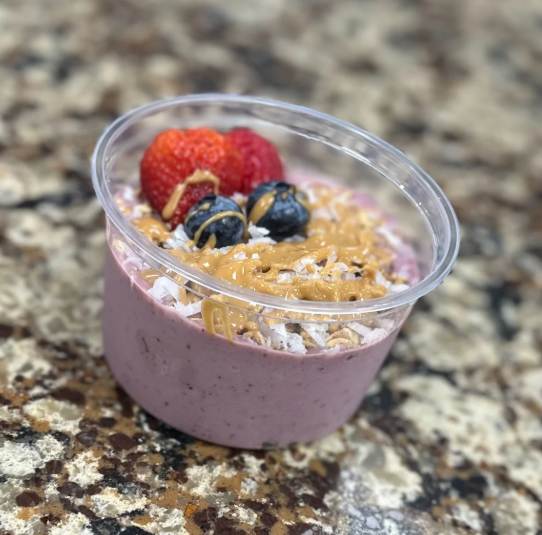
Some short-term studies suggest that controlled acai intake may improve certain metabolic markers. These results are often cited as proof that acai is “good for blood sugar.”
What gets lost is fragility. Change the form, change the dose, or change the surrounding meal, and the effect may disappear. These studies do not examine commercial bowls consumed regularly. That gap is rarely addressed in messaging created by an acai bowl supplier for wholesale buyers, but it matters more than the headline numbers.
The Cholesterol Argument That Often Fills the Gap
When glucose-related claims feel uncertain, cholesterol benefits are often introduced instead. Acai contains antioxidants, and antioxidants are linked to cardiovascular protection. The logic is not wrong, but it is incomplete.
Cholesterol outcomes depend on patterns, not ingredients. A bowl that regularly pushes sugar or calorie intake too high can undermine lipid control regardless of antioxidant content. This tension is well understood by any ODM acai bowl manufacturer trying to balance nutrition narratives with consumer demand.
Where Acai Bowls Usually Start Working Against Blood Sugar Control

The issue is rarely a single ingredient. It is accumulation. A banana here, granola there, a drizzle of honey. Each addition seems reasonable on its own. Together, they change absorption speed and glucose response.
Blending accelerates the process further. Fiber still exists, but its structure does not. This is why many diabetics tolerate whole foods better than blended ones, even when ingredients look identical. For a custom acai bowl manufacturer for wholesale buyers, this nuance is difficult to communicate at scale.
Why Format Matters More Than the Word “Acai”
Pure acai pulp behaves one way. Homemade bowls behave another. Commercial bowls behave differently again. Treating them as interchangeable is convenient, but inaccurate.
This explains why experiences with acai vary so widely. It also explains why manufacturers increasingly segment products instead of pushing a single universal bowl concept across all channels.
Medication, Timing, and the Parts People Rarely Talk About
Acai itself is not known for direct drug interactions. Still, foods that influence insulin sensitivity can shift glucose patterns in indirect ways.
For people using insulin or sulfonylureas, unpredictability is not theoretical. Symptoms may appear late or not at all. This is why dietary changes deserve caution, whether the bowl comes from a café or a large acai bowl factory for wholesale distributors.
What “Safer Use” Actually Looks Like in Daily Life
In practice, diabetics who continue eating acai tend to simplify it. Portions shrink. Sweeteners disappear. Toppings are reduced. The bowl becomes controlled rather than indulgent.
On the supply side, the same pattern appears. An acai bowl manufacturer for wholesale buyers that limits formulation complexity often sees steadier repeat orders than one chasing novelty flavors.
The Research Gaps That Still Matter
Long-term effects remain unclear. Differences between diabetes types are underexplored. Interactions with overall dietary patterns are difficult to isolate.
This uncertainty does not invalidate acai. It limits how confidently it can be positioned. As acai bowls move deeper into mainstream distribution, that restraint becomes more important, not less.
A More Practical Way to Think About Acai Bowls and Diabetes
Acai is not a shortcut. It is an ingredient. Its impact depends on processing decisions, portion size, and what it is combined with.
For individuals, that means paying attention to construction, not labels. For brands, it means aligning claims with reality. Within ecosystems built around custom acai bowl manufacturers for wholesale buyers, the most durable products are usually the least dramatic. They do not promise miracles. They behave consistently.
And for people managing blood sugar, consistency is often the most valuable feature of all.