
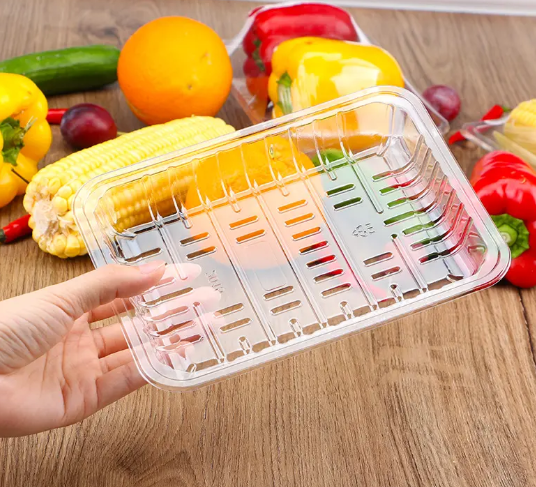
In the Canadian produce market, packaging decisions rarely change overnight. They shift slowly, usually pushed by logistics pressure rather than design trends. CPET fruit trays became more visible not because they were new, but because they quietly solved several problems at once. They hold shape during transport, tolerate temperature swings better than standard PET, and still present fruit clearly on retail shelves.
For Canadian importers and distributors, this combination matters. Fruit often travels long distances, sometimes crossing provinces before it ever reaches a store. Trays that warp, crack, or lose rigidity introduce costs that are hard to recover later. That is why procurement teams now look beyond basic specifications and start asking deeper questions about who is actually making their trays and how.
JHPKG and the Appeal of Flexible CPET Customization
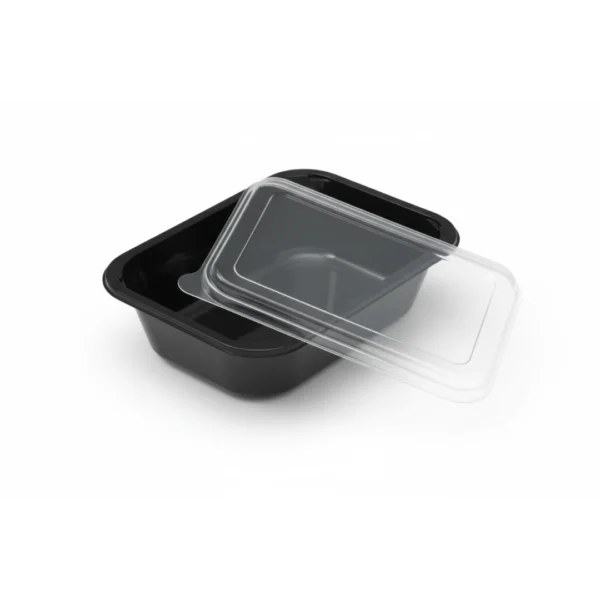
JHPKG is often considered by buyers who need more than an off-the-shelf solution. As a custom CPET fruit tray manufacturer, the company focuses on adapting tray structure to product behavior rather than forcing fruit into a fixed format. Wall thickness, corner reinforcement, and ventilation patterns are adjusted based on how fruit moves through packing lines and distribution centers.
For buyers working on private-label programs, JHPKG’s role as an OEM CPET fruit tray factory becomes relevant. Tooling development is handled with future volume in mind, which reduces the risk of redesign once a tray is already in circulation. This approach tends to appeal to procurement teams that value stability over short-term savings, especially when dealing with multiple SKUs.
Indorama Ventures and the Value of Industrial-Scale Consistency
Indorama Ventures represents a very different sourcing philosophy. Its strength lies in scale and material control rather than customization speed. As a CPET fruit tray supplier for wholesale buyers, the company prioritizes consistency across large production runs. That consistency becomes noticeable during long shipping cycles, where stacking pressure and vibration can quickly expose weaknesses in tray design.
For Canadian buyers managing steady, high-volume programs, this predictability matters. While customization options may follow stricter frameworks, the trade-off is reliable lead times and fewer surprises during peak seasons. In many cases, that reliability outweighs the flexibility offered by smaller factories.
Eastman Chemical and Performance-Driven CPET Solutions
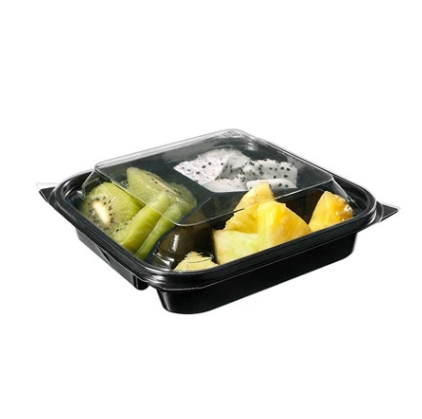
Eastman Chemical enters the CPET discussion from the material side rather than the finished tray alone. Acting as a CPET packaging solution manufacturer, the company emphasizes resin performance, clarity, and dimensional stability. These characteristics are particularly relevant for fruit trays used in premium retail environments, where presentation and shelf appearance influence purchasing behavior.
Canadian retailers with higher display standards often favor trays developed using Eastman materials. The visual difference may seem subtle at first, but it becomes more apparent under strong lighting and extended shelf exposure. For ODM CPET fruit tray suppliers working with Eastman, this material consistency allows them to position their products at the higher end of the market without frequent quality adjustments.
SK Chemicals and CPET Trays Built Around Heat Resistance
SK Chemicals has gradually built its CPET tray portfolio around temperature performance and regulatory alignment. As a CPET fruit tray manufacturer, the company focuses on trays that remain stable across chilled storage and ambient conditions. This matters for fruit products that move between temperature zones during packing, transport, and retail handling.
For Canadian buyers navigating both food safety requirements and sustainability expectations, SK Chemicals offers a sense of balance. The trays are designed to meet performance needs without leaning entirely on marketing-driven environmental claims. That practical positioning tends to resonate with brands planning for long-term compliance rather than short-term campaigns.
Wankai New Materials and Speed-Oriented CPET Production

Wankai New Materials is often evaluated by buyers who need momentum. As a CPET fruit tray factory for wholesale buyers, it integrates sheet production and tray forming, allowing quicker response when new dimensions or structures are required. This speed can be valuable for seasonal fruit programs or expanding product lines.
While customization follows defined boundaries, the ability to move from concept to sample quickly gives buyers room to test without committing immediately to large volumes. For Canadian importers exploring new formats, this responsiveness can reduce the friction usually associated with overseas sourcing.
China Resources Chemical Innovative Materials and Cost Stability
China Resources Chemical Innovative Materials approaches CPET trays from a supply-chain integration perspective. As a CPET fruit tray manufacturer for wholesale buyers, it connects upstream material sourcing with downstream tray production. This structure helps smooth out price fluctuations that often affect resin-based packaging.
For Canadian procurement teams operating on annual contracts, this integration can simplify budgeting and forecasting. Although tray designs may lean toward standardized formats, the benefit lies in predictable costs and consistent output, which becomes increasingly important at higher volumes.
Shantou Linghai Plastic Packing and Mid-Volume Flexibility
Shantou Linghai Plastic Packing occupies a practical middle ground. As a custom CPET fruit tray supplier, it focuses on commonly used tray formats rather than highly specialized designs. This makes it suitable for buyers who do not yet require large-scale industrial production but still need reliable CPET performance.
For Canadian buyers running pilot programs or managing diverse fruit assortments, Linghai’s flexibility on minimum order quantities can lower entry barriers. It allows sourcing teams to test packaging assumptions before committing to larger contracts.
How Canadian Wholesale Buyers Usually Compare CPET Tray Partners
In practice, tray selection rarely comes down to one factor. Buyers weigh material performance, stacking strength, lead time, and communication quality together. CPET trays for berries behave differently from those used for stone fruit or cut fruit, and manufacturers that acknowledge these differences tend to perform better as long-term partners.
For wholesale buyers, the most effective evaluations often involve trial runs rather than paper comparisons. Working with a CPET fruit tray manufacturer that supports sampling and gradual scaling reduces the risk of misalignment once full volumes are in motion.
CPET Tray Costs and the Reality of Return on Investment
From a cost perspective, CPET trays rarely dominate the total product cost, but they influence losses, presentation, and logistics efficiency. Larger order volumes lower unit prices, yet they also increase exposure if tray specifications are wrong. That is why many buyers prefer suppliers who support phased procurement.
Partnering with an OEM or ODM CPET fruit tray factory that understands this progression often leads to better long-term results than chasing the lowest initial quote. Over time, fewer damaged shipments and smoother retail handling tend to offset modest differences in tray pricing.
Closing Thoughts on CPET Fruit Tray Sourcing for Canada
CPET fruit trays have earned their place in the Canadian produce market by solving practical problems rather than promising ideal scenarios. The factories discussed here represent different strengths, from scale and integration to flexibility and speed.
For sourcing teams, the most reliable outcomes usually come from aligning product needs with manufacturing reality. Choosing CPET fruit tray manufacturers for wholesale buyers who understand both sides of that equation makes the difference between packaging that merely exists and packaging that quietly supports growth.