
In commercial baking, trays are rarely discussed until something goes wrong. Warping. Uneven browning. Handling bottlenecks. In Canada’s food production sector, these issues scale fast. What looks like a simple purchasing decision often turns into a long-term operational constraint.
This is why Canadian bakeries, food processors, and retail chains tend to work with a relatively small group of proven commercial baking tray manufacturers and suppliers. Each serves a different production reality, and none of them fits everyone.
Below are seven suppliers that actively support food production in Canada, for very different reasons.
1. Canadian Racks — Custom Industrial Baking Solutions for High-Volume Operations
Canadian Racks operates squarely in the industrial end of the market. It is best described as an industrial baking tray manufacturer, not a catalog seller.
Most buyers approach Canadian Racks when standard trays stop working. Lines are automated. Loads are heavy. Downtime is expensive. In these environments, trays are no longer consumables, they are part of the production system.
Their metal trays are typically built to specification. Dimensions, edge profiles, and structural reinforcement are discussed early. This makes Canadian Racks a clear custom baking tray supplier, but it also means longer lead times and higher entry cost.
This is not an ideal option for small bakeries or price-driven purchases. For facilities running continuous or semi-automated production, however, durability tends to outweigh flexibility.
2. D&V Plastics — HDPE Bread Crate & Tray Specialists for Transportation Efficiency
D&V Plastics is often included in baking tray discussions for a reason, even though their products do not go into ovens.
They function as a plastic bakery tray supplier, focused on what happens after baking. Transport. Storage. Repetition.
HDPE bread crates and trays are used heavily by bakeries with centralized production and regional delivery routes. These trays tolerate washing, stacking, and impact far better than lightweight alternatives.
For buyers searching for a bakery tray wholesale supplier to support logistics rather than baking performance, D&V Plastics fits well. It is less relevant for production-floor needs and more relevant once volume increases and handling inefficiencies start showing up in cost reports.
3. New Method Packaging — Disposable Ovenable Trays for Retail Bakeries
New Method Packaging addresses a very different pain point: operational simplicity.
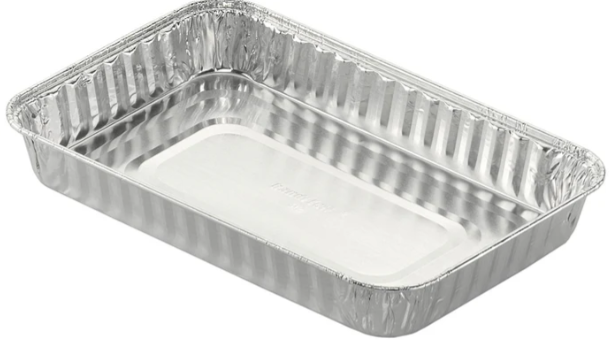
As a disposable baking tray manufacturer, the company supplies ovenable paper-based trays designed to move from bake to shelf with minimal handling. These trays are commonly used by retail bakeries, dessert brands, and private-label producers.
Buyers often turn to New Method when washing, storage, or tray loss becomes a distraction. Disposable trays remove those variables entirely.
This approach is not cost-effective for every operation. For high-volume industrial lines, disposables are usually impractical. For short runs, seasonal items, or multi-SKU retail programs, a custom disposable baking tray supplier can simplify production far more than reusable assets.
4. Drader — Long-Established Supplier in Bakery Logistics Systems
Drader is not known for baking trays in the traditional sense. It is better understood as a bakery tray supplier focused on movement, not baking.
Their stack-and-nest trays and crates are widely used in large distribution systems. Empty trays nest tightly. Full trays stack securely. Space savings are the point.
For grocery supply chains and large bakery networks, this matters. Transport costs accumulate quietly. So does wasted warehouse space.
Drader also offers refurbishment programs, which makes sense only when tray fleets are already large. For smaller operations, this model is usually unnecessary. For national distribution systems, it is often expected.
5. Chicago Metallic — Established Commercial Bakeware for Standardized Production
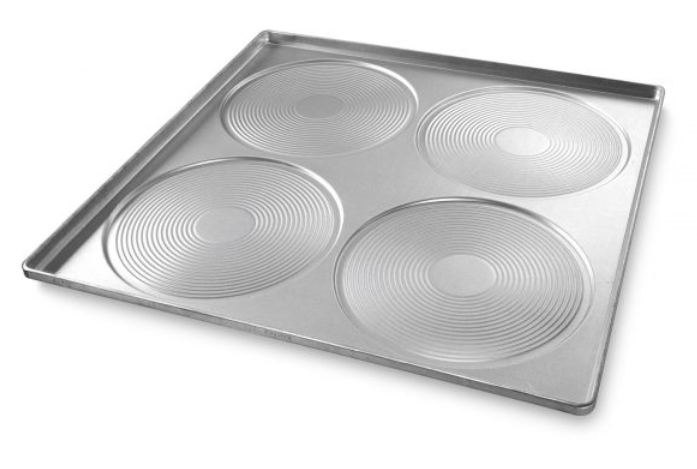
Chicago Metallic remains one of the most recognized commercial baking tray manufacturers in North America.
Their strength is not customization. It is standardization. Sheet pans, molds, and commercial formats that behave predictably batch after batch.
Canadian buyers often rely on Chicago Metallic when consistency matters more than optimization. Multiple locations. Multiple staff. One tray format that everyone understands.
This makes them a dependable commercial baking tray supplier for bakeries that value repeatability. It also means fewer options for non-standard line layouts or unique production constraints.
6. Crown Cookware — Canadian Manufacturing with Practical Lead Times
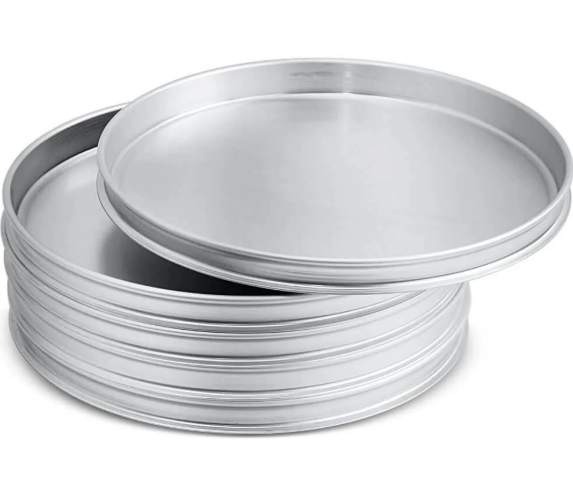
Crown Cookware operates closer to the middle of the market. As a Canadian baking tray manufacturer, it serves bakeries that want reliable supply without cross-border complexity.
Their trays are typically straightforward in design. Practical. Durable enough for daily commercial use. Not engineered for extreme automation.
For small to mid-sized bakeries, local manufacturing matters. Lead times are shorter. Communication is simpler. Reordering is predictable.
Crown Cookware is rarely chosen for highly specialized production. It is chosen because it works, and because support is nearby.
7. A1 Cash and Carry — Bulk Supply for Price-Sensitive Buyers

A1 Cash and Carry functions primarily as a baking tray wholesale supplier.
Their role is simple. Stock standard commercial trays. Sell them in volume. Move quickly.
This model fits startups, small bakeries, and foodservice operators opening new locations. The trays are not designed for long-term industrial use. They are designed to be accessible.
For buyers prioritizing immediate availability and cost control, wholesale suppliers like A1 serve a clear purpose. For operations planning multi-year tray lifecycles, they are usually a temporary solution.
How to Choose a Commercial Baking Tray Supplier in Canada
There is no universal best supplier. The right choice depends on scale.
Retail bakeries often prioritize flexibility. Disposable trays or readily available stock formats reduce complexity. Industrial producers prioritize durability and integration. Custom metal trays cost more but last longer.
Material decisions follow the same logic. Metal dominates high-temperature baking. Plastic supports logistics. Disposable materials simplify handling.
The mistake many buyers make is focusing only on unit price. Replacement frequency, labor, washing, storage, and downtime all affect long-term cost.
Industry Trends Influencing Baking Tray Sourcing in Canada
Automation is changing tray requirements. Uniform dimensions and consistent edge geometry now matter more than ever.
At the same time, Canadian buyers are reassessing supply chains. Domestic sourcing reduces lead times and exposure to disruption, even if initial costs are higher.
Finally, bakeries are splitting their tray strategies. Reusable systems where volume justifies it. Disposable systems where flexibility matters more.
Conclusion
The Canadian baking industry relies on a mix of industrial baking tray manufacturers, niche specialists, and baking tray wholesale suppliers. Each plays a role.
The most effective buyers do not look for a perfect tray. They look for the right tray for a specific part of their operation.
That distinction is what separates efficient production from ongoing friction.