
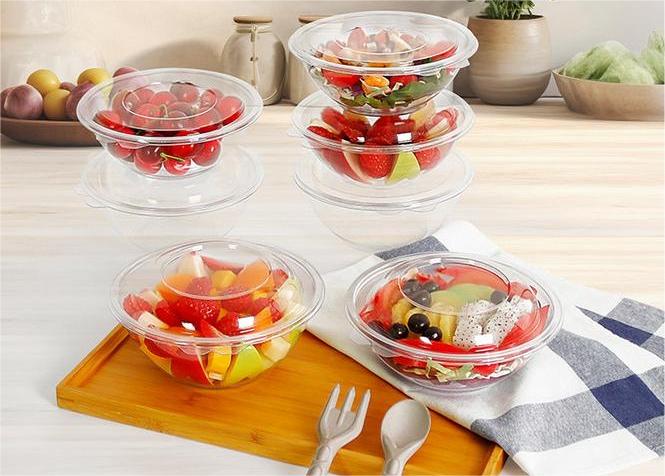
Recycled PET salad bowls used to be discussed mainly in sustainability reports. Today, they show up much earlier in the decision chain. Buyers talk about them during sourcing calls, packaging trials, and even store audits. The reason is simple: once recycled content becomes visible, it stops being a background detail and starts influencing how fresh the food looks.
In cold food categories, packaging clarity quietly carries more weight than most buyers expect. A slightly dull bowl can make a fresh salad feel processed. A grey tone can trigger complaints, even if the product inside is unchanged. This is why rPET salad bowls are often judged more strictly than their virgin PET counterparts.
The suppliers reviewed here were filtered with that reality in mind. Each one offers confirmed rPET salad bowl production in Asia, with a focus on transparency control rather than marketing claims.
Why rPET Salad Bowl Clarity Is Still a Sourcing Problem
Producing clear rPET is not just a material issue. It is a process issue. Differences in recycled feedstock, filtration quality, and forming temperature all show up visually, sometimes in ways that are hard to predict during early sampling.
Many suppliers can provide one good-looking batch. The challenge appears later, when volume increases or when different production runs are placed side by side. That is usually when buyers realize that recycled content and visual consistency are not always aligned.
This gap explains why experienced buyers now ask fewer questions about percentages and more questions about process stability.
1. Faerch and the Importance of Visual Control
Faerch is often mentioned when buyers want to understand what stable rPET clarity looks like over time. Its salad bowls do not aim to look glossy or exaggerated. Instead, they aim to look the same, batch after batch.
In practice, Faerch behaves like a custom rPET salad bowl manufacturer for retail-focused food brands, where shelf appearance matters more than novelty. The bowls tend to avoid strong color shifts, which reduces risk in high-light retail environments.
For many procurement teams, Faerch is chosen not because it is the cheapest option, but because it removes uncertainty from visual quality discussions.
2. Huhtamaki and Operational Predictability
Huhtamaki’s rPET salad bowls are usually evaluated as part of a larger packaging system. Instead of pushing aggressive recycled aesthetics, the company focuses on compatibility and operational flow.
It often serves as an OEM rPET salad bowl supplier for multi-region foodservice programs, where consistency across SKUs matters more than design detail. Clarity is controlled, but not overstated, and production behavior is generally conservative.
This approach appeals to buyers who prioritize rollout stability over visual experimentation.
3. D&W Fine Pack and Format Continuity
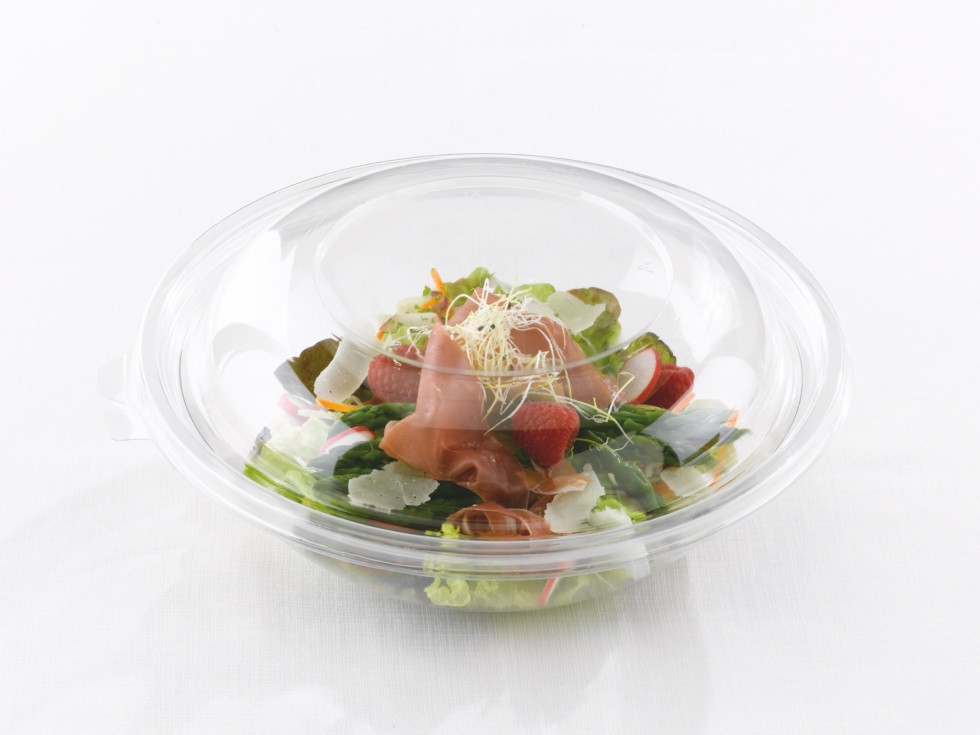
D&W Fine Pack’s rPET salad bowls closely follow formats that buyers already recognize. That familiarity reduces friction when switching from virgin PET to recycled material.
In sourcing projects, D&W Fine Pack is frequently positioned as a private label rPET salad bowl factory for export distributors, especially in deli and ready-meal segments. The bowls are designed to fit existing lids, packing lines, and carton logic.
For buyers managing large catalogs, this continuity can be more valuable than marginal gains in clarity.
4. Sabert Asia and Presentation-Driven Design
Sabert Asia treats rPET salad bowls less as commodity items and more as presentation tools. Wall thickness, edge definition, and shape symmetry are all used to support visual appeal.
As a design-oriented rPET salad bowl manufacturer for premium food display, Sabert Asia tends to attract brands that sell with their eyes first. The recycled content is visible, but it does not feel accidental.
This positioning works well for concepts where packaging is part of the product story rather than just a container.
5. Taizhou Fuling and Commercial Flexibility
Taizhou Fuling approaches rPET salad bowls from a volume and cost perspective. Instead of locking buyers into one configuration, it allows adjustments in recycled content ratio, size range, and tooling detail.
In many cases, it functions as an ODM rPET salad bowl factory for wholesale buyers, especially those supplying multiple price tiers. Clarity is acceptable for mass retail use, though not positioned as premium.
This flexibility makes it easier for buyers to balance sustainability targets with margin pressure.
How Buyers Really Evaluate rPET Salad Bowl Suppliers
Samples are only the starting point. Real evaluation happens when something goes wrong. Color drift, lid mismatch, or delivery delays quickly expose how a supplier operates under pressure.
This is why many buyers prefer a reliable rPET salad bowl manufacturer for long-term supply, even if the initial quotation is higher. Stability often costs less than repeated adjustments later.
rPET Salad Bowls as a Practical Transition

For many brands, rPET salad bowls are not the final solution. They are a step toward reduced plastic impact without sacrificing clarity. That makes supplier choice more strategic than symbolic.
Working with a high-clarity rPET salad bowl supplier for food packaging distributors allows brands to move forward without redesigning their entire cold food range.
What Separates Viable Suppliers from Short-Term Options
Beyond price, buyers now pay attention to communication speed, tolerance control, and problem-solving habits. These factors rarely appear in brochures, but they decide long-term success.
A certified recycled PET salad bowl manufacturer for export markets often proves more valuable after the first few shipments than during the quotation phase.
Final Thoughts on rPET Salad Bowl Sourcing in Asia
Asia offers strong capacity for rPET salad bowl production, but results vary widely. High clarity, recycled content, and consistent supply do not automatically come together.
For buyers willing to look past surface claims, partnering with a sustainable rPET salad bowl supplier for international food brands becomes less about branding and more about operational confidence.