
Let’s face it: the world of “eco-friendly” packaging is a bit of a minefield right now. If you are a procurement officer or a distributor, you’re likely getting hammered with sales pitches about “green” alternatives. But here is the cold, hard truth—if you can’t back up your claims with the right paperwork, you’re just one audit away from a major headache. In a B2B environment, “compostable” shouldn’t be a marketing buzzword; it needs to be a legal certainty. When you finally vet and choose a reliable compostable coffee cup manufacturer, you aren’t just paying for the physical product. You are paying for a verified safety net that keeps your brand out of legal hot water.
Why Traditional Cups Are a Dead End
The old-school coffee cup was a marvel of convenience, but an absolute disaster for the planet. That polyethylene (PE) plastic lining is basically welded to the paper, making it a nightmare for recycling centers. Most of them just end up in landfills or, worse, incinerators. The shift toward PLA and aqueous coatings was a step in the right direction, but “compostability” is a spectrum. Without the right stamps of approval, you might be buying something that won’t break down any faster than a plastic bottle. This is why a professional compostable cup factory for bulk orders focuses so much on material science. They know that “good enough” isn’t an option when millions of units are at stake.
BPI: Your Entry Ticket to North America

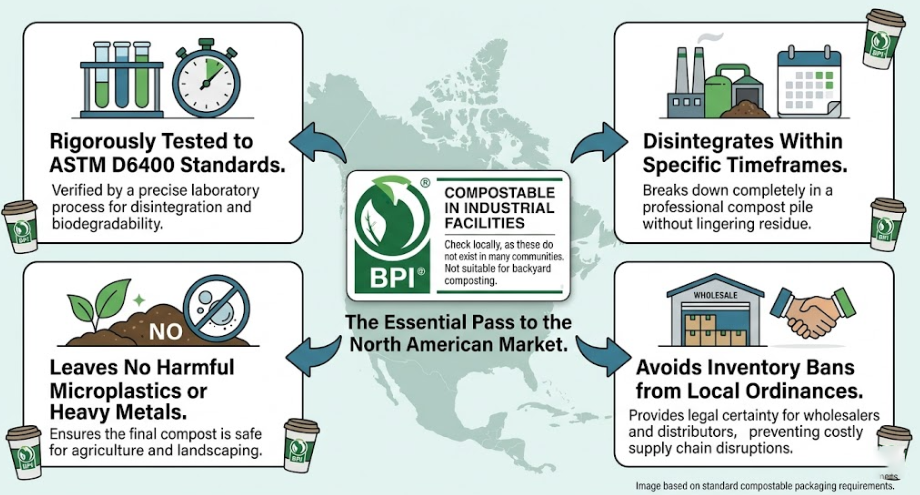
If your business has even a toe in the US or Canadian markets, the BPI (Biodegradable Products Institute) logo is your North Star. It’s not just for show. To get that logo, a cup has to survive a brutal testing process based on ASTM D6400 standards. It has to disintegrate within a specific timeframe in a professional compost pile without leaving behind nasty microplastics or heavy metals. For any serious wholesaler, partnering with an experienced custom compostable cup supplier who carries BPI certification is the only way to ensure your inventory won’t be banned by local “zero-waste” ordinances. It takes the guesswork out of compliance.
The European Barrier: TUV AUSTRIA and Seedling
Europe is notoriously picky about its trash—and for good reason. If you want to sell across the pond, you need to talk about TUV AUSTRIA and the “Seedling” mark. Their “OK Compost INDUSTRIAL” certification is the benchmark for the EU. It proves the cup can handle the intense, controlled heat of an industrial composting facility. For those of you scouting a leading compostable cup manufacturer in China or other manufacturing hubs, these certificates are your litmus test. If a factory can’t produce a valid TUV report, they simply aren’t playing in the big leagues yet. You need that paper trail to get through customs without a hitch.
Home vs. Industrial: Don’t Get Burned
Here is a detail that catches a lot of buyers off guard: there is a huge difference between “industrial” and “home” compostable. Most PLA cups require the high heat of a commercial facility (around 140°F) to actually snap their chemical bonds. If a customer tosses that cup in a backyard pile, it’s going to sit there for a long time. However, the market is moving fast. If you want to stand out, you might want to look for “OK Compost HOME” labels. Talking to a specialized compostable cup ODM provider about home-compostable resins can give you a massive edge with eco-conscious boutique cafes. It’s a great way to offer a solution that actually fits a “zero-waste” lifestyle.
FSC: It’s Not Just About the End of Life
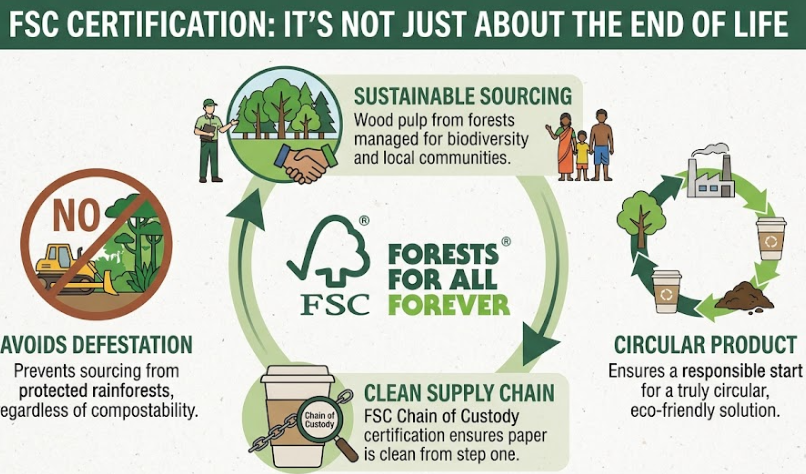
It’s easy to get obsessed with how a cup breaks down, but we also have to look at where the wood pulp came from. A cup made from wood stolen from a protected rainforest isn’t “sustainable,” no matter how fast it turns to dirt. That’s where the Forest Stewardship Council (FSC) comes in. This certification ensures the paper is sourced from forests that are managed with respect for biodiversity and local communities. When you are auditing a reputable compostable coffee cup wholesaler, always check for their FSC Chain of Custody. A truly circular product has to be clean from the very first step of the process.
The PFAS Problem: The New “Forever” Headache

The latest nightmare for the packaging industry is PFAS—the “forever chemicals” used to keep grease from soaking through the paper. They are being banned everywhere. Most modern composting certifications now include a mandatory test for fluorine to ensure a product is PFAS-free. A top-tier compostable cup supplier for eco-conscious brands will have these test results ready before you even ask. If they dodge the question or give you a vague answer about “proprietary coatings,” be very careful. In today’s regulatory climate, having PFAS in your supply chain is a ticking time bomb for your reputation.
B2B Reality: Why Certifications Are Your Best Insurance
In the B2B world, certifications aren’t just “feel-good” badges; they are your legal armor. Governments are getting aggressive with anti-greenwashing laws, and the fines can be staggering. Working with a certified compostable cup factory for global distribution means you get a complete documentation package—test reports, batch numbers, and valid certificates—that you can hand over during an audit. This level of transparency is what builds long-term trust with corporate clients. It shows you aren’t just flipping product, but actually managing a responsible supply chain.
Future-Proofing Your Packaging Strategy
The rules of the game are changing. With Extended Producer Responsibility (EPR) laws, the cost of dealing with waste is being pushed back onto the people who sell it. This means the “cheap” plastic cup is going to get a lot more expensive when you factor in taxes and disposal fees. Choosing a trusted OEM compostable cup manufacturer is a strategic move to stay ahead of the curve. They don’t just provide the cups; they provide the technical expertise to navigate these shifting laws. In the end, the right certifications don’t just protect the environment—they protect your bottom line from a rapidly changing world.