
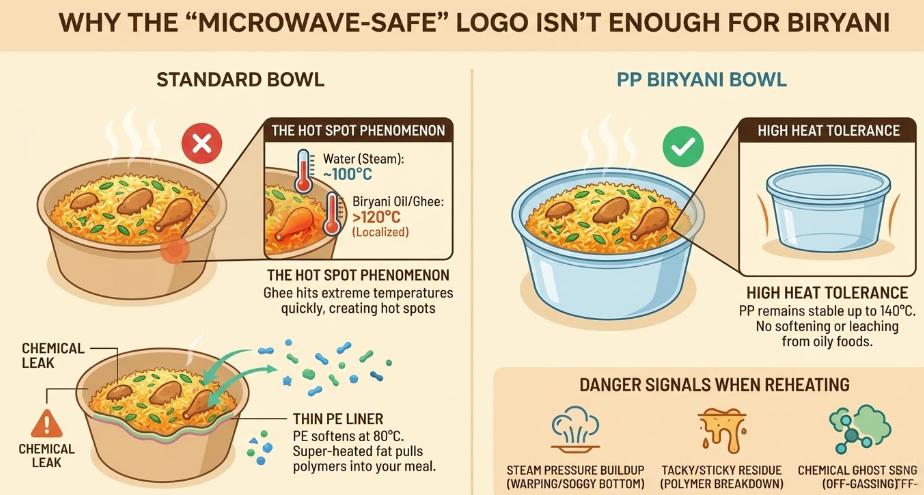
The aroma of a slow-cooked biryani is unmistakable, a heavy perfume of saffron and spice that practically begs for a second round the next day. But let’s be honest: most of us just toss that leftover container into the microwave without a second thought, trusting that tiny “microwave-safe” logo embossed on the bottom. However, when you’re dealing with the unique, oily chemistry of a biryani, that little icon might be leading you into a chemical trap. Food safety in the modern takeaway era isn’t just about whether a bowl melts; it’s about what it’s quietly leaking into your basmati rice while the timer counts down.
The Hidden Physics of Biryani vs. Standard Bowls
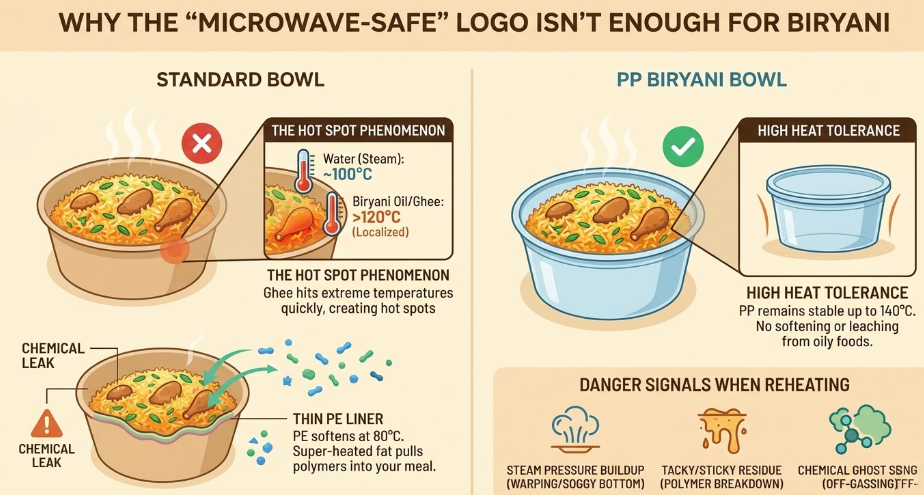
We often make the mistake of assuming that if a container can handle a quick soup reheat, it’s up to the task of handling biryani. That’s a dangerous gamble. Biryani presents a specific challenge for food packaging due to its high density and heavy fat content. In a microwave, water molecules heat up fast, but oil molecules—like those in ghee—hit extreme temperatures even quicker. While water caps out at 100°C, the oils in your biryani can easily spike to 120°C in localized “hot spots.” This creates a thermal drill effect. If your food came from a standard PE coated biryani bowl supplier, the thin interior lining will likely begin to soften at just 80°C. Once that barrier is compromised, the super-heated fat begins to pull microscopic plastic polymers directly into your meal.
Beyond just the heat, there’s the invisible battle of steam pressure. Because biryani is packed so tightly, it traps massive amounts of moisture. As it reheats, this steam creates a humid, high-pressure environment that tests every seam of the container. If the structural integrity isn’t top-tier, you’ll notice the bottom becoming “greasy” or “soggy.” That’s not just oil seeping through; it’s a red flag that the container’s molecular wall has failed, turning your lunch into a cocktail of degraded plastic and paper pulp.
The 30-Second Microwave Safety Test You Need to Master
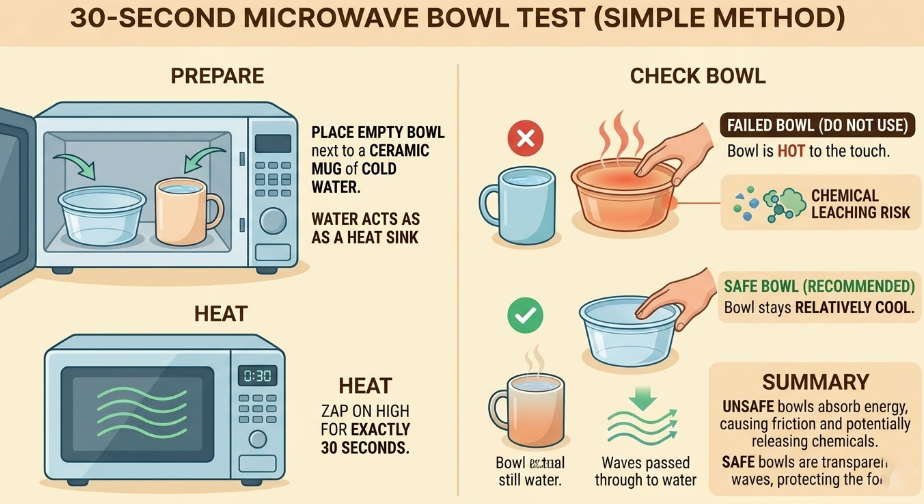
Since you can’t always vet the source of every takeaway container, you need a quick, DIY way to verify safety at home. I always recommend the 30-Second Energy Absorption Test. It’s simple: place the empty bowl in the microwave next to a separate ceramic mug filled with cold water. The water acts as a “heat sink” to protect your microwave’s internals while giving you a baseline for comparison. Zap them on high for exactly 30 seconds.
When the timer dings, carefully touch the empty bowl. If the bowl feels hot while the water in the mug is still cool, the container has failed miserably. This heat proves that the materials used by the heat resistant PP biryani bowl manufacturer for bulk orders were likely tainted with impurities or polar molecules that absorb microwave energy. A truly safe microwave container should stay relatively cool because the waves should pass right through it to hit the food. If the bowl itself is absorbing heat, it’s undergoing molecular friction—a recipe for chemical off-gassing.
Decoding the Inner Lining: PP vs. CPET
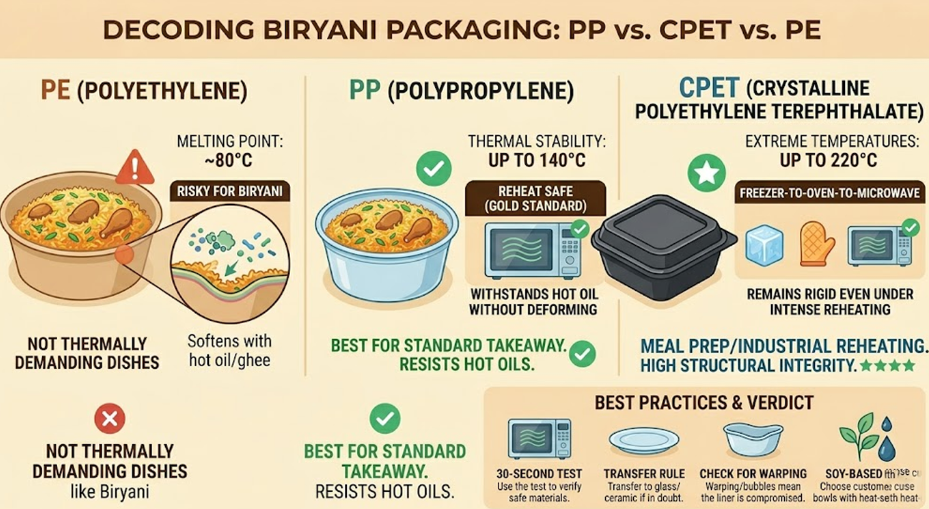
What’s actually sitting between your spices and the microwave radiation? Usually, it’s one of three materials. PE is the budget choice, but its low melting point makes it a liability for greasy foods. For anyone in the catering business or heavy-duty food service, you should be sourcing from a reliable microwave safe PP biryani bowl factory that focuses on thermal stability. Polypropylene (PP) is the gold standard here, capable of withstanding up to 140°C without flinching when it touches hot oil.
If you’re looking at premium meal-prep services that go from freezer to oven to microwave, a certified food grade CPET biryani container exporter is the only way to go. CPET (Crystalline Polyethylene Terephthalate) can handle a staggering 220°C, remaining rigid and inert even under intense industrial reheating. While “eco-friendly” PLA liners are trendy, they often fail at temperatures as low as 60°C. For a dish as thermally demanding as biryani, the “green” choice might actually be the riskiest one for your endocrine system.
The Dangers of Chemical Leaching and Oil Saturation
Why does this matter? It’s not just about a weird plastic aftertaste; it’s about long-term health. Most plastic coatings contain phthalates or other stabilizers to keep them flexible. These chemicals are “lipophilic,” meaning they love fat. When biryani oil hits a degrading liner, it acts as a solvent, actively stripping these chemicals out of the plastic and into your diet. Chronic exposure to these leached substances is a known disruptor for hormonal balance.
The risk doubles if the bowl has fancy, colorful printing near the rim. Many cheap inks are loaded with volatile organic compounds (VOCs) that can vaporize during a long reheat. To avoid this, savvy restaurant owners only work with a custom printed PP biryani bowl manufacturer for restaurant chains that uses soy-based, heat-stable inks. You want the branding on the outside to stay on the outside, not condense back into your dinner.
Real-World Failure Scenarios: What to Watch For
Even if a bowl looks fine, you have to be a bit of a detective during the reheating process. One major warning sign is “tackiness.” If the inside of the bowl feels slightly sticky after it’s been heated—and it’s not just from the rice—that’s the polymer breaking down. Another red flag is what I call the “chemical ghost” smell. If you catch a whiff of scorched tape or burnt hair under the scent of cardamom, throw it out.
Warping is the most obvious physical sign of danger. If the rim starts to ovalize or the bottom “bubbles” upward, the moisture has breached the coating. This structural collapse means the microscopic barrier is gone. This is why it is vital for businesses to vet their stock through a professional PP biryani bowl ODM partner who can provide lab reports on structural integrity during 3-minute high-heat cycles.
Better Alternatives and Best Practices
If you’re ever in doubt, just follow the “Transfer Rule.” It takes ten seconds to move your biryani to a glass or ceramic plate. Yes, it’s one more dish to wash, but it completely removes the chemical leaching variable from your meal. If you’re stuck using the original container, at least heat it in 60-second bursts, stirring in between to break up those dangerous oil hot spots.
For those in the food industry, your packaging choice is a silent promise of safety. Stepping up to a high quality CPET biryani bowl supplier in Asia can actually be a massive branding win. Customers are increasingly aware of plastic safety, and providing a heavy-duty, oven-safe tray shows you care about more than just the bottom line.
The Verdict on Microwave Safety
At the end of the day, a “microwave-safe” label is just a baseline—it means the bowl won’t catch fire. It doesn’t mean it’s chemically inert at high heat. By using the 30-second test and knowing your materials, you take the guesswork out of your lunch. Whether you’re a hungry consumer or a durable plastic biryani bowl wholesaler looking for the best inventory, the details matter. Next time you go for those leftovers, take a second to check the bowl. A little scrutiny goes a long way. Partnering with a sustainable PP biryani packaging manufacturer ensures that the only thing getting heated is the food, keeping your health—and your biryani—exactly as it should be.