
Let’s be honest: a coffee-stained mug is a professional liability. Whether you are running a high-traffic bistro or managing a sleek corporate suite, those nasty brown rings send the wrong message to clients. They suggest neglect. Most people assume a quick run through the dishwasher solves it, but coffee is chemically stubborn. If you’ve just invested in a bulk order from a custom coffee cup factory, you don’t want that fresh glaze looking aged within a month. You need to treat these stains like a chemistry problem, not just a dishwashing chore.
Why Coffee Stains Are So Stubborn (The Chemistry)

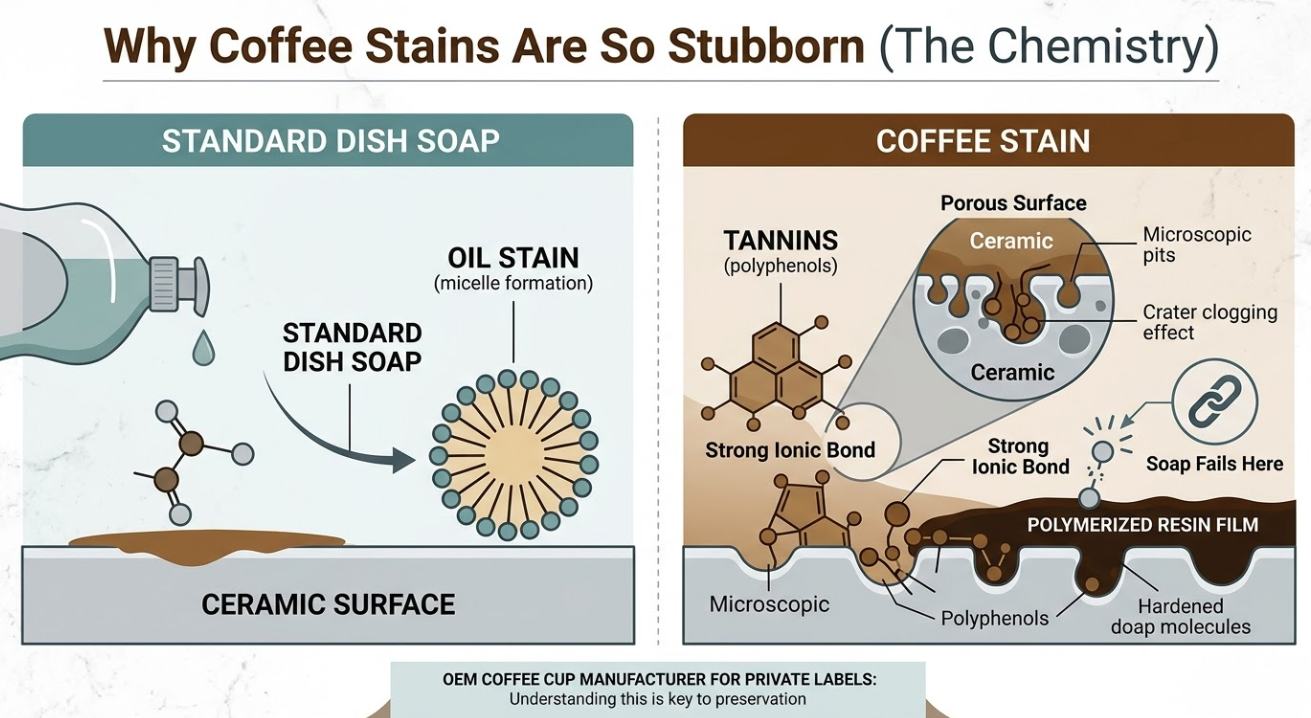
The real villain here is a group of organic compounds called tannins. Think of tannins as nature’s dye—they are polyphenols found in coffee beans that love to stick to surfaces. While a ceramic mug feels smooth, it is actually covered in microscopic pits. Over time, tannins crawl into these tiny craters and set up shop. This is a headache for anyone sourcing from a specialized coffee cup supplier for bulk orders, because even the best finishes aren’t 100% immune to this “pore-clogging” effect.
Standard soap is great for grease, but it’s useless against the ionic bond coffee forms with ceramic or steel. Once the liquid dries, the tannins polymerize, creating a resin-like film that essentially becomes part of the cup. For procurement teams working with an OEM coffee cup manufacturer for private labels, the goal is to break this bond without stripping the expensive branded finish.
Method 1: Baking Soda Paste — The Universal Mild Abrasive

Baking soda is the “secret weapon” in hospitality for a reason. Its crystals are sharp enough to shave off the tannin film but soft enough that they won’t scratch your glaze. This is a critical distinction emphasized by every premium porcelain cup factory for luxury brands: if you use a harsh scrubber, you create micro-scratches that will only trap more stains next time.
The Pro Move: Mix a teaspoon of soda with just a splash of water. You want it thick, like heavy paste. Use a damp cloth to rub this into the brown rings using firm, circular pressure. In less than a minute, the grit physically shears the stain off the surface. It’s cheap, food-safe, and incredibly fast for office-wide maintenance.
Method 2: White Vinegar Soak — The Acidic Dissolver
If you can’t reach the bottom of a narrow travel mug, stop scrubbing and start soaking. White vinegar contains acetic acid, which acts as a chemical wedge, driving itself between the stain and the vessel. This is the go-to maintenance step for anyone buying from a leading stainless steel tumbler supplier, as vinegar cleans the metal without risking the “pitting” or corrosion that bleach might cause.
The Pro Move: Fill the cup with a 1:2 ratio of vinegar and boiling water. Heat is the catalyst here—it speeds up the acid’s ability to soften the dried-on tannins. Give it 20 minutes. Usually, the brown film will simply slide off with a light rinse, requiring zero manual labor.
Method 3: Baking Soda + Vinegar — The “Fizzing” Deep Clean
When a mug has been sitting on a desk for weeks, you need a bit of kinetic drama. Combining baking soda and vinegar creates a sudden release of carbon dioxide. This fizzing isn’t just for show; it creates physical agitation at the molecular level, literally vibrating the stain loose. It’s a lifesaver for rehabilitating old samples from a wholesale coffee cup factory for distributors.
The Pro Move: Put the soda in the dry cup first. Then, pour in the hot vinegar. The order is vital because you want the reaction to happen on the stain, not in the air. Let the bubbles do the heavy lifting for about 10 minutes. It’s the most satisfying way to clear out narrow corners.
Method 4: Dishwasher Detergent + Boiling Water — The Industrial Power
In a high-volume cafe, you don’t have time for lemon juice and vinegar. You need the enzymes found in commercial dishwasher pods. These chemicals are specifically engineered to rip apart organic pigments. This is the “nuclear option” often suggested by an industrial-grade drinkware manufacturer for cafes when turnover is high and results must be perfect.
The Pro Move: Toss a small amount of powder detergent into the mug and fill it with boiling water. Be careful—the steam can be intense. Let it sit for 30 minutes. The high-heat environment keeps the enzymes active, stripping the cup back to its original factory shine without you ever touching a sponge.
Method 5: Lemon + Salt Scrub — The Natural Brightener
For high-end bone china or gold-rimmed pieces, you have to be careful. You need the natural bleaching power of citric acid and the gentle friction of salt. This is the traditional care method for pieces from a bespoke bone china factory for boutiques, where preserving the delicate hand-painted details is the primary goal.
The Pro Move: Cut a lemon, dip the wet side in table salt, and use the lemon itself as the scrubber. The salt won’t dissolve immediately, providing a soft buffer that lifts the stain while the lemon juice brightens the porcelain. It’s effective, smells great, and won’t harm your most expensive inventory.
Material Matching & Safety Matrix

Before you dive in, know your materials.
-
Stainless Steel: Stay away from bleach. It kills the protective oxide layer and leads to rust.
-
Bone China: Never use the “Boiling Water” method if the cup is cold; the thermal shock can cause “crazing” or tiny cracks in the glaze.
-
Custom Prints: If your gear is from a wholesale coffee cup factory for business brands, keep the acids inside the cup to protect the external logo.
Prevention: The “Golden Window”
The best way to manage coffee stains is to stop them from setting. There is a “Golden Window” of roughly 30 minutes. If you rinse a cup with warm water within half an hour of finishing the drink, the tannins don’t have enough time to bond.
Implementing a “rinse-first” culture in your workplace can cut your deep-cleaning needs by 80%. No matter which wholesale coffee cup supplier for business brands you buy from, a little bit of proactive maintenance will keep your brand looking sharp and your coffee tasting exactly the way it should.