
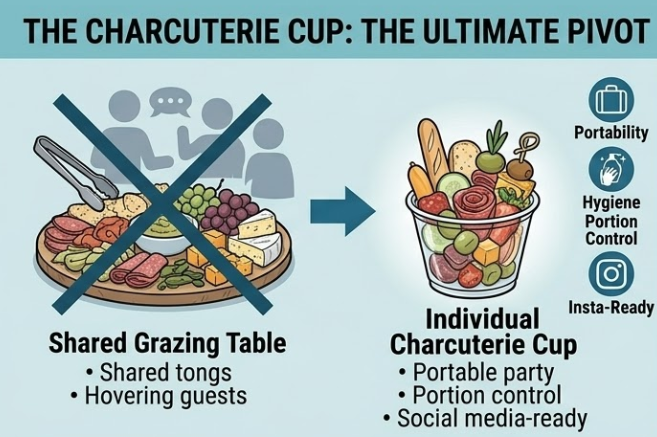
Let’s be honest: the traditional, sprawling grazing table is a nightmare for anyone trying to juggle a wine glass and a conversation at a crowded cocktail hour. It’s a mess of shared tongs and awkward hovering. That is exactly why the “Charcuterie Cup”—or “Jarcuterie” if you’re feeling trendy—has absolutely taken over the event industry. It’s the ultimate pivot toward hygiene, portion control, and, frankly, social media-ready aesthetics.
But if you are managing a high-volume catering business or planning a wedding for 300 guests, you aren’t just making a snack; you are managing a logistics chain. This starts with the vessel. Working with a reliable custom PET charcuterie cup manufacturer is a game-changer because you need containers that won’t crack under the weight of a heavy breadstick or lose their crystal-clear transparency in a humid refrigerator.

Why The Individual Format Wins Every Single Time
The shift from boards to cups wasn’t just a post-pandemic fluke. It was a realization that guests hate being tethered to a food table. A cup is a “portable party.” It allows for true mobility. Guests can wander from the bar to the patio without losing their snack. From a planner’s perspective, the “grazing anxiety” is gone—no more worrying about one guest hoarding all the expensive aged Gouda while others are left with crackers.
Efficiency is the secret sauce here. When you source your hardware from a disposable charcuterie cup factory, you’re buying into a standardized system. Whether you choose 12 oz for a light appetizer or 16 oz for a hearty cocktail hour, these dimensions allow you to calculate your food cost down to the penny. In the world of commercial catering, that precision is what keeps your margins healthy.
Hardware Secrets: It’s Not Just a Plastic Cup
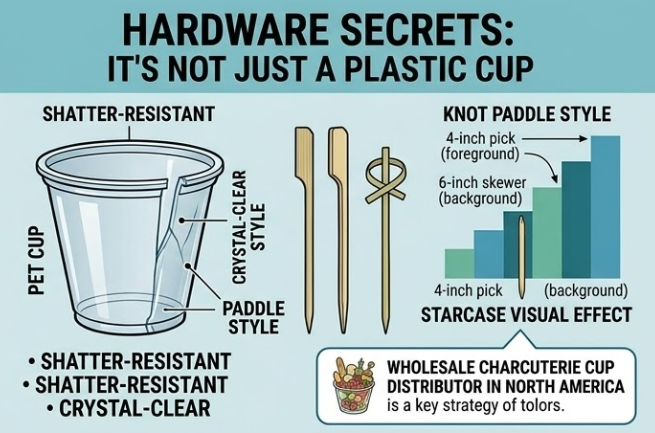
If you think any old cup will do, think again. The “verticality” of these displays puts a lot of stress on the container. Cheap, thin-walled plastic will flex, causing your carefully arranged skewers to tilt and collapse. Professional caterers almost always bypass retail shelves to find a premium charcuterie cup supplier for bulk orders. You want PET plastic because it’s shatter-resistant and has that high-end “glass-like” look that makes even a simple cube of cheddar look expensive.
Beyond the cup, you need an arsenal of structural tools. Bamboo skewers are your best friends—specifically the “knot” or “paddle” styles that prevent olives from sliding off. You’ll need 4-inch picks for the foreground and 6-inch skewers for the background to create that “staircase” visual effect. If you’re coordinating a multi-city tour or a massive corporate rollout, securing a wholesale charcuterie cup distributor in North America ensures that your supply chain stays consistent across different regions.
The Art of the Ingredient: Texture, Weight, and Gravity
Building a charcuterie cup is basically edible architecture. You can’t just throw things in. You have to consider how ingredients behave over time. Soft, creamy cheeses like Brie are delicious but can get messy if they touch the side of the cup. The pro move? Salami fans and pepperoni roses. By folding your meats into “accordions” and threading them onto a skewer, you create a stiff structure that holds up other items.
Stability is key. For a commercial event, you need items that won’t wilt. Think grapes, dried apricots, and Marcona almonds. If you’re worried about shelf life during a long event, check with a charcuterie cup packaging supplier for event planners about dome lids. These lids do double duty: they prevent the cheese from “sweating” and make the cups stackable for transport, which is a massive win for off-site catering logistics.
The Step-By-Step: Building from the Bottom Up
Efficiency in the kitchen is about the assembly line. Don’t build one cup at a time; build fifty.
-
The Foundation: Drop a tablespoon of mixed nuts or a few dried cranberries at the very bottom. This isn’t just for eating—it acts as “ballast” to keep the cup from being top-heavy and prevents skewers from sliding around.
-
The Anchor: Slide in your tallest item first. This is usually a long, thin breadstick or a sturdy sprig of rosemary. It sets the “height” of the cup.
-
The Skewers: This is where the value is. A standard cup needs two distinct skewers. One should be “salty/savory” (salami, olive, pepperjack) and one should be “fresh/sweet” (mozzarella, tomato, basil or berry and brie).
-
The Branding: If you’re a caterer, this is your billboard. Partnering with an oem charcuterie cup producer for private labels allows you to have your logo etched or stickered onto the cup. It turns a simple appetizer into a powerful marketing tool every time a guest takes a photo for Instagram.
Theme Ideas: From Game Day to Black Tie

The beauty of this format is its chameleonic nature. For a “Game Day” tailgate, lean into robust, hearty flavors. Swap the Brie for sharp smoked Cheddar cubes and replace the prosciutto with thick-cut pepperoni. Use a clear cup from a sustainable charcuterie cup manufacturer for eco-friendly events—something like a compostable PLA—to keep the clean-up guilt-free for outdoor festivals.
For a “Bridal Shower” or high-end wedding, it’s all about the “garden” look. Use edible flowers, honey sticks, and pale green grapes. The goal is to make it look like a bouquet you can eat. For corporate “Power Hours,” focus on premium, low-mess items like Castelvetrano olives and Marcona almonds. If you’re a large-scale buyer, finding an industrial charcuterie cup factory for retail chains can provide the volume needed to maintain this level of detail across thousands of units for national events.
Logistics: Preparation and The “Soggy Factor”
The biggest enemy of the charcuterie cup is moisture. If you put a wet grape next to a crisp cracker, that cracker will be mush in twenty minutes. The solution? Strategic placement. Use your meats or cheeses as “dividers” to keep the dry goods away from the produce.
For large-scale events, you have to prep in advance. You can skewer the meats and cheeses up to 24 hours ahead of time, but never, ever add the crackers or nuts until the very last second. If you’re shipping these or moving them between venues, look for a global charcuterie cup exporter for catering businesses that offers specialized inserts. These inserts keep the different components separated until the guest is ready to eat, ensuring that “first-bite” crunch every time.
Final Thoughts on Scaling Up
Charcuterie cups are more than a trend—they are a response to the way we socialize now. We want premium food, but we want it to be fast, clean, and mobile. By mastering the vertical assembly and choosing the right structural hardware, you can turn a simple snack into a high-profit catering powerhouse.