
Keeping your commercial bakeware in peak condition is less about “scrubbing hard” and more about managing the chemical battle occurring on the metal’s surface. When an operations manager pulls a fresh inventory shipment from a reliable cookie tray factory in China, the goal isn’t just to use them—it’s to ensure those trays don’t become a pitted, carbon-caked liability within six months. Understanding how to clean cookie trays properly requires a shift from “dishwashing” to “asset management,” focusing on the molecular bond between organic fats and industrial alloys.
Why Material Specs Dictate Your Cleaning Chemistry

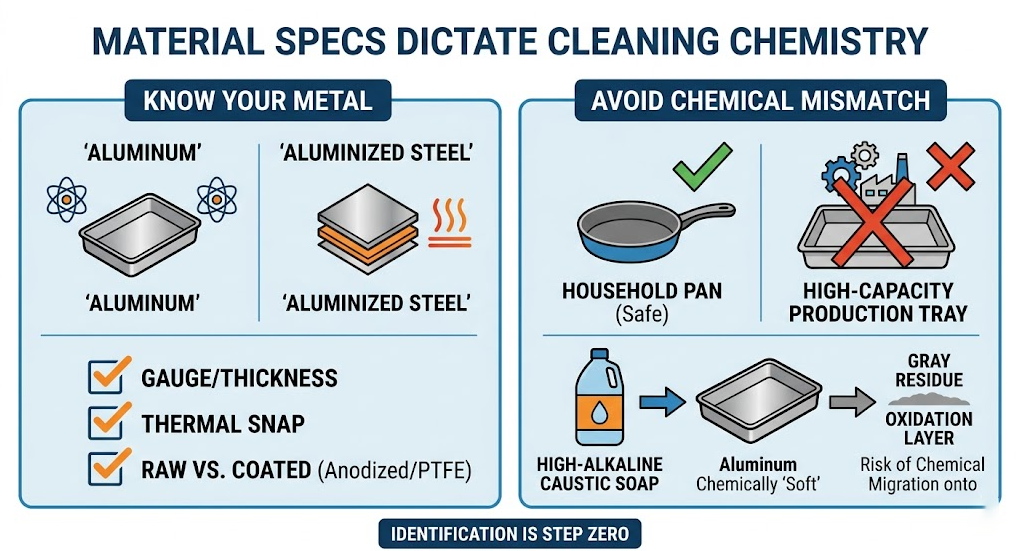
You can’t treat every tray like a standard household pan. Most high-capacity production lines utilize specific aluminum grades or aluminized steel for their thermal snap. If you’ve sourced your fleet from an experienced custom cookie tray manufacturer, you likely have a specific gauge that responds poorly to high-alkaline caustic soaps. Aluminum, while a thermal dream, is chemically “soft”; aggressive dishwashing chemicals can trigger oxidation, leaving a gray residue that eventually migrates onto your cookies. Identifying whether your trays are raw, anodized, or coated is the absolute “Step Zero” before your crew even turns on the tap.
The Science of the “Degreasing Soak”

For those nightmare-inducing trays that just finished a 12-hour production run, the “dwell time” is your best friend. Rather than letting staff waste hours with steel wool—which effectively ruins the surface tension of the metal—we recommend a specialized immersion. Facilities utilizing a specialized cookie tray supplier for global distributors often implement a pre-soak station utilizing enzyme-active surfactants. By letting the trays sit for thirty minutes, you’re allowing the chemistry to do the heavy lifting, shearing the lipid bonds of the burnt-on butter and sugar. This converts a grueling manual task into a simple, non-abrasive rinse-off process.
Eliminating Carbon Hotspots with Sodium Bicarbonate
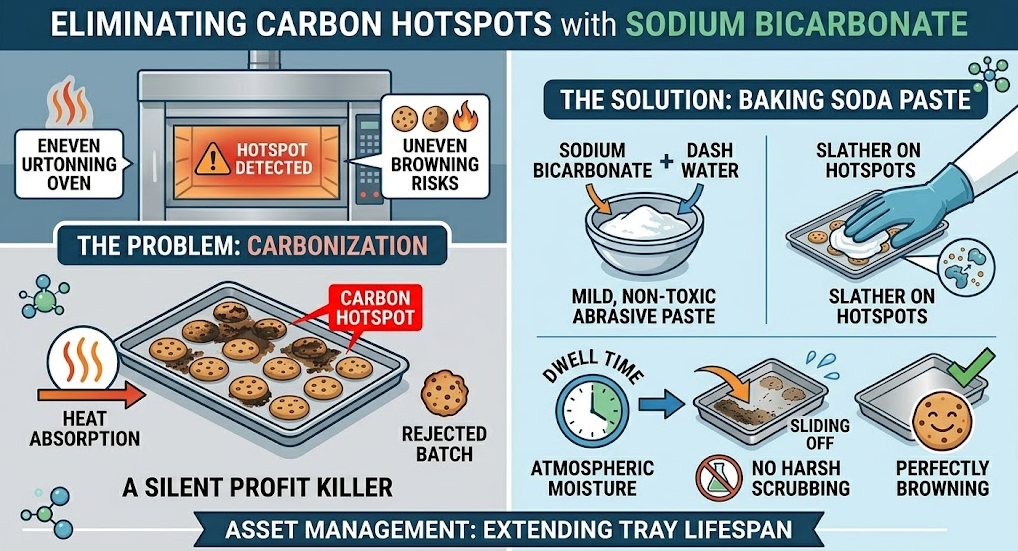
Carbonization is a silent profit killer. Those black, crusty patches on the corners of your trays aren’t just ugly; they absorb heat at a different rate, leading to uneven browning and rejected batches. To combat this, a thick paste of sodium bicarbonate (baking soda) and a dash of water creates a mild, non-toxic abrasive. It’s an old-school industry trick often suggested by a reputable cookie tray factory for professional bakeries that want to avoid harsh acids. Slather the paste on the “hotspots,” let the atmospheric moisture trigger the reaction for a few hours, and the carbon usually slides off with minimal mechanical force.
Managing Hard Water Scale with Acetic Acid Flushes
If your facility is located in an area with high mineral content in the water, your trays will eventually develop a “cloudy” appearance. This calcium buildup acts as a microscopic insulator, slowing down your bake times. A simple, cost-effective fix is a post-wash acetic acid (white vinegar) flush. This is a critical SOP for anyone managing a wholesale cookie tray collection for catering services, as mineral scale can harbor bacteria if left unchecked. A quick acidic rinse neutralizes the alkaline minerals, ensuring the metal remains “thermally transparent” and visually pristine for health inspections.
High-Temp Sanitization for Industrial Food Chains
In a high-volume B2B setting, there’s a fine line between “clean” and “sanitized.” If your kitchen is kitted out with gear from an OEM cookie tray manufacturer for food chains, your sanitation cycle needs to hit at least 180°F (82°C) in the final rinse. This “flash heat” serves two purposes: it kills residual pathogens and ensures the trays dry almost instantly upon exiting the rack. This prevents the metallic, “wet-dog” odor that sometimes happens when large stacks of trays are left to air-dry slowly in humid prep areas.
Preventing the “Stacking Rust” Trap
One of the biggest mistakes in bakery logistics is stacking trays while they are still slightly damp. This creates a capillary effect where water is trapped between the sheets, leading to “white rust” or pitting corrosion. For those who buy through a bulk cookie tray supplier for bakery franchises, we suggest a vertical “cooling and drying” rack system. By ensuring laminar airflow between every single sheet, you eliminate the micro-climates that allow mold or oxidation to take hold. A bone-dry tray is a tray that will last for a decade, not a season.
Tactical Use of Silicone and Parchment Barriers
Sometimes the best cleaning method is a defensive one. Integrating high-quality parchment or PTFE liners can reduce your sanitation labor by roughly 80%. When you are negotiating your next order with an ODM cookie tray factory for industrial kitchens, ask about custom-sized trays designed specifically to lock these liners in place. While liners represent an upfront consumable cost, the ROI is found in the reduced wear-and-tear on your trays and the significant drop in your water and chemical utility bills.
Auditing Your Sanitation Frequency
A professional operation shouldn’t wait for the health inspector to find a problem. Implementing a “Deep-Clean Audit” means pulling a percentage of your inventory every week for a full restorative treatment. This proactive stance ensures that the high-performance products from your high-volume cookie tray manufacturer actually deliver on their promised lifespan. By tracking the age and condition of your trays, you can predict replacement cycles and ensure that every single cookie that leaves your facility is baked on a surface that is both chemically clean and thermally efficient.