
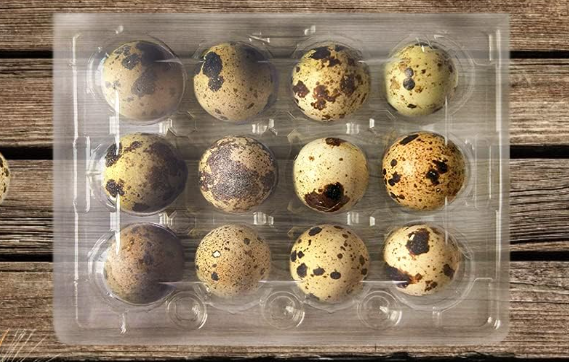
Choosing a quail egg tray looks simple until eggs start cracking, shifting, or rolling during storage and incubation. Most problems don’t come from poor egg quality. They come from subtle size mismatches that only show up after trays are stacked, moved, or rotated repeatedly. For breeders, hatcheries, and buyers sourcing trays at scale, understanding the real difference between standard and jumbo quail eggs is less about theory and more about avoiding quiet, cumulative losses.
This is also where tray selection stops being a hobby decision and starts looking like a procurement problem, especially for operations dealing with mixed flocks or bulk handling.

Standard vs. Jumbo Quail Eggs: Size Benchmarks That Actually Matter
In practice, quail eggs are rarely labeled “standard” or “jumbo” in a way that helps with tray selection. What matters are physical thresholds. Standard quail eggs usually fall between 25 and 27 millimeters in diameter, with lengths around 31 to 35 millimeters and weights close to 9 or 10 grams. These dimensions are what most mass-produced trays are built around.
Jumbo quail eggs push past those limits. Diameters above roughly 26.7 millimeters and weights moving toward 12 to 17 grams change how eggs sit inside a tray. The egg doesn’t just get bigger; the center of gravity shifts. That shift is what causes instability, especially during stacking or turning. From a sourcing perspective, this is where buyers start looking beyond generic trays and toward custom quail egg tray manufacturers for wholesale buyers who understand dimensional tolerance rather than nominal size.
Tray Cell Geometry: Why Hole Size Beats Capacity Numbers
Many trays advertise capacity first. Thirty-six eggs. Eighteen eggs. Those numbers are easy to compare, but they hide the more important detail: cell geometry. Standard quail trays typically use cell diameters in the 27 to 30 millimeter range. For standard eggs, that works well enough. The egg settles, weight is distributed evenly, and lateral movement is limited.
Jumbo eggs behave differently. In a standard cell, they are either squeezed at the sides or perched too high. Both scenarios increase breakage risk. This is why jumbo-specific trays often move toward 29 to 40 millimeter cell sizes. The goal isn’t extra space; it’s controlled support. Buyers sourcing at scale often discover that off-the-shelf trays fail here, which is why OEM quail egg tray suppliers are frequently approached once jumbo production becomes consistent rather than occasional.
Storage Trays vs. Cartons: Stackability Comes First
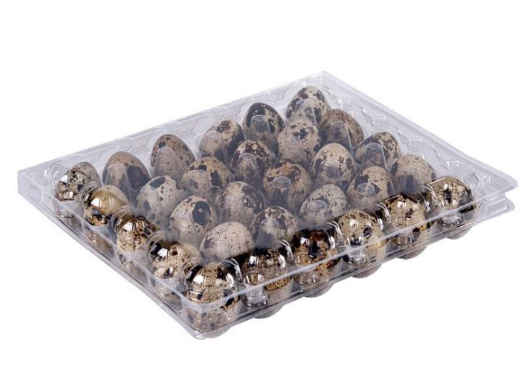
Storage is where small design flaws turn into measurable losses. Stackable plastic trays, particularly 36-egg formats around 7.9 by 7.9 inches, dominate commercial environments for a reason. They maximize vertical space, distribute load through support columns, and survive repeated handling. For both standard and jumbo eggs, stability under stacking pressure matters more than individual cell comfort.
Carton-style packaging has its place, especially in retail or short-distance transport. But cartons assume limited stacking and minimal movement. When jumbo eggs are placed into standard quail cartons, the mismatch becomes obvious quickly. This is why many operations sourcing in volume gravitate toward heavy-duty quail egg tray factories for bulk buyers, even if the upfront cost appears higher.
Incubator Tray Compatibility: Where Most Jumbo Eggs Fail
Incubation introduces another layer of constraint. Many incubator trays are designed around standard egg dimensions, allowing double-layer stacking or automated turning. Jumbo eggs disrupt that balance. They often fit only in the top layer or require single-layer setups to avoid contact during rotation.
Some hatcheries attempt workarounds by mixing egg sizes or modifying trays. These solutions can work temporarily, but they introduce new risks, particularly during turning cycles. This is where sourcing from an ODM quail egg tray manufacturer for wholesale buyers becomes less about customization and more about risk control. A tray that looks oversized may simply be compensating for mechanical movement inside an incubator.
Failure Scenarios: What Happens When Trays Are Mismatched
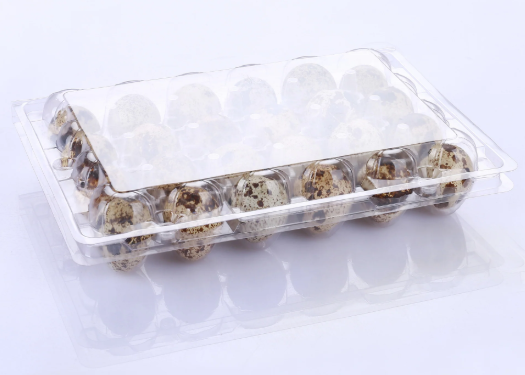
The most common failure with jumbo eggs in standard trays is not immediate cracking. It’s micro-damage. Pressure points weaken shells over time. During turning, eggs may lift and settle repeatedly, increasing stress. In storage, trays may not close or stack correctly, transferring load unevenly.
The opposite mismatch also has consequences. Using jumbo trays for standard eggs reduces density and stability. Eggs have more room to shift, which increases collision risk during transport. Over thousands of eggs, these small inefficiencies become real cost factors. This is often when buyers re-evaluate suppliers and start conversations with quail egg tray manufacturers for wholesale buyers who can align tray design with actual egg profiles.
Measuring and Sorting: Practical Size Classification in Real Flocks
Accurate measurement doesn’t require lab conditions. A basic caliper measuring diameter and length is usually enough. Eggs under 27 millimeters in diameter generally behave as standard. Once measurements creep above that, especially when weight increases, jumbo trays become safer.
Weight acts as a secondary indicator. Eggs consistently above 12 grams tend to behave differently in storage and incubation. For mixed flocks, full separation is rarely practical. Instead, many operations sort eggs into broad categories to reduce the worst mismatches. This pragmatic approach is often recommended by custom quail egg tray suppliers for wholesale buyers familiar with real production environments.
Tray Materials and Durability in Daily Use
Material choice influences how forgiving a tray is. Recycled PET plastic trays offer higher load tolerance and survive repeated stacking. They also maintain shape better in fluctuating temperatures. Paper trays cost less upfront but absorb moisture and lose rigidity quickly, especially under jumbo egg loads.
Exposure to heat and sunlight accelerates deformation in lower-grade plastics and paper alike. Over time, material fatigue leads to inconsistent support, which affects both standard and jumbo eggs. Buyers focused on long-term use often favor suppliers positioned as industrial quail egg tray factories for bulk buyers, where durability testing is part of the design process.
Capacity Planning: 18-Egg vs. 36-Egg Trays
Tray capacity decisions are usually driven by scale. Small breeders may prefer 18-egg trays for portability and easier handling. Larger operations gravitate toward 36-egg trays because they optimize space and reduce handling cycles. Structural design matters here. Support columns and stacking interfaces determine how well trays perform under load.
For jumbo eggs, larger trays are often more forgiving simply because they distribute weight across more structural elements. This is another reason why high-volume buyers tend to standardize suppliers early, often working directly with quail egg tray manufacturers for wholesale buyers rather than switching between retail options.
Practical Selection and Budget Strategies for Mixed Flocks
Mixed flocks introduce unavoidable compromise. No single tray fits every egg perfectly. Many operations adopt a dual approach: durable, stackable trays for storage and transport, paired with more specialized trays for incubation. Over time, this reduces breakage and improves hatch consistency.
Budget decisions should account for replacement cycles, not just unit price. Paper trays replaced every few weeks often cost more annually than durable plastic trays used for years. This long view is typically reflected in recommendations from custom quail egg tray manufacturers for wholesale buyers, who see failure patterns across many clients rather than isolated setups.
Final Thoughts
Choosing the right quail egg tray is less about finding a universal standard and more about aligning dimensions, material, and use case. Standard and jumbo eggs behave differently under stress, and trays amplify or mitigate those differences. For operations handling eggs in volume, tray selection becomes a quiet but critical part of efficiency.
When decisions are made with real dimensions, realistic handling conditions, and long-term cost in mind, tray problems tend to disappear from daily operations. That, more than any specification sheet, is usually the real goal.