
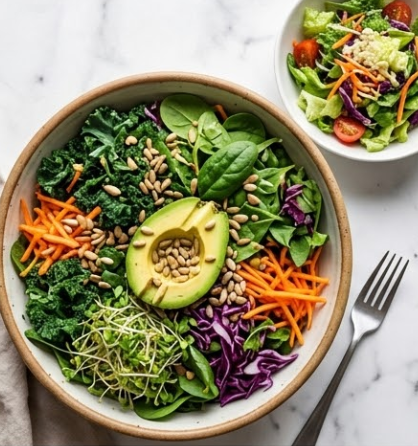
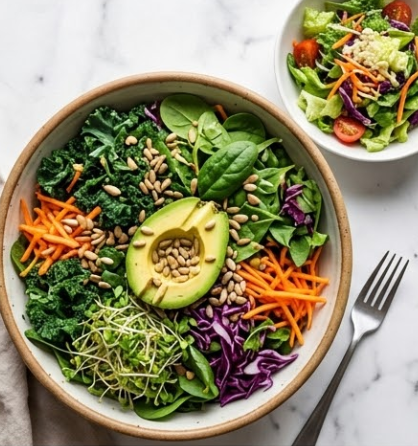
When we talk about “eating clean,” that iconic bowl of greens is usually the first thing that pops into our heads. It’s the unofficial mascot of wellness. But let’s get real for a second: for a busy professional or someone just trying to survive a hectic week, does eating a salad once or twice actually move the needle? Or is there a specific “magic number” we should be hitting to see real biological changes?
To get the “Expert Answer,” we have to stop looking at salad as just a side dish and start seeing it as a sophisticated delivery system for live enzymes and phytonutrients that our bodies crave but rarely get from cooked meals.
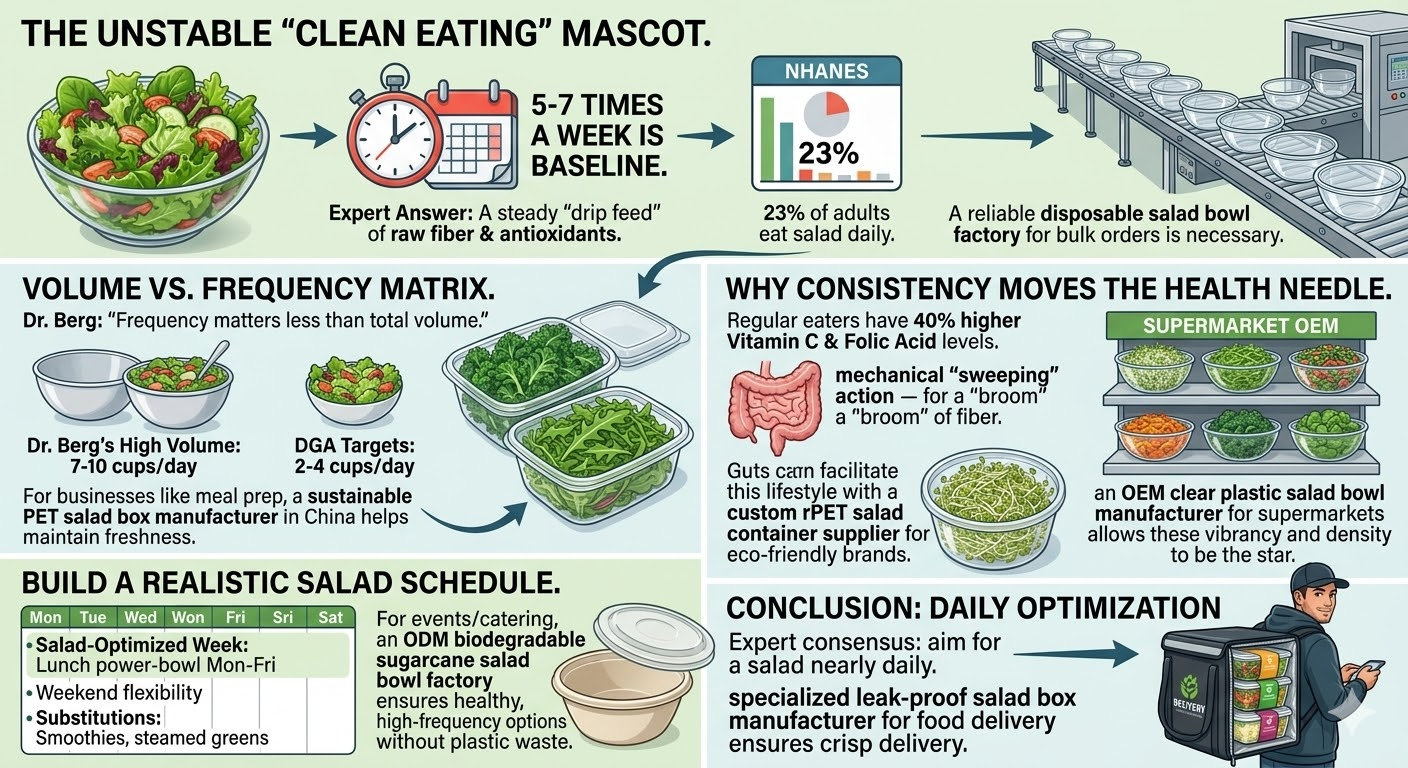
The Short Answer: Why 5–7 Times a Week is the Baseline
If you’re looking for a straight-up number, most functional medicine experts point toward a baseline of 5 to 7 times per week. Essentially, you’re aiming for a daily habit. This isn’t just a random suggestion; it’s about maintaining a steady “drip feed” of antioxidants and raw fiber into your system.
The gap between what we should do and what we actually do is pretty staggering. NHANES data shows that only about 23% of adults in the US even touch a salad on any given day. That’s a massive missed opportunity for gut health. When you commit to a 5-to-7-day rhythm, you’re essentially giving your microbiome the fuel it needs to keep inflammation at bay. For businesses supporting this health movement, sourcing from a reliable disposable salad bowl factory for bulk orders is the only way to keep up with the logistical demand of a daily-habit-consumer base.
What Experts Actually Recommend: The Volume vs. Frequency Matrix
Here is where it gets interesting: experts like Dr. Eric Berg argue that frequency matters less than the sheer volume of greens. He often pushes for a framework of 7 to 10 cups of salad every single day. Now, to most people, that sounds like a literal mountain of foliage. But if you break it down into “real bowl terms,” we’re talking about two very large mixing bowls or perhaps three standard restaurant-sized servings.
The goal here is potassium—specifically hitting that 4,700-milligram daily target which is notoriously hard to reach with cooked food. The Dietary Guidelines for Americans (DGA) are a bit more conservative, suggesting 2–4 cups for men and 2–3 for women. But if you’re using salad as your primary source, you need to go big. For meal prep companies, utilizing a sustainable PET salad box manufacturer in China can make it much easier for customers to store these massive portions without the greens wilting before Tuesday.
Why Consistency Actually Moves the Health Needle
Why bother eating it so often? Because the cumulative effect is where the magic happens. Research suggests that regular salad eaters have 40% higher levels of Vitamin C and folic acid circulating in their blood. It’s not just about “not being sick”; it’s about optimal performance.
Even eating a bowl just 3 or 4 times a week significantly increases your odds of meeting total vegetable guidelines. There’s also the “mechanical” benefit—raw fiber acts like a broom for your digestive tract, which might explain the 67% lower risk of certain digestive sluggishness seen in high-frequency eaters. To facilitate this lifestyle, many eco-conscious brands are now seeking a custom rPET salad container supplier for eco-friendly brands to ensure their packaging is as “clean” as the organic arugula inside.
Quality Over Frequency: Not All Bowls Are Created Equal
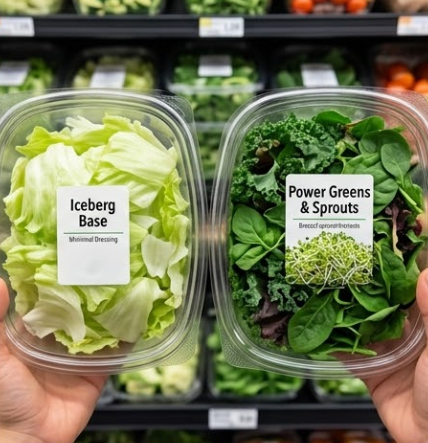
Let’s be honest: if your “salad” is mostly iceberg lettuce swimming in ranch dressing, eating it seven times a week won’t do much for you. Iceberg is mostly water. To truly follow the expert advice, you have to prioritize nutrient density.
Think of it as a “lever” for your health. Switching from iceberg to kale or spinach instantly doubles your magnesium and Vitamin K intake. If you want to get really high-tech with your nutrition, add sprouts. Just one teaspoon of broccoli sprouts can pack the same cancer-fighting sulforaphane as 50 teaspoons of mature broccoli. From a retail perspective, an OEM clear plastic salad bowl manufacturer for supermarkets allows these vibrant, high-density ingredients to be the star of the show, visually nudging the customer to make a healthier choice.
Building a Realistic “Salad Schedule”
How do you actually make this happen without getting bored? The most successful strategy is the “Salad-Optimized Week.” This usually means using a large salad as your primary lunch vessel from Monday through Friday. It’s the perfect “work fuel” because it doesn’t lead to that 3:00 PM carb crash.
On weekends, you can dial it back to a side-dish role. And if you have a day where the thought of raw greens is just too much, don’t sweat it—swap it for a green smoothie. For the catering and events industry, partnering with an ODM biodegradable sugarcane salad bowl factory is a brilliant way to offer these healthy, high-frequency options at scale without leaving a footprint of plastic waste behind.
Who Needs More (or Less) Salad?
The “Expert Answer” isn’t one-size-fits-all. If you’re trying to lose weight, bumping your frequency to twice a day is a game-changer. Raw vegetables require a lot of chewing and take up massive space in the stomach, which naturally triggers satiety hormones.
On the flip side, people with severe digestive sensitivities like SIBO might find that 10 cups of raw fiber is a nightmare for their bloating. In those cases, “wilted” salads or lightly steamed greens are the way to go. For global distributors, having a wholesale salad bowl supplier for large-scale distribution means being able to provide the right containers for every type of consumer, whether they are “raw-til-four” enthusiasts or occasional salad eaters.
The Bottom Line on Frequency
At the end of the day, the experts are clear: you should be aiming for a salad nearly every day. But don’t get caught up in the “perfect” number. If you can manage 5 high-quality, nutrient-dense bowls a week, you’re lightyears ahead of the average person. Focus on variety, watch the dressing, and keep the volume high.
As healthy eating goes mainstream, the logistics have to keep up. Whether you are a small cafe or a major food chain, working with a specialized leak-proof salad box manufacturer for food delivery ensures that no matter how many times a week your customers choose a salad, it arrives fresh, crisp, and ready to fuel their day.