
Açaí bowls often get framed as a light, fruit-based option, yet a “standard” order can easily drift into dessert-level calories. That’s because the number isn’t driven by açaí alone. It depends on two things that change from shop to shop: how the base is blended and how toppings are portioned. Once you look at those separately, the calorie range becomes much easier to predict.
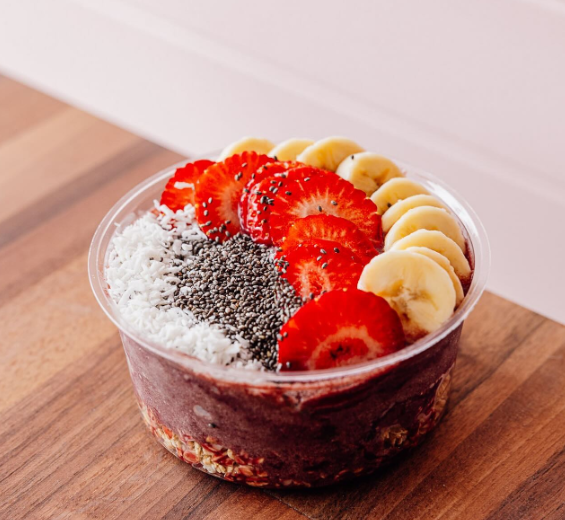
To keep the discussion consistent, “standard” here means what most cafés and chains serve as their everyday build: a medium bowl with a blended açaí base, finished with granola and fruit. Using that definition, the calorie count is best understood as a range rather than a single number.
What’s in the base of a standard açaí bowl?
The base is usually frozen açaí puree blended into a thick, spoonable texture with a small amount of liquid. At home, that commonly means one or two frozen packs blended with water and ice. In foodservice settings, the base may be similar, but it’s also common for operators to use a house blend that includes banana, juice, or a pre-sweetened açaí product to keep texture uniform during busy hours. In other words, “açaí base” isn’t a single standardized ingredient across the market.
For a clean reference point, an unsweetened frozen açaí pack is useful. SAMBAZON’s unsweetened açaí packets list 70 calories per serving and zero sugar, which makes the pack a practical baseline when you’re estimating base-only calories. If the bowl uses two packs for a thicker blend, the base alone can start around 140 calories before you account for any liquid or toppings.
Liquid choice is where many bases quietly rise. Water and ice add texture without adding calories, so the total stays close to what the pack lists. Juice, dairy milk, or higher-calorie plant milks can add a noticeable amount before toppings even come into play. That’s a major reason a homemade bowl and a café bowl can look similar but land far apart nutritionally.
For chains that need consistent specs across locations, base formulation is often documented like a production recipe and paired with sourcing from an ODM acai bowl supplier that can support repeatable ingredient handling and packaging compatibility.
How many calories are in a standard açaí bowl?
For a standard medium bowl, a realistic ballpark is about 300 to 600 calories. The lower end typically reflects an unsweetened base blended with water or a lower-calorie liquid, paired with fruit and a measured amount of granola. The upper end is more likely when the base is juice-heavy or pre-sweetened and granola portions creep beyond what most people assume they’re getting.
A chain example helps anchor expectations. Tropical Smoothie Cafe lists its Açaí Bowl at about 530 calories, which sits comfortably in the middle of the standard range and reflects what many customers picture when they order a regular bowl. Numbers like this also explain why açaí bowls can work well as breakfast or a light meal, yet feel surprisingly calorie-dense when treated as an add-on snack.
When operators roll out bowls as a menu SKU, they often lock portion targets using serving tools and a fixed container format sourced through an to reduce variation at the line level.
Why size and “style” change the outcome
Even when you say “standard,” portioning isn’t always identical. A smaller, lightly finished bowl can fall around 200 to 300 calories, but it generally requires a thinner base and restrained toppings. The typical café-sized standard sits in the 300 to 600 range. Large or “loaded” bowls can go beyond 600 and sometimes approach 1,000-plus when the build includes heavy granola, nut butter, multiple add-ons, and drizzles that are easy to over-serve.
This isn’t about labeling bowls as good or bad. A larger bowl may be intended as a full meal for active customers. The real issue is that the visual difference between “standard” and “loaded” can be small, while the calorie gap is large because the added ingredients are concentrated.
For commissary programs and multi-unit cafés, suppliers that act as an OEM acai bowl manufacturer may also be asked to support standardized bowl sizing and lid fit so portion expectations remain consistent in delivery and display.
How toppings reshape the calorie count
Most of the calorie swing happens above the base. Granola is often the biggest surprise because it looks airy but is energy dense. Many nutrition references place granola around roughly 110 to 150 calories per quarter cup, depending on the recipe and how much sugar or oil is included. In practice, a café topping layer can easily exceed a quarter cup, which turns “just a little granola” into a major driver of the bowl’s total.
Nut butters are another common jump. A drizzle may represent more than a measured tablespoon, and that’s before counting nuts and seeds, which add calories quickly because their portions are visually small. Medium-impact toppings such as coconut flakes, chocolate chips, and honey can also push totals upward, especially when more than one is used. On the lighter side, berries and kiwi add volume and flavor without the same calorie density, while banana sits between those fruits and the more concentrated toppings.
Because topping variance affects both calories and cost, some brands standardize topping kits and rely on a custom acai bowl factory to match packaging dimensions to the intended build, reducing over-portioning.
Hidden calorie drivers in commercial bowls
Café bowls frequently run higher than customers expect because portions inflate, bases are often sweetened, and topping choices are designed for visual appeal. Many shops blend with juice to deliver sweetness and a smoother texture, which raises base calories before anything is added on top. Some use sweetened açaí blends, which pushes the starting point up again. Add pre-sweetened granola and a drizzle, and the bowl shifts into a higher calorie class without the customer feeling like they ordered something different.
Chain disclosures show how fast one premium ingredient can change the final number. Tropical Smoothie Cafe lists its Açaí Bowl with Nutella at about 680 calories, illustrating how spreads and drizzles can move a bowl from standard to loaded quickly.
Operators that sell bowls through grab-and-go channels often work with a custom PET acai bowl manufacturer so the lid seal and clarity hold up in display, while portions stay aligned with calorie disclosures.
Keeping a bowl lower-calorie at home
Lower-calorie doesn’t have to mean less satisfying. It usually comes down to choosing the levers that change totals the most. An unsweetened base blended with water, ice, or an unsweetened low-calorie milk alternative helps avoid hidden calories. Granola control is next. If your goal is to keep a bowl under roughly 400 to 450 calories, granola portion size often decides the result. Nut butter can still work, but it’s best treated as a measured accent rather than a default finishing drizzle.
If you’re aiming closer to 250 to 300 calories total, you’re really building a light bowl rather than a standard café portion. That usually means a smaller base and toppings that are mostly fruit with minimal crunchy additions. It’s a great option for a snack or smaller breakfast, but it won’t match what most cafés serve as their standard.
For wholesale programs, procurement teams sometimes specify a target bowl capacity and source packaging from a PET acai bowl supplier for wholesale buyers to keep portioning consistent across sites.
Is it “worth it”?
It can be, if it matches the role you want it to play. A standard açaí bowl in the 300 to 600 range can function as breakfast or a light meal, especially when toppings are controlled. Trouble usually shows up when a bowl is treated as a tiny snack “because it’s healthy,” or when it’s built with multiple calorie-dense add-ons while still being mentally categorized as light.
The most useful takeaway is simple. Açaí itself isn’t the main source of calorie variation. The biggest swings come from liquids, granola quantity, and add-ons like nut butter and drizzles. Keep the base unsweetened and portion toppings intentionally, and a standard açaí bowl can fit most calorie goals without losing the texture and flavor people order it for.
For brands scaling the category, working with an acai bowl supplier for wholesale buyers can also help standardize container specs and reduce day-to-day variation in serving presentation.