
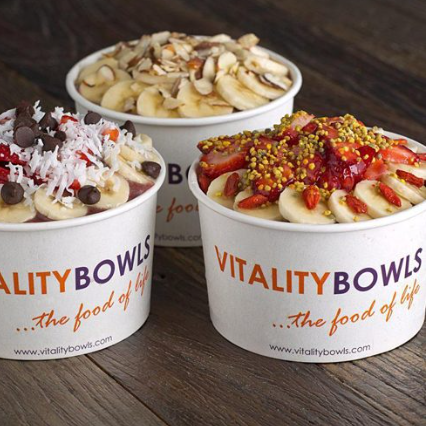
Why “Acai Bowl Factories” Mean Something Different in Germany
Search data around açaí bowls often creates a misleading impression: that Germany hosts multiple factories dedicated exclusively to açaí bowl packaging. In reality, Germany’s strength lies not in niche, single-product factories, but in a highly developed paper and fiber foodservice manufacturing ecosystem. Within this system, paper and molded fiber bowls originally designed for cold desserts, smoothie bowls, and prepared foods have become the de facto packaging solution for açaí bowl businesses.
For B2B buyers, this distinction is critical. Procurement decisions are rarely made around product names alone. What matters is whether a manufacturer can reliably supply bowls that perform under high moisture conditions, meet German and EU food-contact requirements, and scale with commercial growth. In this context, “professional paper açaí bowl factories” refers to German-based paper acai bowl manufacturers for wholesale buyers whose paper or fiber bowl systems are already proven in açaí bowl applications across foodservice channels.
This article adopts that practical definition. Rather than inflating the market with non-existent specialists, it maps seven credible German manufacturing systems that foodservice buyers actively source from when building or expanding açaí bowl programs.
What Defines a Professional Paper Acai Bowl Factory for Foodservice Buyers
In Germany, a factory becomes relevant to açaí bowl packaging when its products align with real operational demands. The first requirement is material suitability. Açaí bowls combine frozen bases, fresh fruit, and liquid toppings, which creates condensation and prolonged surface contact with moisture. Paper or fiber structures must maintain rigidity and surface integrity throughout service.
The second requirement is compliance. German buyers operate in one of Europe’s most regulated packaging environments. Manufacturers must demonstrate alignment with EU food-contact rules and relevant compostability or fiber certifications where applicable. This compliance layer is not optional; it directly affects brand risk and market access.
Commercial readiness forms the third pillar. Foodservice businesses require predictable lead times, stable specifications, and wholesale supply continuity. Finally, branding support plays an increasing role as açaí bowls evolve from menu items into lifestyle products. The ability to support printing, custom paper acai bowl OEM solutions, or standardized private-label formats often separates strategic suppliers from transactional ones.
Together, these criteria define what “professional” means in the German açaí bowl packaging context.
1. Huhtamaki Germany GmbH – Industrial-Scale Paper Bowl Manufacturing
Huhtamaki Germany represents the industrial end of the paper bowl spectrum. With local production and a long-standing role in European foodservice packaging, the company’s relevance to açaí bowls lies in structural consistency rather than niche marketing. Its paper-based bowl formats are engineered for moisture resistance and dimensional stability, two factors that directly affect açaí bowl presentation during service and takeaway.
For buyers operating multi-location concepts, Huhtamaki’s strength is predictability. Large-scale manufacturers excel at maintaining specification consistency across batches, which simplifies quality control and reduces operational variability. This is particularly important when packaging becomes part of standardized training and operating manuals across stores. In such cases, packaging behaves less like a commodity and more like a system component within a broader paper acai bowl factory for B2B buyers sourcing strategy.
2. PAPSTAR GmbH – Accessible Foodservice Packaging Systems

PAPSTAR occupies a different but equally important position in the German market. Known for broad foodservice coverage, PAPSTAR supplies paper and fiber bowls that are frequently used for cold desserts and smoothie-style offerings. For açaí bowl businesses, this translates into practical accessibility.
Many early-stage or regional operators prioritize ease of sourcing and manageable order quantities. PAPSTAR’s strength lies in balancing scale with flexibility, allowing buyers to enter the market without committing to industrial-level volumes from day one. As businesses grow, continuity of supply becomes just as important as initial access, and PAPSTAR’s domestic infrastructure supports that transition.
From a procurement perspective, this makes PAPSTAR attractive for operators seeking paper acai bowl suppliers for wholesale foodservice buyers that can scale gradually while maintaining product familiarity.
3. Green Box – Sustainability-Driven Acai Bowl Packaging
Green Box has positioned itself firmly within Germany’s sustainability-oriented foodservice segment. Its bowl offerings, primarily based on sugarcane bagasse and paper fiber, are widely adopted for cold food applications where environmental positioning matters as much as performance.
For açaí bowl brands that build identity around health, natural ingredients, and environmental responsibility, packaging becomes part of the brand narrative. Green Box’s relevance lies in aligning material choices with consumer-facing sustainability expectations while still meeting operational needs. The bowls are designed to handle moisture without rapid degradation, which is essential for frozen and semi-frozen foods.
From a B2B perspective, Green Box is often evaluated not only on product features but on documentation quality and traceability, elements that increasingly influence custom paper acai bowl manufacturer for foodservice buyers selection decisions in Germany.
4. Duni Group Germany – Premium Paper Bowl Presentation

Duni Group’s German operations bring a design-forward dimension to paper bowl manufacturing. While performance remains essential, Duni’s bowls often emphasize visual consistency and surface quality, making them suitable for premium açaí bowl concepts where presentation directly affects perceived value.
In competitive urban markets, açaí bowls are no longer novelty items. Brands differentiate through aesthetics as much as ingredients. Packaging that supports clean printing, consistent color reproduction, and refined shapes becomes a marketing asset. Duni’s experience with branded foodservice environments positions it well for businesses that treat packaging as part of the customer experience rather than a purely functional container.
For buyers focused on OEM paper acai bowl suppliers for wholesale buyers, this combination of performance and visual control can justify a higher unit cost.
5. Sabert Deutschland – Functional Performance Under Moisture Stress
Sabert Deutschland is best known for structural performance. Its foodservice containers are designed to resist leakage and deformation, attributes that directly address common açaí bowl challenges. When bowls are filled with frozen bases and layered toppings, structural weakness quickly becomes visible to customers.
In delivery and takeaway scenarios, where bowls may be handled multiple times before consumption, rigidity and seal compatibility matter. Sabert’s approach prioritizes functional reliability, making it a logical choice for operators who experience frequent issues with bowl softening or leakage.
From a commercial standpoint, Sabert appeals to buyers who frame packaging decisions around cost efficiency over the full lifecycle, not just unit price. Reduced product loss and fewer customer complaints often offset marginally higher packaging costs, especially when working with a paper acai bowl factory for wholesale buyers focused on performance.
6. Innovative Packaging (IIC AG) – Custom-Oriented Development

Innovative Packaging operates at the intersection of development and manufacturing coordination. Rather than focusing solely on standard SKUs, it supports tailored solutions for foodservice businesses with specific requirements. For açaí bowl brands experimenting with portion differentiation, lid systems, or material innovations, this flexibility can be valuable.
Smaller or fast-growing brands often struggle to fit neatly into standardized packaging categories. Innovative Packaging addresses that gap by enabling pilot runs and controlled development projects, helping buyers validate packaging concepts before committing to large volumes.
In sourcing terms, this model supports ODM paper acai bowl manufacturers for B2B buyers without immediately triggering industrial-scale commitments, which can be critical during early brand expansion.
7. Faerch Germany – Scalable Fiber-Based Bowl Systems
Faerch’s German operations contribute industrial-scale fiber-based manufacturing capabilities to the market. Its relevance to açaí bowls lies in scalability. As brands move from regional to national distribution, packaging systems must support higher volumes without specification drift.
Faerch’s fiber-based and paper-laminated bowls are designed for consistent output across large runs, making them suitable for centralized procurement models. For buyers managing multi-region sourcing, this consistency simplifies logistics planning and supplier coordination, particularly when working with a paper acai bowl supplier for wholesale buyers.
Why Germany Remains a Strategic Sourcing Hub for Acai Bowl Packaging
Despite the absence of niche açaí bowl factories, Germany remains one of Europe’s most reliable sourcing bases for paper bowl packaging. The combination of regulatory rigor, manufacturing maturity, and logistics infrastructure creates a stable environment for foodservice buyers.
German manufacturers tend to emphasize documentation, repeatability, and controlled production processes. For international buyers or brands planning EU-wide expansion, sourcing from Germany can reduce compliance uncertainty while supporting long-term supply stability through experienced paper acai bowl manufacturers for B2B buyers.
From “Seven Factories” to Procurement Reality
The idea of seven dedicated açaí bowl factories in Germany may be misleading, but the underlying opportunity is real. Germany offers seven distinct, credible manufacturing systems that already support açaí bowl applications across foodservice markets. For buyers, understanding this ecosystem is more valuable than chasing narrowly defined labels.
By evaluating manufacturers through performance, compliance, and commercial readiness, foodservice businesses can build packaging strategies that scale with confidence. In that sense, the German paper bowl market is not a limitation for açaí bowl brands—it is a foundation built by experienced custom paper acai bowl manufacturers for wholesale buyers.