
Let’s be real: Bolognese sauce—or ragù alla bolognese—is the heavyweight champion of Italian comfort food. It’s thick, it’s meaty, and it’s a labor of love that involves hours of slow-simmering beef, pork, and aromatics. But if you’re running a professional B2B food operation, “delicious” isn’t the only metric that matters. You need the data. Whether you’re supplying meal-prep companies or stocking a national restaurant chain, the calorie count of your sauce is a critical operational variable. It affects your labeling, your cost-per-portion, and ultimately, your brand’s reputation for transparency.
Here’s the breakdown. A standard 8-ounce cup of traditional Bolognese usually clocks in between 300 and 450 calories. Why the massive gap? It’s almost entirely down to the meat’s fat content. Use a leaner beef, and the numbers drop. Add pancetta or fatty pork shoulder, and you’re looking at a serious energy spike. For commercial players, “guessing” isn’t an option. This is why many leading brands now partner with a custom PP sauce cup manufacturer. By using precision-molded, standardized containers, you take the guesswork out of the kitchen. A “cup” becomes a fixed unit, ensuring your nutritional claims stay 100% honest and your food costs stay under control.
The Macro Reality: What’s Actually in the Cup?
Strip away the herbs and the wine, and the caloric engine of any Bolognese is the protein and fat. You’re typically looking at 15 to 25 grams of fat and 20 to 30 grams of protein in every cup. Since fat brings 9 calories per gram to the party, it’s the biggest driver of the total count. For wholesalers moving sauce at scale, managing this density is a massive logistical headache. Many are now pivoting to a reusable plastic sauce cup supplier to get their hands on calibrated serving tools. These aren’t just containers; they are “portion-control insurance.” They stop the “portion creep” that happens when a tired kitchen worker scoops an extra ounce, which might not sound like much but can ruin a client’s dietary targets and your profit margins.
Carbs? They’re usually the underdog here, sitting at about 10 to 15 grams per cup, mostly from the tomato paste and the “soffritto” base. But the market is changing fast. We’re seeing a huge demand for “clean label” and keto-friendly products. To sell into this premium space, you need packaging that matches the “healthy” narrative. That’s why we see smart buyers moving toward a sustainable sugarcane bagasse sauce cup factory. It’s a strategic branding play. The eco-friendly material sends a message that the product inside is high-quality and forward-thinking, even before the customer takes their first bite.
Hidden Calories and the Industrial Scaling Problem
In a home kitchen, a knob of butter or a splash of whole milk is just “chef’s intuition.” In an industrial vat, it’s a variable that can mess up the nutritional labeling for an entire production run. Authentic Bolognese often uses milk to soften the meat, but that milk brings extra saturated fats and sugars. If you’re a B2B producer, you have to lock these variables down tight. Working with an OEM plastic sauce cup producer is a game-changer because it allows you to standardize your output across multiple regions. Whether your product is being served in a stadium or a hospital, the volume—and therefore the calories—remains identical.
Then you’ve got the technical side: heat. Sauce often goes into the container while it’s still steaming hot. If your packaging is cheap, it’ll leach chemicals or warp, which is a disaster for food safety. Sourcing from a high-heat resistant PP sauce cup wholesaler is a non-negotiable move. You need a vessel that can handle the thermal stress without compromising the chemical integrity of the sauce. A calorie-controlled meal is only as good as the container it’s delivered in.
Commercial Realities: Artisan Taste, Industrial Precision
There’s often a huge gap between a “chef-made” sauce and a “shelf-stable” commercial version. To keep the flavor consistent over months of storage, some producers add thickeners like cornstarch or extra sugar to balance out the acidity of mass-processed tomatoes. This can easily add 50 or 60 “hidden” calories per serving. To fight the “over-processed” stigma, top-tier B2B suppliers are using high-pressure processing (HPP) and minimal additives. These premium sauces need to be packaged in something that reflects that quality—like the containers from a BPA-free recycled sauce cup manufacturer. It’s about signaling. When a procurement officer sees high-grade, recycled materials, they instinctively trust that the sauce inside isn’t loaded with cheap fillers.
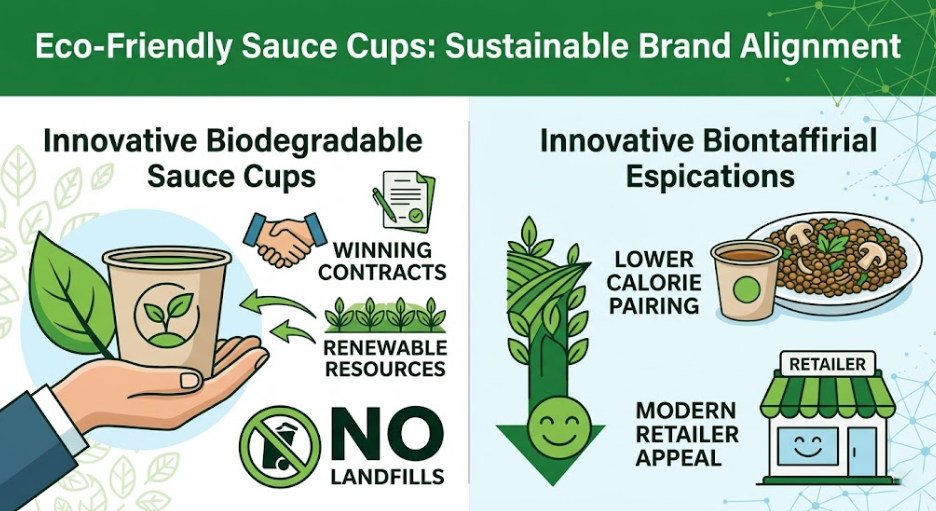
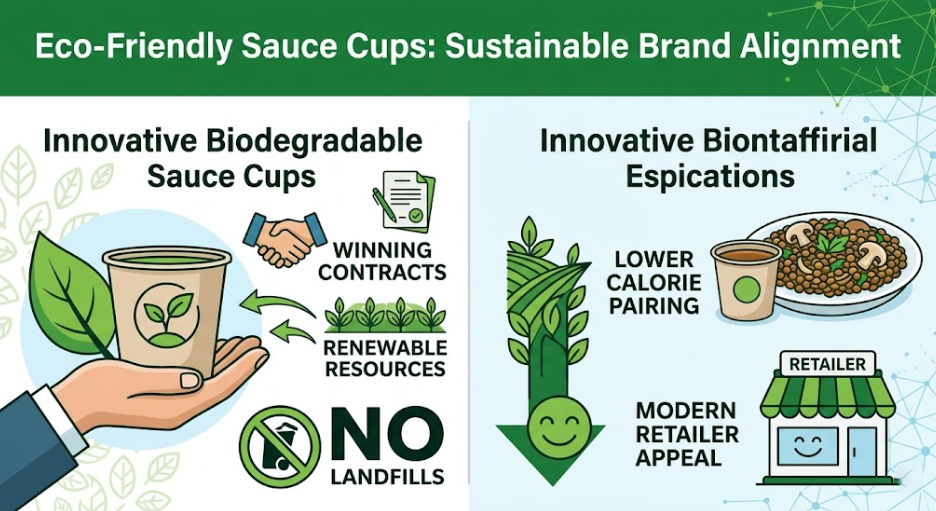
The “green” shift isn’t just PR; it’s a core requirement for modern B2B contracts. If you’re launching a plant-based Bolognese—maybe using lentils or mushroom crumbles—the packaging has to walk the talk. Partnering with an innovative biodegradable sauce cup supplier is how you win those contracts. You’re selling a cohesive experience: a lower-calorie, plant-based sauce in a container that won’t be sitting in a landfill for a thousand years. That’s a winning pitch for modern retailers.
Portion Control: The Bottom Line
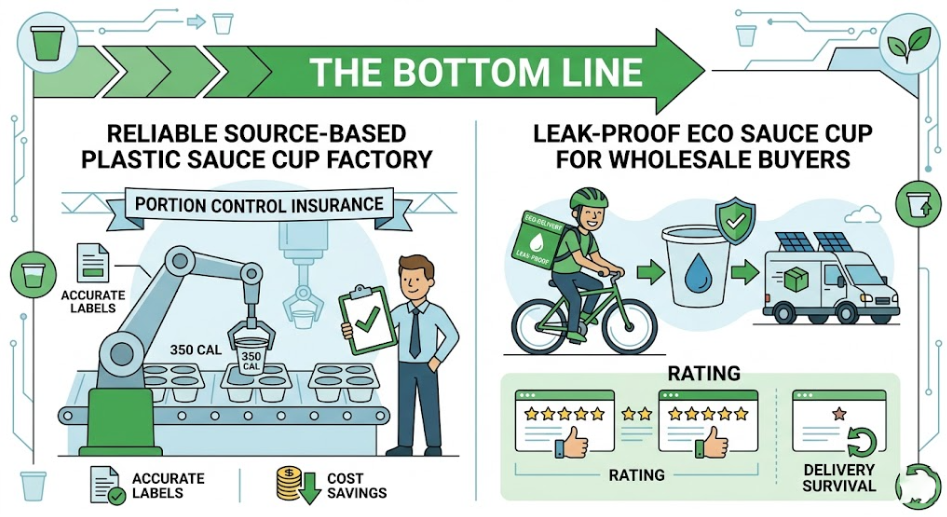
In the food service business, “eyeballing it” is how you lose money. If a server gives away an extra two tablespoons of Bolognese per plate, that’s thousands of dollars—and millions of unintended calories—over a year of operation. The solution has to be mechanical. By sourcing from a reliable source-based plastic sauce cup factory, businesses give their clients a fail-safe way to manage their output. Pre-portioned cups take the decision-making away from the kitchen staff. The diner gets exactly 350 calories, and the operator keeps their margins.
And don’t overlook the “delivery factor.” With the explosion of third-party apps, your sauce cup has to be built like a tank. It needs to survive a 20-minute bumpy ride on a scooter without leaking oil. A leak-proof eco sauce cup for wholesale buyers is the final piece of the puzzle. It ensures the intended serving size actually reaches the customer’s table. In a world of 1-star reviews, that’s the difference between a successful delivery and a refund.
Looking Ahead: The Future of Sauce and Sustainability
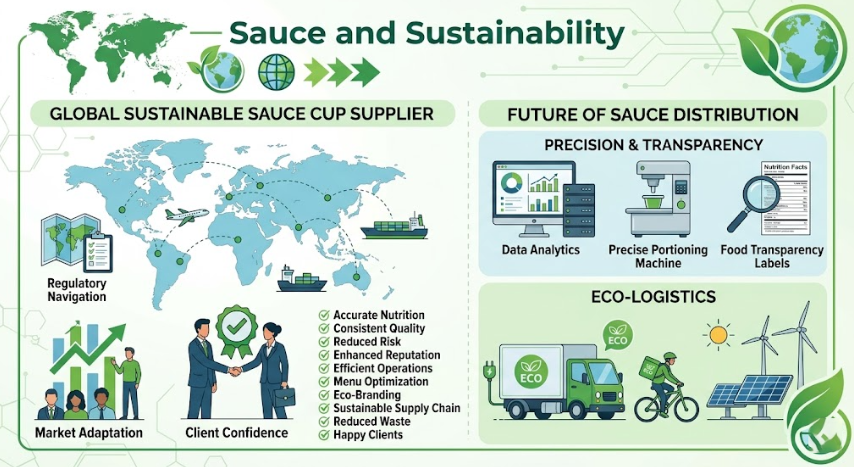
The food industry is getting smarter. We are moving toward a future where every gram is tracked and every container is accounted for. B2B stakeholders who want to thrive need to invest in both nutritional accuracy and environmental responsibility. Aligning with a global sustainable sauce cup supplier isn’t just about “doing good”; it’s about navigating the new landscape of global food regulations and consumer expectations.
Bottom line: A cup of Bolognese averages 350 calories, but that number is only as good as the packaging that carries it. By focusing on precision-molded, eco-friendly containers and honest ingredient sourcing, the B2B sector can keep serving up this Italian classic to a world that’s hungry for both flavor and transparency. Consistency isn’t just a goal; it’s a business strategy.