
Let’s be honest for a second. We’ve all seen it happen—someone pops a tiny plastic container into the microwave for a quick 20-second warm-up, and suddenly the kitchen smells like burnt chemicals. Or worse, the cup warped into a weird, jagged shape. For a regular person at home, it’s a ruined snack. But for a business owner? That’s a potential lawsuit or a lost customer. When we dive into the world of microwave-safe plastic sauce cups, we aren’t just talking about “containers.” We are talking about the survival of your brand’s reputation under extreme heat. Choosing a high-heat resistant PP sauce cup manufacturer is the only real way to make sure your packaging doesn’t turn into a liability the moment it hits the microwave.
The Science: Why “Microwave-Safe” Is a Specific Chemistry
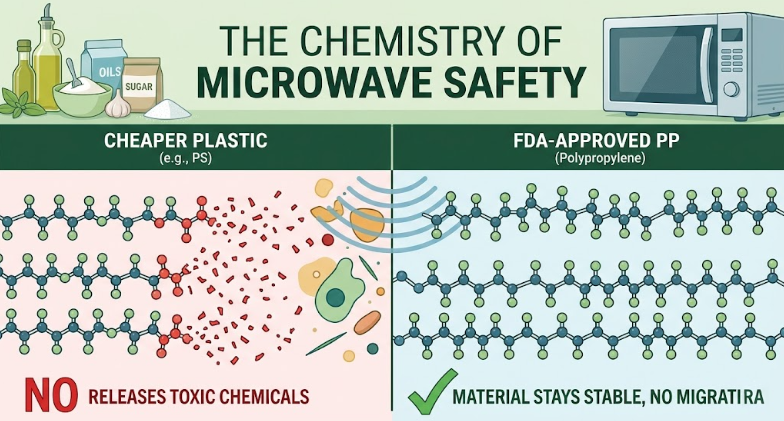
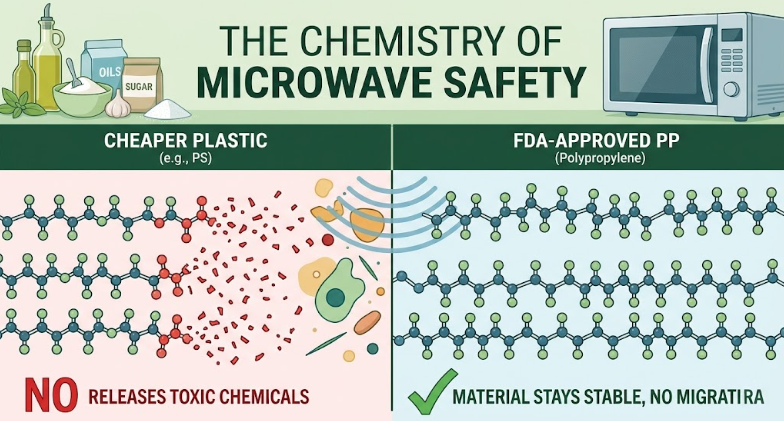
Here is the thing most people miss: “Microwave-safe” is a legal and chemical definition, not just a marketing buzzword. Plastics are basically long chains of molecules, and heat makes those chains vibrate. If the chains are too weak, they break, and that’s when chemicals start “migrating” into the food. You don’t want that. No one does. To avoid this, you really need to be working with a reliable polypropylene sauce cup supplier who doesn’t cut corners on resin quality. They ensure that the material stays stable even when the sauce inside—which might be full of oils or sugars—reaches temperatures well above boiling.
Polypropylene: The Only Real Choice for Heat
If you’re looking for the absolute “gold standard,” it’s Polypropylene. You’ll recognize it by the little number “5” stamped on the bottom. It’s a beast when it comes to heat. With a melting point around 160°C, it laughs at the heat a microwave produces. I’ve seen plenty of companies try to save a few cents by using cheaper plastics, but they always regret it. Serious B2B buyers usually go straight to a custom food-grade PP sauce cup factory to get high-clarity, high-heat versions that can handle everything from hot nacho cheese to steaming gravy. It’s about that specific thermal resilience that makes PP the king of the condiment world.
Why Thickness and Design Actually Matter
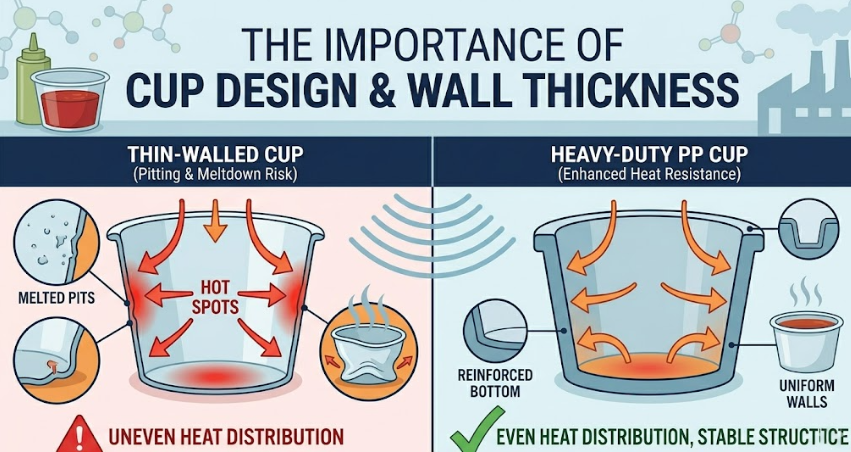
It isn’t just about the raw material, though. The physical design of the cup plays a massive role in how it survives the microwave. Because these cups are so small, they heat up incredibly fast. If the walls are too thin, you get “hot spots” that can cause the plastic to pit or melt locally. That’s why I always tell people to find a wholesale heavy-duty PP sauce cup distributor that focuses on wall thickness. A well-engineered cup distributes that microwave energy more evenly, preventing those annoying (and dangerous) melted spots that make customers nervous about eating your food.
The Paperwork Behind the “Wavy Lines”

You see those three little wavy lines on the bottom of a cup and you think, “Okay, I’m safe.” But in the professional world, you can’t just trust a symbol. You need the data. A reputable BPA-free PP sauce cup manufacturer won’t just tell you it’s safe; they will hand you the lab reports. They test for things like “overall migration” and “specific migration” of chemicals. If your supplier gets quiet when you ask for these documents, that’s a massive red flag. Safety in the microwave isn’t a guess; it’s a proven fact backed by ISO and FDA testing.
What You Should NEVER Put in the Microwave
We need to talk about the “no-go” list. Polystyrene (PS)—that clear, crunchy plastic used for cold coleslaw—is a disaster waiting to happen in a microwave. It’s brittle and starts to break down at surprisingly low temperatures. Then you have PET, which is fantastic for cold drinks but usually turns into a limp mess in the heat. This is exactly why you have to consult an experienced microwaveable plastic sauce cup factory. They know which resins are designed for the freezer-to-microwave journey and which ones are strictly for the fridge. Mixing them up is an expensive mistake you don’t want to make.
Lids: The Forgotten Safety Feature
Lids are where a lot of people mess up. If you microwave a sealed cup, the steam pressure has nowhere to go. Best case? The lid pops off. Worst case? The whole thing explodes. Microwave-safe lids are designed to be “breathable.” Whether it’s a tiny vent hole or a specific snap-fit that allows air to escape, the engineering matters. When you are sourcing from a professional vented-lid PP sauce cup supplier, you are buying more than just a piece of plastic; you are buying a safety system that keeps the customer from getting burned by a steam burst.
The Sustainability Angle
Let’s be real—the world is moving away from single-use plastics. But until we have a perfect bio-replacement that can handle 160°C, PP is actually our best bet because it’s highly recyclable. The trick is making sure the plastic is pure enough to be processed again. Working with a specialized recyclable PP sauce cup factory ensures that your footprint is as small as possible while still keeping the food safe and hot. You don’t have to choose between being “green” and being safe; you just have to choose the right partner.
Conclusion: Don’t Cut Corners on the Small Stuff
At the end of the day, a sauce cup might seem like a tiny detail in your supply chain. But it’s a detail that touches the customer’s food—and their health. By focusing on high-quality Polypropylene and verifying your supplier’s credentials, you’re building a foundation of trust. Finding a trusted heat-resistant PP sauce cup manufacturer for global export is the final piece of the puzzle. It ensures that no matter where your product ends up, it can handle the heat of a modern kitchen without a single worry. In this business, the “small stuff” is exactly what makes you a pro.