
In the rapidly evolving landscape of functional nutrition, the classic fruit bowl is currently undergoing a mid-life crisis. Depending on who you ask, it is either the gold standard of a clean breakfast or a “fructose-laden trap” that triggers a mid-morning energy crash. The reality, however, is far more nuanced. Understanding why “fruit equals a sugar rush” is only half the story; the other half lies in the structural biology of the plant and the macronutrient architecture of the meal. For those in the food service and meal-prep sectors, sourcing a premium food-grade PET fruit bowl manufacturer is only the first tactical step. The real strategic win is engineering what happens inside that high-clarity plastic.
The Matrix: Why Whole Fruit Isn’t Just “Natural Candy”
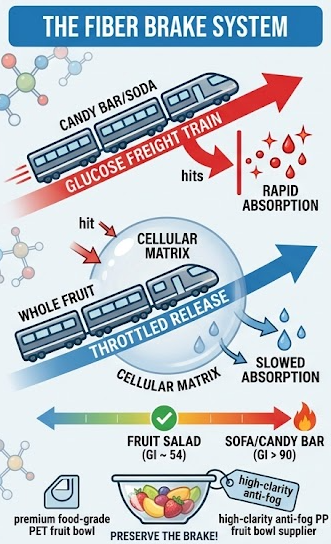
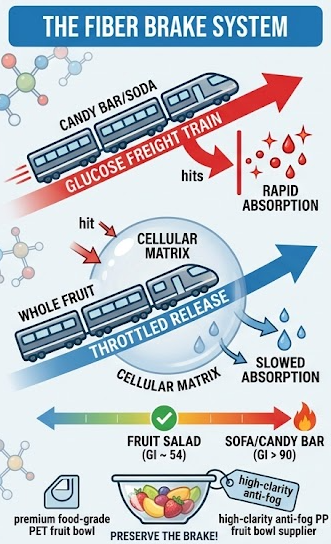
The most common mistake in nutritional thinking is treating the sugar in a piece of fruit the same as the sugar in a soda. In processed sweets, sugar is “free”—it is chemically unbound and hits the bloodstream with the force of a freight train. In a whole berry or a slice of apple, that fructose is sequestered within a “cellular matrix” of structural fibers. When you consume a whole fruit, your body must mechanically and enzymatically deconstruct these cell walls, a process that inherently throttles the release of sugar.
Fiber acts as a built-in metabolic brake. A solid mix of fruit usually delivers between 2g and 8g of dietary fiber per serving. This fiber increases the viscosity of the stomach contents, creating a physical barrier that slows glucose absorption in the small intestine. This is exactly why a fruit salad often carries a Glycemic Index (GI) of around 54, while a liquid sugar source can easily scream past 90. To preserve this “brake” for the retail shelf, a high-clarity anti-fog PP fruit bowl supplier provides the kind of visual transparency that showcases these fiber-rich skins and textures, signaling “sustained energy” to the savvy, health-conscious consumer.
The Macronutrient Gap: Why You’re Hungry by 10 AM
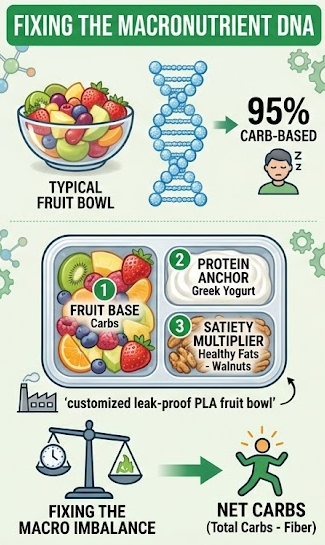
If fruit is so structurally sound, why do many people experience “hangry” symptoms just two hours after a fruit-only breakfast? The answer is found in the macronutrient DNA of the meal. A typical fruit-only bowl is almost entirely carbohydrate-based—roughly 95% of its calories come from sugar and fiber. It lacks the two most important “satiety anchors”: protein and fat. Without these, your body spikes insulin to clear the sugar, and as your blood glucose levels dip back down, your brain sends a 9-1-1 hunger signal.
The secret to fixing this is focusing on “net carbs” (total carbs minus fiber). But even a low-net-carb bowl needs a stabilizing force. This is where modern meal-prep brands are getting smart. Instead of tossing fruit into a generic tub, they utilize a customized leak-proof PLA fruit bowl factory to source multi-compartment containers. These eco-friendly inserts keep the fruit physically separated from protein-heavy additions like Greek yogurt or cottage cheese until the moment of consumption. This prevents the fruit from becoming soggy while simultaneously fixing the macro imbalance that leads to energy crashes.
The Protein Anchor and the Satiety Multiplier
Protein is the undisputed king of fullness. It has the highest thermic effect of food (TEF) and triggers the release of peptide YY, the hormone that tells your brain you are officially “done” eating. By adding just 15g to 20g of protein—whether through yogurt, hemp seeds, or a scoop of clean protein powder—you fundamentally alter the bowl’s glycemic architecture. It acts like a heavy anchor on a kite; it keeps the entire meal from flying away into a temporary sugar high.
Then there is dietary fat, the most misunderstood multiplier in the fruit bowl equation. Most people skip fat in a fruit context because it feels “heavy.” However, healthy fats from walnuts, chia seeds, or avocado slow down “gastric emptying”—the rate at which food leaves your stomach. This means the fruit stays in your digestive tract longer, drip-feeding energy into your bloodstream rather than dumping it all at once. To ensure these calorie-dense, oily toppings don’t leak or degrade the packaging during transit, procurement teams often lean on an OEM/ODM microwaveable MFPP fruit bowl supplier. These mineral-filled shells are designed to handle the weight and chemical properties of fats without losing structural integrity, allowing for complex macro profiles that stay fresh from the factory to the fork.
Choosing Your Players: The Science of GI vs. GL
Not all fruits play by the same metabolic rules. A “pro-level” bowl follows what we call the 80/20 rule: 80% of the volume should consist of low-to-moderate GI fruits like raspberries, blueberries, blackberries, and green apples. The remaining 20% can be reserved for high-flavor, higher-sugar accents like mango or pineapple.
However, Glycemic Load (GL) is the metric that actually matters in a real-world setting. While a watermelon has a high GI, its GL is remarkably low because it is mostly water. Conversely, a large bowl of dense grapes has a high GL because of the sheer sugar concentration per gram. To maintain this balance at a commercial scale, a wholesale disposable plastic fruit bowl factory for distributors provides the uniform sizing and precise portioning needed to ensure the kitchen doesn’t accidentally overpack the high-GL fruits. When the container volume is standardized, the nutritional consistency of the brand remains protected.
The Micronutrient Catalyst
While macros provide the fuel, micronutrients like Potassium and Vitamin C act as the invisible catalysts that make the metabolism work better. Potassium is vital for electrolyte rebalancing after carbohydrate metabolism, and Vitamin C is famous for increasing the absorption of non-heme iron found in plant-based add-ins like pumpkin seeds. To protect these delicate, light-sensitive antioxidants, the packaging must offer superior barrier properties. Sourcing from a heavy-duty stackable CPET fruit bowl manufacturer provides a durable, heat-resistant shield that protects the fruit from external environmental stressors during the high-speed logistics of modern food distribution.
The Smoothie Trap: Don’t Drink Your Macros
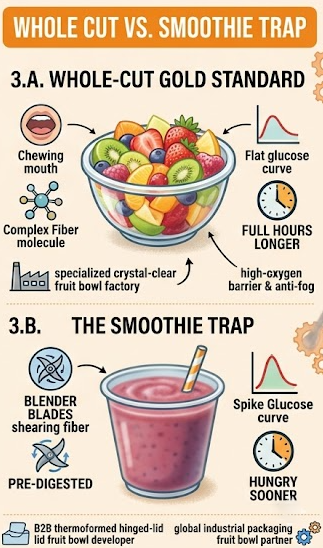
The quickest way to undermine the science of a fruit bowl is to put the ingredients into a high-speed blender. Blending shears the insoluble fiber into tiny particles, effectively “pre-digesting” the meal. This allows the sugar to bypass the natural “brake system” of the cellular matrix and enter the bloodstream almost instantly. Furthermore, drinking your calories bypasses the “cephalic phase” of digestion—the act of chewing that tells your brain to start the satiety process.
This is why “whole-cut” is the gold standard for metabolic health. For businesses looking to capture this market, working with a specialized crystal-clear fruit bowl factory for wholesale buyers is essential. These factories produce lids with high-oxygen barriers and anti-fog coatings that keep the fruit looking crisp and structurally intact. When the fruit stays whole, the fiber stays functional, and the customer stays full for hours longer than they would with a liquid smoothie.
Four Science-Backed Formulas for Peak Performance
To turn this theory into a menu, we can categorize the “Perfect Bowl” into four specific metabolic formulas:
-
The Metabolism Pro (The Low-Sugar Stabilizer): A base of blackberries and raspberries, topped with plain Greek yogurt and a sprinkle of chia seeds. High fiber, high protein, and zero “sugar rush.”
-
The Performance Fuel (Pre-Workout): A mix of bananas and blueberries with a scoop of whey protein. This provides faster-releasing energy for muscle glycogen with low fat to prevent digestive heaviness during movement.
-
The Satiety Hero (The Meal Replacement): Sliced apples and strawberries paired with almond butter and toasted coconut flakes. This is the highest fat-to-carb ratio, designed for long-duration fullness.
-
The Master Bowl (The Definitive Recommendation): 15g of protein, 8g of healthy fats, and at least 6g of fiber. This achieves the “Golden Ratio” of functional nutrition.
For a brand to launch these formulas successfully, they need more than just fruit; they need a B2B thermoformed hinged-lid fruit bowl developer who can create secure, airtight packaging that prevents oxidation and keeps the macro-ingredients separated and fresh until the seal is broken.
The Future: Functional Fruit Packaging
As we move “beyond the sugar rush,” the fruit bowl is being redefined as a functional delivery vehicle for total macronutrient balance. It is no longer a simple snack; it is a sophisticated layering of fiber, protein, and lipids. Whether you are an individual meal-prepper or a global brand partnering with a global industrial packaging fruit bowl partner, the core principle remains the same: the health value of fruit is not found in the fruit alone, but in the metabolic company it keeps. By choosing the right materials and the right macros, we can enjoy the vibrant energy of nature without the insulin-induced crash.