
The real headache with charcuterie cups isn’t just making them look pretty; it’s stopping the clock on spoilage and sogginess. You are essentially trying to keep a crunchy cracker, a moist piece of brie, and oily salami in the same tiny space without them ruining each other. For anyone in the high-stakes world of event planning or large-scale catering, storage is a game of moisture control. Get it wrong, and you’re serving limp crackers and “sweating” cheese. Get it right, and the hundredth cup tastes like it was just made.
The Storage Timeline: The 2-4 Hour Golden Rule and Prep Logic

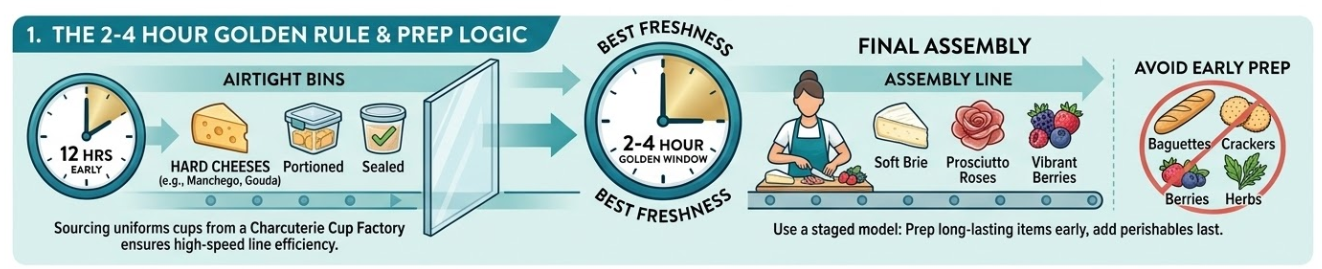
Time is the enemy here. While you might want to knock out your assembly the night before, the “sweet spot” for peak freshness is actually a narrow two-to-four-hour window. This is when the cheese maintains its creamy profile and the meats haven’t yet oxidized into that unappealing gray-brown hue. When managing massive volume, smart operators rely on a reliable charcuterie cup factory for bulk orders to ensure they have enough uniform inventory to run a high-speed assembly line just before the doors open.
If you are tackling a major B2B contract, don’t try to build everything at once. Use a staged model. You can prep hard cheeses like Manchego or Gouda up to 12 hours early if kept in airtight bins. But the “danger” items—baguettes, berries, and crackers—shouldn’t touch the cup until that final four-hour stretch. This is where a professional snack cup supplier for catering businesses becomes a vital partner, providing the physical containers while your team focuses on the last-minute high-touch assembly that keeps the product crisp.
Engineering Freshness: Dry-Wet Separation and Structural Barriers

Think of the cup as a vertical engineering project. The biggest fail in stored charcuterie is “cracker wilt.” To prevent this, your heaviest, most moisture-resistant items—think almonds, dried apricots, or hard cheese cubes—must go at the bottom. They act as a dry anchor. If you put an olive next to a cracker, the moisture transfer will ruin the crunch in minutes.
Modern caterers use physical barriers to cheat the clock. Small parchment discs or tiny individual honey jars can act as a wall between ingredients. Also, use those long bamboo skewers as “tent poles.” When you drape plastic wrap over a tray of cups, the skewers keep the wrap from touching and squashing your prosciutto roses. Many planners consult with an innovative disposable food cup manufacturer for B2B clients to find specific cup depths that accommodate these internal structural tricks.
Container Functionality: Why Material and Size Dictate Shelf Life
Your choice of vessel isn’t just about aesthetics; it’s about thermal management. Glass looks premium but is a heavy conductor, leading to messy condensation when moving from a cold fridge to a warm room. High-clarity plastic is usually the smarter bet for catering. A 10 oz to 12 oz size is the industry “standard” because it fits perfectly into commercial refrigeration racks without wasting vertical space.
Lids are your primary insurance. A total airtight seal can actually make some cheeses smell funky because they can’t “breathe.” A vented dome lid is the best middle ground—it blocks fridge odors but lets a tiny bit of air circulate. Buying these as a system from a premium PET charcuterie cup manufacturer for global distributors ensures the lids actually click shut and stay that way during a bumpy delivery van ride.
Fridge Organization and the “Wake-up” Rule
Commercial kitchens are tight. Storing a hundred individual cups will eat up your walk-in cooler space fast. Use vertical stacking crates or shelving inserts to keep things organized. You want a steady 38°F to 40°F. If it’s colder, your berries will freeze and go mushy; warmer, and the soft cheeses become a food safety risk.
Here is the “pro” secret: the “Wake-up” period. Cold cheese is flavorless. To let a brie or cheddar really sing, the cups need to hit room temperature for about 20 minutes before serving. This lets the fats soften and the aroma bloom. If you’re running a brand activation, a custom printed appetizer cup supplier for event planners can offer materials that won’t fog up during this temperature shift, keeping the presentation crystal clear.
Managing Outdoor Events and Active Cooling

Outdoor gigs up the ante. If the sun is out and it’s over 75°F, your safety window drops to about two hours. You need active cooling. Try the “ice basement” trick: fill a metal tray with crushed ice, cover it with a thin linen or flat stones, and set the cups on top. This chills the base of the cup without the mess of melting water touching the food.
The base material of the cup matters even more in the heat. Cheap, thin-walled plastics can warp or wobble when they get warm. Partnering with a wholesale charcuterie container factory for large-scale retail allows you to get heavy-duty, thermoformed cups that stay rigid even on a hot summer deck. These professional-grade options are built to stand straight on uneven surfaces like gravel or grass.
Waste Control and the Ethics of Leftovers
Precision is the only way to protect your margins. For a standard cocktail hour, aim for 1 to 1.5 cups per head. Over-preparing creates a “leftover nightmare.” Once a cup has sat out at a party, it shouldn’t be re-stored for sale. The texture degradation and risk of cross-contamination make it a one-way trip.
However, unassembled components are fair game. Hard cheeses and cured meats can be re-wrapped in parchment and kept for another 48 hours. Crackers, once exposed to fridge humidity, are usually a loss. Smart caterers work with a high-volume snack packaging manufacturer for food distributors to buy dry goods in bulk packs that stay sealed until the very last second, ensuring you only risk what you actually use.
Sustainability and the Future of Grazing Storage
The industry is leaning hard toward compostable PLA and sugarcane fibers. These are great for the brand image but require different storage logic. Sugarcane is porous; it will soak up salami oil much faster than plastic.
If you go the eco-friendly route, your assembly window shrinks—aim for no more than 90 minutes before service to keep the cup from looking greasy. Working with a premium eco-friendly cup factory for sustainable brands lets you test different bio-plastics for oil resistance, ensuring your “green” choice doesn’t result in a soggy presentation. Balancing the right timing and materials is the only way to keep your charcuterie as the highlight of the event.