
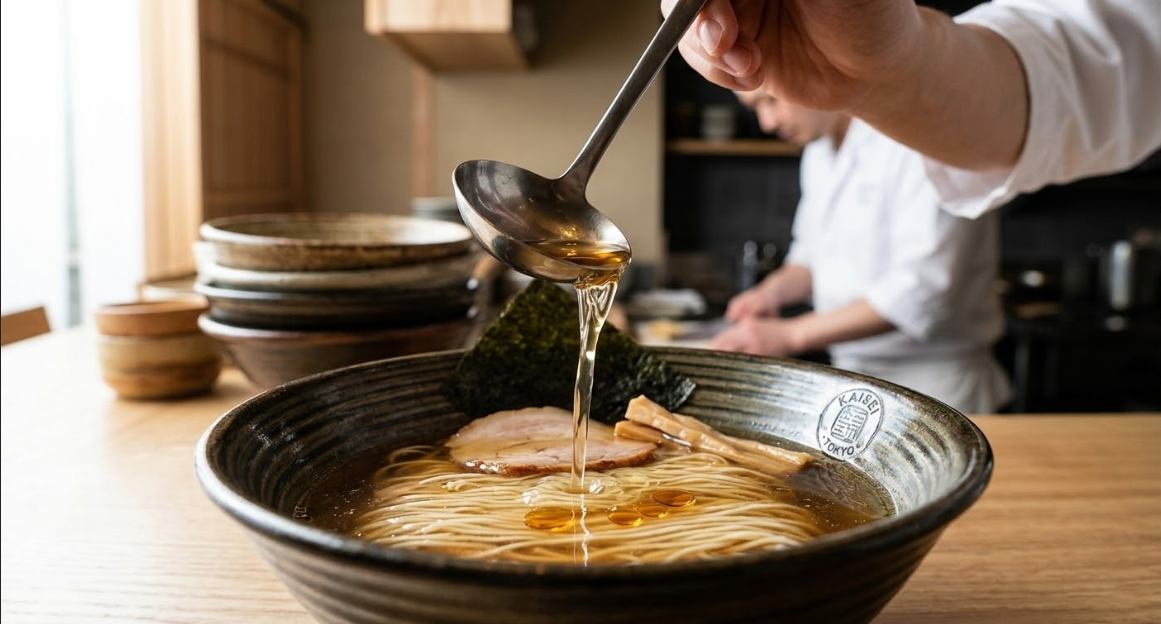
Ever wonder why that bowl of ramen at a neon-lit Tokyo shop hits different? Most people think it’s just about boiling bones for days until you’re exhausted. But the “secret” isn’t just time—it’s a calculated dance between flavor chemistry and physics. To move beyond average home cooking, you need to think like a culinary engineer. We’re talking about managing “umami synergy” and perfecting the art of fat emulsification to get that liquid gold.
The Umami Gap: Why Your Broth Feels “Thin”
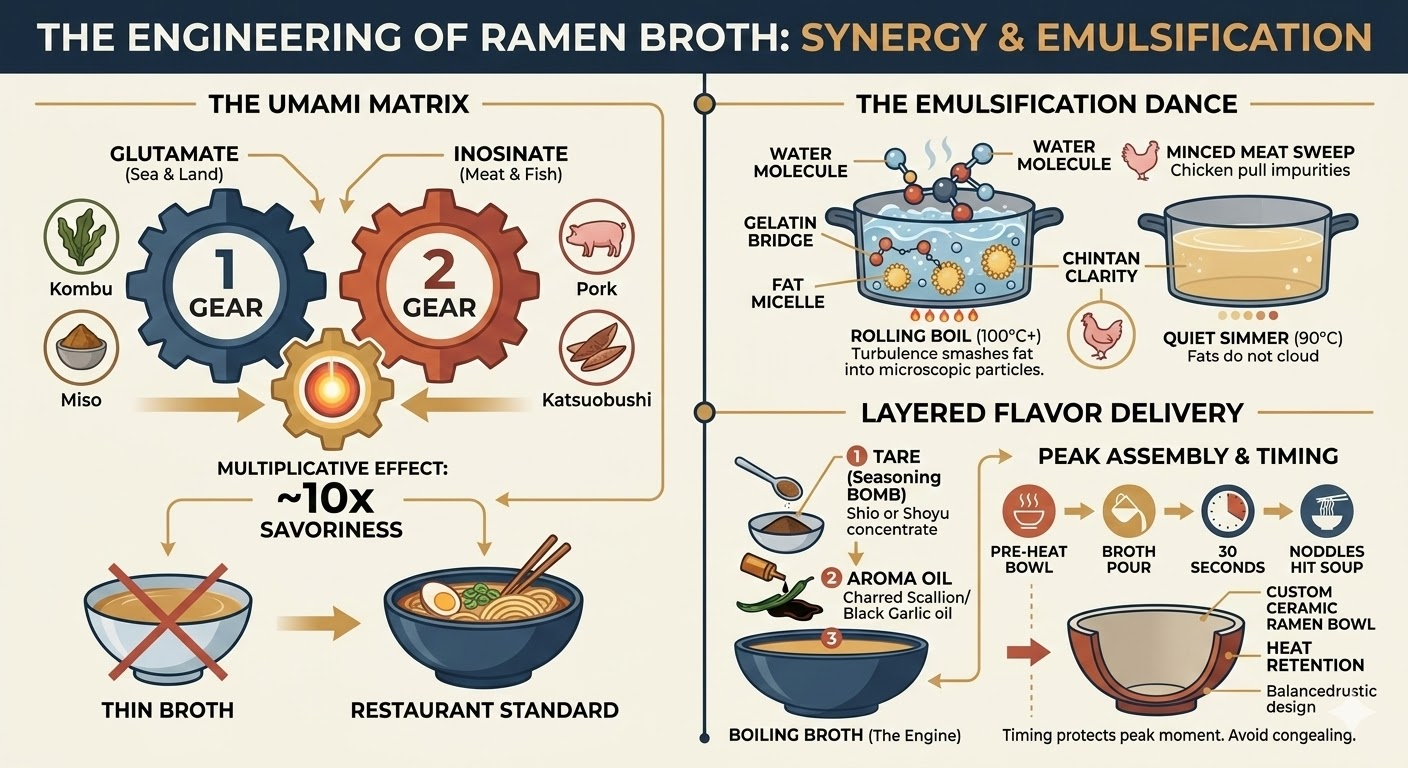
The biggest letdown in home-cooked broth is usually a lack of depth. In the professional world, we don’t just “add flavor”; we build a matrix. Science tells us that Glutamate (from things like kombu or miso) and Inosinate (from meat or dried fish) aren’t just additive—they are multiplicative. When they meet, they amplify savoriness by nearly tenfold. For shop owners aiming for this level of impact, working with a reliable ramen bowl factory for bulk orders ensures that the vessel is as high-quality as the chemical masterpiece inside it.
To bridge this gap, you must source ingredients from both land and sea. If you’re simmering pork but skip the dried kombu, you’re leaving 90% of your flavor potential on the table. It’s this foundational logic that transforms a simple soup into a restaurant-standard broth.
The Physics of Texture: Getting That “Sticky” Mouthfeel
The way a soup coats your spoon—that rich, almost sticky sensation—is the hallmark of a great Paitan (creamy) broth. That creamy look isn’t from milk; it’s a stable emulsion of water and fat held together by gelatin. During a violent, rolling boil, collagen breaks down into gelatin, acting as a bridge between the oil and water. If your fire is too low, the oil just sits on top in greasy puddles.
Master chefs use high-heat turbulence to smash fat into microscopic particles. For those in the trade, choosing the right hardware is vital, just as a premium ramen bowl supplier for commercial use provides the heavy-duty porcelain needed to keep that delicate emulsion warm. If you don’t nail the emulsification, your broth will feel oily instead of velvety.
Shio and Shoyu: Discipline in a Clear Bowl

While Tonkotsu is about chaos and high heat, clear broths (Chintan) are about pure discipline. A perfect Shoyu ramen should be clear enough to see your reflection but pack a punch like a heavyweight boxer. The trick? Never let the water boil. You want a “quiet” simmer—barely a bubble breaking the surface at roughly 90°C. This keeps the fats from clouding the liquid.
To maximize clarity while boosting flavor, try the “minced meat sweep”—adding lean ground chicken to pull out impurities like a magnet. If you’re building a brand, partnering with a bespoke ramen bowl manufacturer for private labels lets you design a shallow, wide bowl that highlights this clarity, making the broth glow under the dining room lights.
Tare and Aroma Oil: The Two-Stage Flavor Punch
The broth is the engine, but the Tare (seasoning) is the steering wheel. Pro shops never salt the big pot of broth. Instead, they drop a concentrated “bomb” of flavor into the bowl first. Whether it’s a salt-based Shio Tare or a fermented Shoyu version, this is where the precision salt levels live.
Then comes the Aroma Oil (Aroma-yu). This is the first thing your nose hits. Whether it’s charred scallion oil or a dark, moody black garlic oil (Mayu), this layer of fat seals in the heat and adds a specific “scent profile.” For larger operations, finding a professional ramen bowl exporter for global shipping ensures that these complex layers stay intact within durable, heat-retaining vessels that can survive the rigors of a busy kitchen.
Miso Mastery: Complexity Through Fire
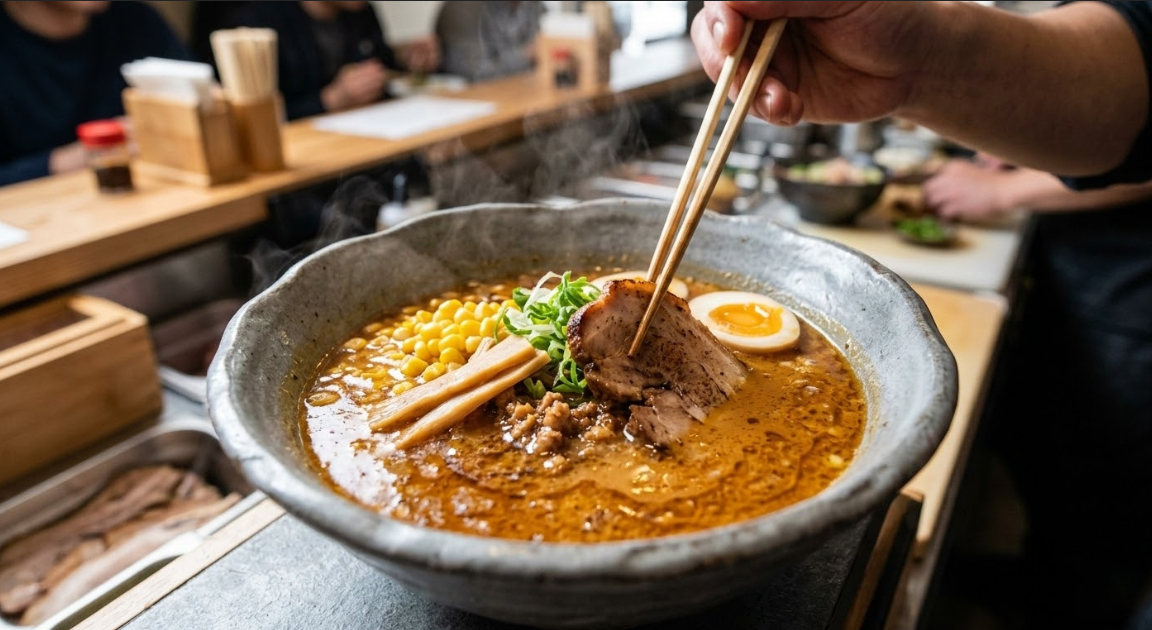
Miso ramen demands a different strategy because you’re fighting against bold, fermented bean paste. A “best” recipe isn’t just stirring paste into water. You need to sauté. Stir-fry your ginger, garlic, and ground pork until they’re caramelized, then “toast” the miso in the pan. This triggers the Maillard reaction, giving you a smoky depth you can’t get from boiling alone.
Since Miso ramen is heavy and rustic, it needs a bowl that feels substantial. A custom ceramic ramen bowl factory for hospitality can create those thick-walled, earthy designs that keep the soup piping hot until the last drop. It’s all about balancing that fermented funk with a rich, fatty backbone.
The Final 10%: Timing Is Everything
The difference between a “good” bowl and a “legendary” one often comes down to the last 60 seconds. Professionals always pre-heat their bowls. If you pour 95°C broth into a cold ceramic dish, the temp drops instantly, and the fat starts to congeal. The noodles have to hit the soup exactly half a minute after pouring.
This level of detail is why the B2B side is so specialized. From kitchen flow to choosing a certified ramen bowl wholesaler for restaurant chains, every step protects that “peak” moment. When you assemble, follow the law of layers: Tare first, then Oil, then the boiling broth, then the noodles. This keeps the flavors sharp rather than muddled.
Fix Your Broth: Why It Might Taste “Off”
If your 12-hour effort tastes watery, check your salt. Salt isn’t just for saltiness; it’s the key that unlocks the umami. If it feels thin, you likely lacked collagen—next time, throw in more chicken feet or pork trotters. Consistency is the ultimate goal. For those looking to go pro, sourcing from a dedicated ramen bowl manufacturer for wholesale buyers allows you to scale your vision without losing that artisanal touch. Master the science of the fat and the chemistry of the salt, and you’re not just making dinner—you’re making a masterpiece.