
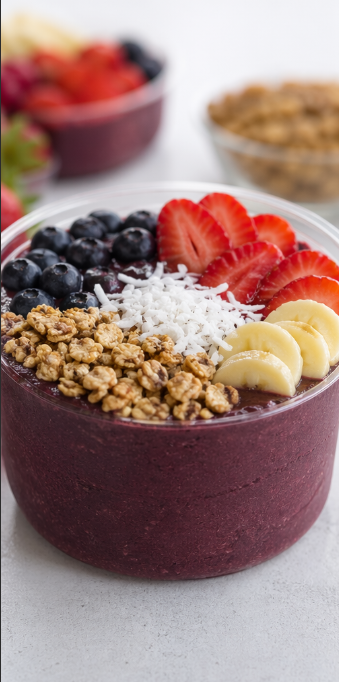
When an acai bowl leaves your store, it starts changing immediately. Not slowly, not subtly—visibly. What looked thick and vibrant at pickup can arrive thin, collapsed, and mixed into something unrecognizable. Customers don’t analyze the reason; they just feel the difference and decide whether to order again.
So the real question isn’t “why does it melt,” but “why doesn’t it hold.”
What Customers Actually Experience (And Why It Matters)
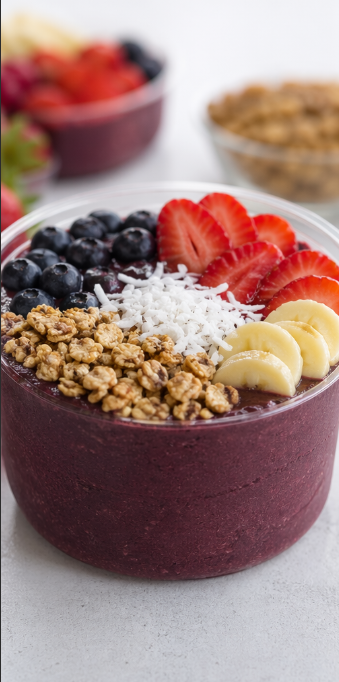
From the customer’s side, the problem shows up in a few familiar ways. Sometimes the entire bowl turns watery. Sometimes the top looks fine but the bottom is icy and hard. In other cases, everything blends together into a flat texture with no contrast.
These aren’t random issues. They’re signals that the product wasn’t built for movement, time, or temperature change. In-store, your bowl lives for five minutes. In delivery, it needs to survive thirty or more. That gap is where most failures happen.
Where Things Start Going Wrong

A lot of businesses assume the solution is simple: keep it colder. But colder alone doesn’t solve structural weakness. If the base is too light, if the ingredients release moisture, or if the packaging can’t hold temperature, the result will still fall apart.
The base is often the first weak point. When it’s blended too smooth or diluted with too much liquid, it loses resistance. It may taste great fresh, but it has no ability to hold shape over time. Then come the toppings—especially fresh fruit—which naturally release water during transit. That moisture seeps downward and speeds up breakdown.
Packaging adds another layer to the problem. Many containers are chosen for appearance or cost, not performance. Thin walls and loose lids allow temperature to shift quickly. Once that happens, everything inside reacts faster than expected. This is why more operators are moving toward solutions developed with a custom acai bowl packaging manufacturer, where insulation and sealing are part of the design, not an afterthought.
Hold Time Isn’t About Temperature Alone
Think of hold time as resistance, not just coldness. A bowl that melts slowly is not necessarily colder—it’s more stable. That stability comes from how the base is built, how ingredients are arranged, and how well the packaging protects everything inside.
If one part fails, the rest follows. A strong base won’t help if moisture seeps in too quickly. Good packaging won’t fix a structure that collapses from within. The goal is balance, not a single fix.
Making the Base Work for Delivery, Not Just Fresh Serving

One of the most effective adjustments happens at the recipe level. A slightly thicker, denser base holds far better during transport. This doesn’t mean sacrificing taste or texture—it means reducing excess liquid and avoiding over-processing.
Even small tweaks in blending can make a noticeable difference. A base with a bit more body resists melting longer and keeps its shape under pressure. Businesses scaling their operations often refine this step with support from an oem acai bowl product supplier, ensuring consistency when volume increases and conditions vary.
Designing Layers That Can Survive the Trip
What looks good in a bowl doesn’t always travel well. Delivery introduces motion, tilting, and time delays. Ingredients shift, settle, and interact differently than they do on a counter.
A more durable approach is to think in layers. A firm base at the bottom creates support. A middle layer can act as a buffer, slowing moisture from reaching the base too quickly. Toppings placed last help maintain both texture and visual appeal.
This isn’t about making the bowl more complicated—it’s about controlling how it behaves over time. Brands that work with an odm acai bowl solution provider often redesign their structure specifically for delivery, not just presentation.
Letting Customers Finish the Job
Separating certain components can change the outcome entirely. When granola or sauces are packed separately, they stay crisp and don’t interfere with the base during transit. The customer adds them just before eating, restoring the intended texture.
This approach also creates a better experience. Instead of receiving a pre-mixed product, the customer interacts with it. It feels fresher, even if the delivery time hasn’t changed. Many operators adopt this model after sourcing from an acai bowl packaging supplier for bulk orders, where modular packaging becomes easier to implement.
Why Packaging Choices Make or Break the Result
Packaging isn’t just about holding the product—it directly affects how long it lasts. Containers with better insulation slow down temperature change, while tight-fitting lids reduce air exchange.
Double-layer designs, for example, create a barrier that helps maintain internal temperature longer. Material choice also matters. Some options transfer heat quickly, while others offer better resistance.
Businesses that treat packaging as part of the product often collaborate with a custom acai bowl container factory to develop containers suited to their specific needs. The difference shows up not in the store, but at the customer’s door.
Cooling Without Creating New Problems
Adding ice packs seems like an easy fix, but it can introduce new issues. Without proper separation, condensation forms and adds unwanted moisture. This can make the bowl even softer by the time it arrives.
A better approach is controlled cooling. Instead of direct contact, cooling elements should support the environment around the bowl. Suppliers specializing as an acai bowl cold chain packaging manufacturer often design systems that balance temperature control with moisture management.
Delivery Time Is a Design Factor, Not Just Logistics
Many businesses treat delivery time as something they can’t influence. In reality, it should shape how the product is built. If your bowl holds for 25 minutes, a 45-minute delivery zone will always create problems.
Adjusting delivery radius, especially during peak hours, can reduce risk immediately. Some brands even modify their menu based on time of day, offering more stable options when delays are likely. Others coordinate production with a custom acai bowl factory for distributors, developing versions specifically intended for longer delivery windows.
Small Changes That Add Up
There’s rarely a single fix that solves everything. But when small adjustments are combined—slightly thicker base, better layering, improved packaging, and realistic delivery zones—the overall result improves significantly.
Consistency becomes easier to maintain. Complaints decrease. Most importantly, customers start receiving a product that feels closer to what they expected.
Operators aiming for long-term growth often standardize these improvements with help from an acai bowl packaging manufacturer for private label brands, ensuring that every location delivers a similar experience.
What Customers Remember
At the end of the process, customers don’t think about structure or packaging. They remember how the bowl looked and tasted when they opened it. If it feels melted or diluted, the impression sticks.
Extending hold time isn’t about perfection. It’s about keeping enough of the original experience intact so that the product still feels worth ordering.
The Shift That Changes Everything
Once you stop thinking of your acai bowl as an in-store item and start treating it as a delivered product, your decisions change. Ingredients, structure, packaging, and delivery limits all begin to align around one goal—survival with quality.
And that’s the difference between a product that travels… and one that actually sells.