
The sudden explosion of individualized catering has flipped the script on how event planners and hospitality pros handle food service. At the center of this shift is the charcuterie cup—a portable, gorgeous, and hygienic pivot away from the old-school communal grazing board. But for catering outfits and food service suppliers, hitting that “sweet spot” in pricing is a massive headache. It’s not just about adding up the cost of three slices of salami; it requires a deep dive into material overhead, labor intensity, and where you actually sit in the market. If you want to scale without losing your shirt, you have to look at these five structural factors.
1. Ingredient Quality and the “Seasonal Tax”

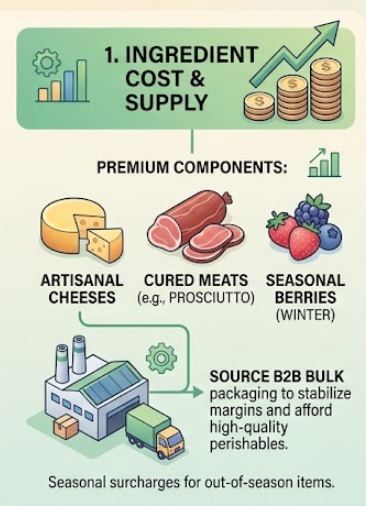
The biggest needle-mover for your price point is obviously what’s inside the cup. Unlike a massive board where you can hide “dead zones” with cheap grapes or piles of crackers, every square inch of a charcuterie cup is prime real estate. If you’re stuffing it with artisanal cheeses, Prosciutto di Parma, or organic Marcona almonds, your base cost per unit is going to climb fast.
High-end B2B clients often demand specific flavor profiles that require sourcing from specialized importers. When you’re ready to scale this side of the business, finding a charcuterie cups supplier for bulk orders is the only way to keep your non-perishable margins from eroding. By locking in your packaging and dry goods through a steady partner, you can afford to splurge on the high-quality, perishable items that define your brand’s reputation. Also, don’t forget seasonality. Fresh berries in December are a budget-killer; you either need to build that into a year-round price or add a seasonal surcharge.
2. Packaging Materials and Structural “Wow Factor”
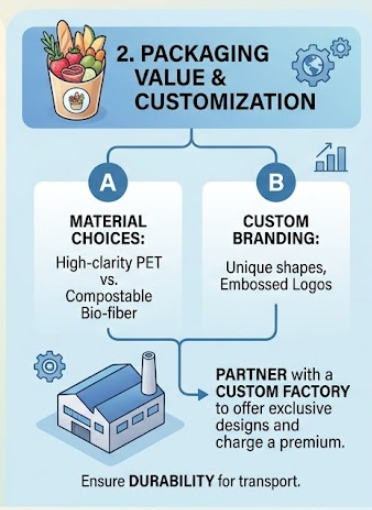
In the B2B catering world, the vessel is honestly just as important as the food itself. That “cup” is the literal foundation of the experience. Cheap, flimsy plastic can make even the best brie look like a bargain-bin find, whereas a sturdy, crystal-clear container adds immediate perceived value. I’ve seen many businesses struggle because they didn’t realize how much packaging eats into the final MSRP.
When you’re picking containers, you have to weigh the material science—do you go with high-clarity PET or a compostable bio-fiber for those eco-conscious corporate accounts? Savvy operations often go straight to a custom charcuterie cups factory to get unique shapes or branded embossing that their competitors can’t just buy off a shelf. This level of exclusivity lets you charge a premium. Plus, if you’re doing high-volume events, the durability of that cup during a bumpy delivery is a factor that justifies a higher price—nobody wants to pay for a cup that arrives cracked.
3. The Hidden Cost: Labor and Artistic Assembly
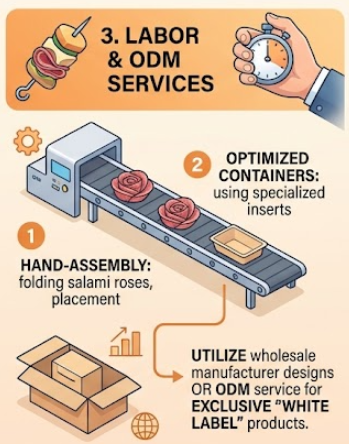
One thing people always underestimate is the sheer amount of time it takes to build these things. This isn’t bulk plating; every single cup is essentially a tiny art project. Every skewer has to be hand-threaded, every “salami rose” folded just right, and every sprig of rosemary placed with precision. For a 300-person corporate gala, the labor hours are staggering.
When you set your price, you have to factor in the hourly wage of your prep team plus a bit of an “artistry tax.” This is especially true for specialized dietary requests like vegan or keto versions, which require extra care and separate workstations. To keep these costs from spiraling, many high-volume caterers work with a wholesale charcuterie cups manufacturer that offers pre-separated inserts or designs meant for rapid assembly. Shaving just 10 seconds off each cup via better packaging can save you thousands in labor over a busy season.
4. Branding and Market Tiering
Your price is a loud-and-clear signal of who you are as a brand. Are you the budget-friendly choice for office lunches, or are you the “white glove” provider for high-stakes board meetings? Customization is the tool that lets you jump between those tiers. Delivering a standard cup is one thing; delivering a cup with a laser-cut logo or a specific color-coordinated theme is a different league entirely.
For large-scale B2B contracts, clients often look for “white label” opportunities. By tapping into a charcuterie cups ODM service provider, you can offer exclusive designs that your competition literally cannot replicate. That exclusivity is a massive selling point. When you provide a client with a “signature” cup that fits their brand identity perfectly, you aren’t just selling cheese anymore—you’re selling a marketing asset. That’s when you move from “cost-plus” pricing to “value-based” pricing.
5. Logistics, Storage, and the Reality of Scaling
The final piece of the puzzle is logistics. Let’s be real: charcuterie cups are a nightmare to transport because they are top-heavy and delicate. You need specialized crates, refrigerated vans, and a crew that knows how to handle “the last mile” without tipping everything over. Those overhead costs have to be baked into the unit price.
Scale can be your best friend or your worst enemy here. Small orders are often wildly inefficient and should carry a premium price. On the flip side, for massive orders, you can use your volume to win. Linking up with a disposable charcuterie cups distributor helps you manage inventory levels so you aren’t tying up all your cash in boxes sitting in a warehouse. When you buy big, your shipping and container costs drop, giving you the room to offer more competitive rates to B2B clients while keeping your margins healthy.
Final Thoughts on Pricing Strategy
To get to your final number, blend these factors into a clear formula: Start with your Prime Cost (Food + Packaging + Labor), add your overhead (Rent + Marketing), and then tack on your profit margin.
Most successful pros in this space find that the secret to staying profitable while keeping corporate clients happy is controlling the source. Partnering with a reliable charcuterie cups factory for B2B clients ensures your primary overhead stays flat even when the food market gets wonky. By optimizing your packaging and streamlining the assembly, you can deliver the high-end, photorealistic look that today’s clients demand without killing your bottom line.
If you’re looking to level up your menu, consider how a professional charcuterie cups supplier can help you experiment with new materials or eco-friendly designs. Staying ahead of the curve on packaging is usually the easiest way to justify a price hike, as clients are increasingly happy to pay for sustainability and style. In the end, the most profitable businesses are the ones that treat their packaging with as much respect as the food inside it.