

When buyers look up the price per unit of a 30-cell egg tray, most are not searching for a single fixed number. What they are really trying to understand is why quotations differ so much between suppliers, and whether a higher price actually translates into lower overall cost once the trays are put into real use.
Paper pulp and plastic egg trays are often placed side by side in price discussions, yet they follow very different cost logics. Treating them as interchangeable products usually leads to poor purchasing decisions. This article looks beyond surface pricing and explains how unit cost, operational reality, and long-term expense interact when choosing between paper pulp and plastic 30-cell egg trays.
Paper Pulp 30-Cell Egg Trays: Why Unit Prices Vary So Widely

Paper pulp egg trays remain the most commonly used solution across egg farms, wholesalers, and export operations. Their dominance is not accidental. They are easy to source, simple to handle, and require no recovery system once used. However, buyers are often surprised by how much unit prices fluctuate between different orders.
At lower purchase volumes, paper pulp trays can seem relatively expensive. Small production runs interrupt factory workflows, and setup costs must still be absorbed even when output is limited. As a result, unit pricing at this level reflects inefficiency rather than material value.
Once order quantities increase, the economics change noticeably. High-volume production allows manufacturers to run molds continuously, reduce downtime, and optimize drying cycles. These efficiencies quickly push the unit price downward, which is why large buyers consistently secure significantly better pricing.
Raw material availability also plays an important role. Most pulp trays rely on recycled paper fibers, and when supply is stable, pricing remains predictable. When recycled paper becomes scarce, manufacturers adjust prices accordingly, even for long-term clients. This sensitivity to raw material markets explains why pulp tray pricing can shift within relatively short periods.
Quality specification further influences pricing. Standard pulp trays are designed for basic transport and short-term use. Reinforced versions increase fiber density to improve stacking strength and resistance to compression. These trays cost more to produce, but many buyers accept the premium to reduce breakage during loading and transit. In environments with high humidity or cold storage, surface-treated pulp trays offer better performance, though the added processing naturally raises unit cost.
Plastic 30-Cell Egg Trays: Higher Prices, Different Cost Logic
Plastic egg trays occupy a different economic category. Their higher unit price often raises concerns during initial procurement, yet plastic trays are rarely intended for single-use scenarios.
Material selection largely defines the price range. PET trays are valued for their clarity and rigidity, while PP trays offer greater impact resistance and flexibility. PVC trays tend to appear in price-driven markets but face growing environmental scrutiny. Each material choice carries trade-offs between durability, compliance, and cost.
Unlike pulp trays, plastic trays require an upfront investment in tooling. Mold costs can be substantial and must be spread across total production volume. For buyers without stable demand or long-term usage plans, this alone can outweigh any potential savings from reuse.
The main economic argument for plastic trays lies in repeat use. In closed or semi-closed logistics systems, trays can circulate many times before replacement. When reuse is consistent and losses are minimal, the effective cost per use becomes surprisingly competitive. However, this advantage disappears quickly when trays are lost, damaged, or retained by downstream partners.
Cleaning and handling add another layer of expense. Plastic trays must be washed, dried, and inspected, which introduces labor, water, and energy costs. These operational factors are frequently overlooked during purchasing decisions, yet they significantly influence real-world cost performance.
Why Simple Unit Price Comparisons Fall Short
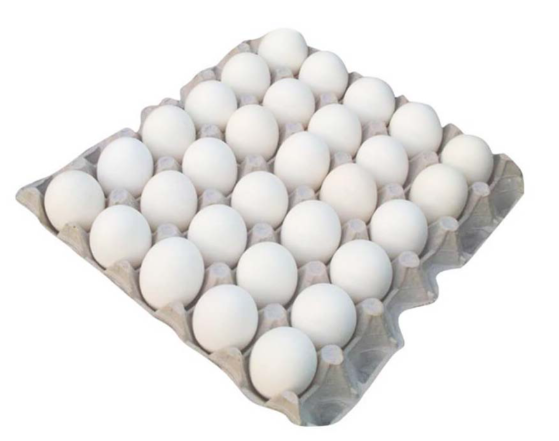
Comparing paper and plastic trays purely on unit price creates a misleading picture. Paper trays are almost always cheaper at the point of purchase, but this does not automatically make them the better option in every scenario. Likewise, plastic trays may appear expensive without context, yet deliver value under the right conditions.
Paper pulp trays accept a certain level of damage as part of normal operation. Because they are inexpensive and disposable, occasional losses rarely disrupt workflows. Plastic trays, on the other hand, represent a higher asset value. Losing even a small percentage can quickly erode the cost advantage gained through reuse.
Geography further complicates comparisons. Manufacturing regions with abundant recycled paper and lower energy costs naturally offer more competitive pulp tray pricing. In contrast, markets with stricter environmental regulations and higher labor costs often see elevated prices for both materials, with plastic trays affected more heavily by compliance requirements.
Performance Versus Price: Understanding Real Value
Durability is often cited as the defining benefit of plastic trays, but durability only matters when it can be fully utilized. In supply chains where trays move freely between multiple parties, higher durability does not necessarily translate into lower cost.
Environmental compliance is becoming increasingly relevant. Paper pulp trays align well with sustainability targets and biodegradable packaging policies. Plastic trays may face additional regulatory costs or future restrictions, depending on regional legislation. These factors are no longer theoretical and already influence purchasing decisions in several major markets.
Customization also impacts cost efficiency. Adjusting pulp tray thickness or cavity depth directly affects production speed, while customization in plastic trays often requires mold modification, increasing upfront investment. Buyers seeking branded or specialized designs must account for these implications early in the decision process.
Choosing the Right Tray for Different Business Models

For one-way transport, export shipments, and open distribution systems, paper pulp trays continue to offer the most reliable balance between cost and practicality. Their low entry cost and simple disposal reduce both financial and operational risk.
Plastic trays perform best in tightly managed environments. Large farms, centralized packing facilities, and vertically integrated retailers are better positioned to benefit from reuse economics. Without consistent recovery and control, plastic trays quickly lose their cost advantage.
Business scale matters as well. Smaller operators typically gain little from investing in plastic systems, while large organizations with standardized logistics can justify higher upfront costs. Policy direction also influences long-term strategy, as regions adopting plastic restrictions increasingly favor pulp-based solutions.
Supplier Pricing Behavior and Cost Control
Suppliers structure pricing differently depending on material and order stability. Pulp tray manufacturers usually prioritize volume consistency, offering better terms to buyers who commit to regular production schedules. Plastic tray suppliers often negotiate around tooling costs and long-term supply agreements.
Hidden costs frequently determine whether a quotation is truly competitive. Freight efficiency, container utilization, customs duties, inspection fees, and export packaging charges can all shift the final unit cost in meaningful ways. Ignoring these elements often leads to unpleasant surprises after delivery.
Real-World Outcomes from the Market
In practice, buyers focused solely on the lowest unit price often encounter higher overall costs later. Ultra-light pulp trays may reduce purchase price but increase breakage. Conversely, plastic trays introduced without a controlled return system frequently suffer losses that undermine projected savings.
Many distributors report that switching from plastic to reinforced pulp trays resulted in lower total packaging costs, even when breakage rates increased slightly. Others operating closed systems achieved consistent savings with plastic trays once reuse cycles stabilized. These outcomes highlight that context, not price alone, determines value.
Conclusion
Choosing between paper pulp and plastic 30-cell egg trays is not a simple matter of comparing unit prices. Each option reflects a different approach to cost, risk, and operational discipline.
For most open-market and export-oriented supply chains, paper pulp trays remain the most dependable and cost-effective solution. Plastic trays only deliver superior value when reuse is consistent and losses are controlled.
Buyers who evaluate total cost structure instead of headline pricing are far more likely to achieve sustainable savings and operational stability.