
In the high-stakes world of “instant gratification” catering, the four-hour delivery window is the ultimate litmus test. For a business, this window presents a persistent biological hurdle: the “soak.” We’ve all seen it—a customer cracks open a fruit platter only to find a bruised, weeping mess where flavors have bled into a soggy disaster. This isn’t just a fluke of logistics; it’s a failure of structural engineering. Solving this at scale requires looking beyond the produce and prioritizing the vessel. Partnering with a reliable PET plastic fruit bowl manufacturer for high-volume supply is the first step in ensuring the container actually supports the delicate science of freshness rather than undermining it.
The Physics of the Foundation: Why Bottom-Heavy Packing Fails
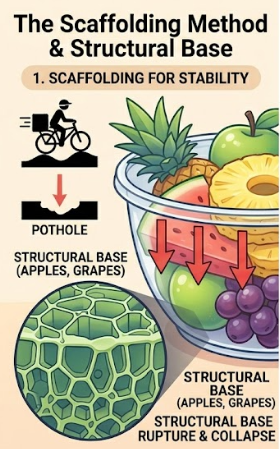
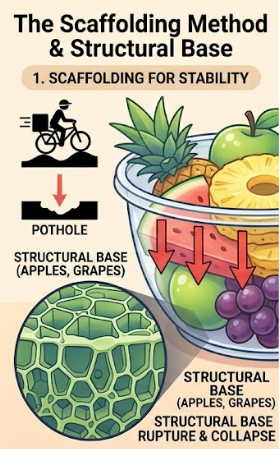
The most frequent error in fruit prep is ignoring basic gravity. Most “wet” fruits—think sliced watermelon or honey-gold pineapple—carry significant weight. When these are unthinkingly tossed at the bottom, they create a “pressure cooker” effect. Over a four-hour transit, the fruit cells at the base inevitably rupture under the mechanical stress of the layers above. This leads to premature juice leakage, which then travels upward via capillary action, softening the “crunch” of everything in its path.
To combat this, professional kitchens utilize what I call “The Scaffolding Method.” This involves using high-fiber, low-moisture fruits—crisp Granny Smith apples or thick-skinned grapes—as a structural floor. These items act as a rigid base that distributes weight evenly. However, even the best stacking fails if the container flexes. Procurement teams often seek out a certified recycled plastic fruit bowl factory specializing in food-grade materials to ensure their packaging has a reinforced, non-bowing base. A rigid base keeps that “scaffold” intact even when a delivery driver is dodging potholes or making sharp turns.
Moisture Migration: The Chemistry of the “Bleed”
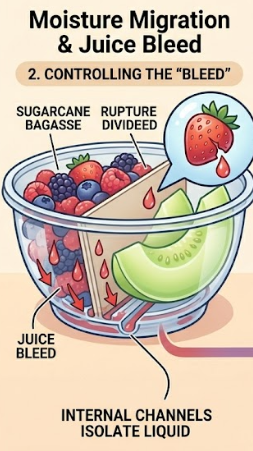
When you slice fruit, you break cellular walls, initiating the release of enzymes and juices. In a mixed bowl, this juice doesn’t just stay put; it migrates. A stray drop of blackberry juice can ruin an entire section of pale honeydew melon in less than sixty minutes. Managing this “bleed” requires a vessel designed for physical separation.
Many high-end brands now work with a versatile compostable PLA fruit bowl supplier for custom branding solutions to create proprietary internal geometries. These might include micro-grooves that channel excess liquid away from the fruit or tiered “staging areas” that keep high-bleed fruits isolated. By controlling the fluid dynamics within the bowl, you ensure that each ingredient remains distinct, rather than merging into a generic, sugary soup.
The Ethylene Problem: Managing the “Breath” of the Bowl
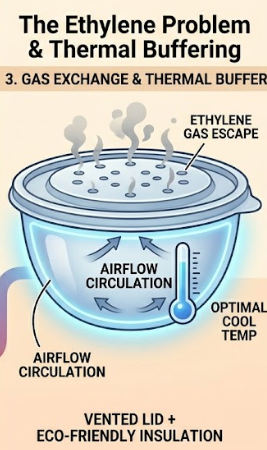
Fruit is a living organism. Even after it is sliced, it continues to respire, releasing ethylene gas—the “ripening hormone.” In a confined space, ethylene acts as a catalyst, telling every other fruit in the bowl to ripen—and eventually rot—faster. If your bowl is hermetically sealed for a four-hour journey, you are essentially creating a high-speed aging chamber.
Strategic layering helps by keeping “heavy breathers” like apples away from sensitive items like berries. Furthermore, the hardware must facilitate gas exchange. Logistics experts frequently source from a global RPET fruit bowl exporter for durable logistics packaging to find lids that feature “passive ventilation.” These microscopic perforations allow ethylene to escape without letting external contaminants in. This balance of airflow is exactly what keeps a raspberry looking plump and dry instead of shriveled by the time it reaches the doorstep.
Material Science: Thermal Buffering in the Last Mile
Temperature is the ultimate regulator of spoilage. For every 10°C increase, the rate of decay roughly doubles. In a delivery van, temperatures fluctuate wildly. If the bowl is made of thin, cheap plastic, it acts like a greenhouse. The material choice is therefore a critical B2B decision.
Moving toward a premium biodegradable pulp fruit bowl wholesaler providing eco-friendly options often provides unexpected functional benefits. Certain molded fibers have better natural thermal resistance than virgin “thin-wall” plastics. These materials act as a buffer, slowing the transfer of heat from the delivery bag to the fruit. When the fruit stays cool, the cells remain tight, and the juice stays inside the fruit where it belongs.
Combating the “Tumble Effect” Through Interior Design
Even a perfectly layered bowl can be ruined by the “tumble effect”—the physical displacement of fruit during the chaotic “last mile.” When a delivery bike hits a curb, the vertical layers can collapse into a horizontal mess. This destroys the visual “unboxing” experience that premium customers are paying for.
To prevent this, the industry has shifted toward “lock-in” designs. By collaborating with an innovative sugarcane bagasse fruit bowl ODM partner for retail-ready designs, companies can develop containers with internal “friction zones” that match their specific menu items. If the bowl is deep enough to snugly hold the fruit without crushing it, the layers stay put. This mechanical stability is the difference between a five-star review and a refund request.
Scaling Quality: The B2B Supply Chain Perspective
For a small cafe, layering is an art. For a national grocery chain, it must be a science. As you scale to thousands of units, you cannot rely on the “gut feeling” of an assembly worker. The process must be standardized. The bowl itself becomes the guide; its dimensions dictate exactly how many grams of “base” fruit go in before the “accent” fruits are added.
To maintain this consistency, a business needs absolute uniformity in their hardware. Securing a trusted polypropylene plastic fruit bowl factory for bulk commercial orders ensures that every lid fits perfectly and every base has the same weight-bearing capacity. When your packaging is a “known constant,” your team can focus entirely on produce quality.
The ROI of Freshness
In the B2B world, the cost of a “soaked” bowl is much higher than the price of the fruit. It includes the labor, the transit cost, and, most importantly, the “customer acquisition cost” lost when a buyer decides never to return. Freshness is the only true competitive advantage here.
Finding a dedicated eco-friendly fruit bowl manufacturer for long-term business partnerships allows you to iterate on your designs as your menu changes. As seasonal fruits come and go, your layering strategy will evolve, but the core principle remains: protect the base, manage the moisture, and let the fruit breathe. When the fruit arrives crisp and vibrant, you haven’t just delivered a snack; you’ve delivered a premium experience that actually survived the journey.