
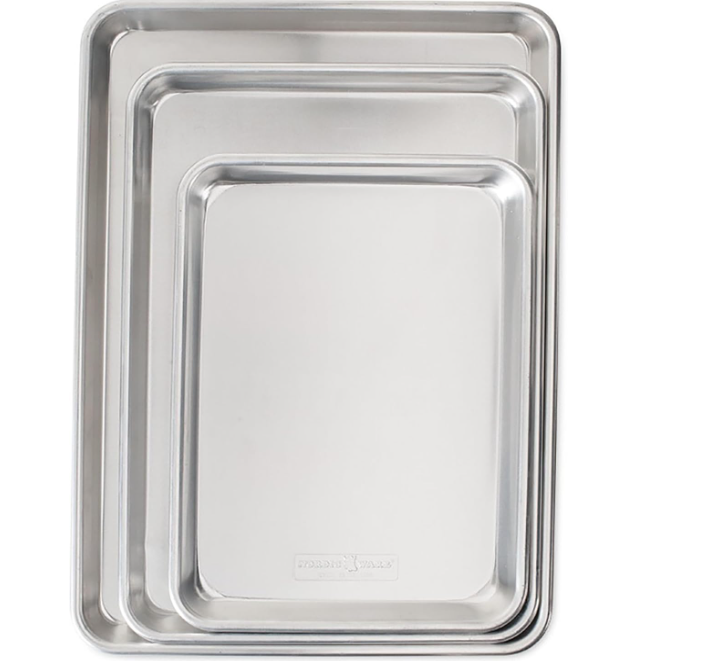
In the U.S. foodservice and packaging market, aluminum baking trays remain a core consumable. Restaurants, bakeries, catering companies, institutional kitchens, and food distributors continue to rely on aluminum trays for baking, storage, transport, freezing, and reheating. Despite the rise of reusable bakeware, aluminum baking trays maintain strong demand due to their heat performance, disposability, and compatibility with high-volume operations.
For wholesale buyers, however, sourcing aluminum baking trays is rarely as simple as comparing unit prices. Capacity stability, dimensional consistency, lead time reliability, and compliance documentation often determine whether a supplier can support long-term distribution or foodservice contracts.
This article reviews five U.S.-based manufacturers that are frequently considered by wholesale buyers. Rather than ranking them by size alone, the focus is on how each aluminum baking tray manufacturer fits different wholesale purchasing models.
1. Handi-foil of America, Inc.
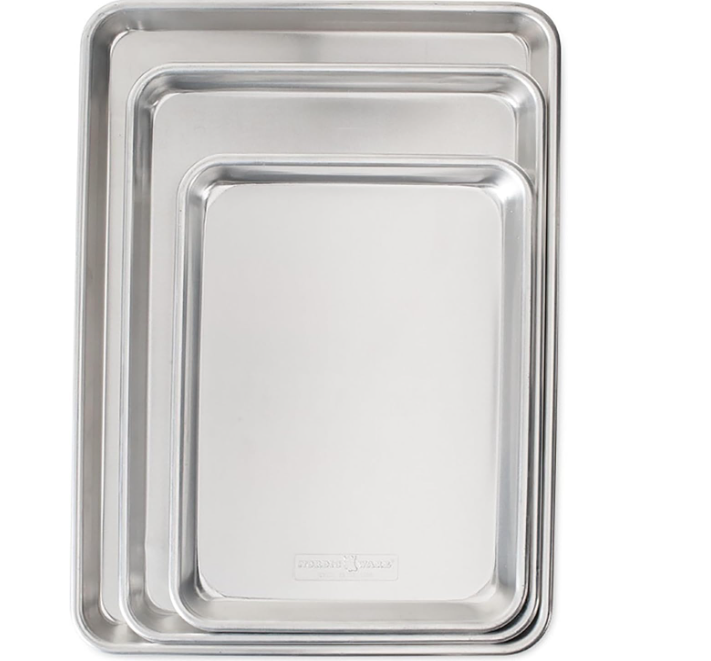
Handi-foil of America is one of the most established names in the U.S. aluminum foil and tray market. Founded decades ago, the company operates multiple manufacturing and distribution facilities across the United States, allowing it to serve national and regional wholesale customers with relatively short lead times.
Its aluminum baking tray portfolio is highly segmented. Buyers can choose from a wide range of sizes, depths, and thickness levels designed for baking, catering, and food transport. Handi-foil also differentiates itself through proprietary edge technologies such as TRU-FIT® and FULL CURL™, which improve rigidity, stacking performance, and lid compatibility.
From a procurement standpoint, Handi-foil is commonly evaluated as a wholesale aluminum baking tray supplier for buyers seeking standardization across large order volumes. Minimum order quantities are structured around pallet or truckload levels, and pricing reflects scale efficiency rather than small-batch flexibility.
The company holds relevant U.S. food-contact certifications, including FDA compliance, and is known for stable supply chain performance. Existing wholesale customers include food distributors, national restaurant groups, and institutional suppliers. After-sales support typically focuses on consistency assurance rather than customization-driven revisions.
2. D&W Fine Pack
D&W Fine Pack has built its reputation by serving institutional foodservice channels. Its customer base often includes hospitals, school systems, hotel groups, and large-scale catering operators where performance reliability outweighs design variation.
Aluminum baking trays from D&W Fine Pack are engineered for functional use. Key considerations include temperature tolerance, structural strength under load, and compatibility with freezing and reheating workflows. Many of its trays are designed to move directly from freezer to oven without deformation.
For wholesale buyers, D&W Fine Pack is often considered an aluminum baking tray supplier for foodservice distributors rather than a customization-focused partner. While branding and packaging customization are available, they are usually offered within predefined size systems.
Pricing models favor recurring volume commitments. Quantity-based discounts and long-term contract pricing are common, particularly for distributors managing institutional accounts. The company’s logistics network and inventory depth also support urgent replenishment needs, which is a critical factor in healthcare and hospitality supply chains.
3. Pactiv Evergreen Inc.

Pactiv Evergreen operates at a different scale compared with niche or regional manufacturers. As a publicly traded packaging group, the company maintains extensive production facilities across North America and supplies a wide range of foodservice and retail packaging products.
Its aluminum baking tray lineup includes multiple shapes, sizes, and thickness grades, designed to meet both foodservice and retail-ready requirements. For wholesale buyers managing national distribution, this breadth reduces the need to source from multiple vendors.
Pactiv Evergreen is frequently shortlisted as a large-scale aluminum baking tray manufacturer for buyers prioritizing nationwide supply consistency. Bulk purchasing advantages include competitive pricing at high volumes, predictable lead times, and integrated distribution capabilities.
Sustainability initiatives also play a role in its positioning. The company emphasizes recyclable materials and transparent sustainability reporting, which can support wholesalers supplying environmentally conscious clients. In addition to products, Pactiv Evergreen offers marketing and technical support services for large wholesale partners.
4. Durable Packaging International
Durable Packaging International positions itself around speed and flexibility. Compared with larger corporations, the company emphasizes responsive production and the ability to handle custom or semi-custom aluminum packaging orders.
Its aluminum baking tray offerings cover baking pans, food containers, and foil trays in a wide range of specifications. One of its distinguishing features is rapid prototyping, allowing buyers to evaluate new tray formats or size adjustments without long development cycles.
Wholesale buyers often assess Durable Packaging as a custom aluminum baking tray manufacturer when standard catalog items do not fully meet operational needs. This includes private-label food brands or regional distributors serving specialized food producers.
The company supports both commercial and retail wholesale relationships, with relatively flexible payment terms and clear return policies. Quality control focuses on consistency across runs, and defect management processes are designed to address issues quickly rather than absorb them at scale.
5. Wyda Packaging USA

Wyda Packaging USA emphasizes distribution efficiency. With strategically located North American distribution centers, the company supports fast delivery across multiple regions, making it attractive for wholesalers operating tight inventory cycles.
Product performance validation is central to its value proposition. Aluminum baking trays are tested for heat resistance, freezer performance, and stackability, ensuring they perform consistently across storage and cooking stages.
Wyda is often evaluated as a regional aluminum baking tray supplier for buyers who value delivery speed as much as unit cost. Pricing structures typically include tiered discounts based on order volume, with meaningful reductions for larger wholesale commitments.
Customization options include size adjustments, branding elements, and specialty coatings, although these are usually tied to higher minimum volumes. Customer service systems emphasize order tracking transparency and resolution speed for post-delivery issues.
Key Selection Criteria for Wholesale Buyers
When selecting an aluminum baking tray manufacturer, wholesale buyers typically evaluate more than product specifications.
Production capacity and lead time reliability are essential for maintaining uninterrupted supply. Price competitiveness matters, but only when paired with consistent thickness, dimensional accuracy, and material quality.
Smaller wholesalers may prioritize suppliers with flexible MOQs and responsive service, while national distributors often focus on scale, certification coverage, and logistics integration.
Contract negotiations usually involve payment terms, minimum order thresholds, price lock-in periods, and liability clauses. Supplier audits commonly include factory certifications, third-party testing reports, and references from existing wholesale clients.
Bulk Order Advantages and Cost Considerations
Bulk purchasing significantly affects aluminum baking tray economics. Price breaks typically appear at mid-volume and high-volume thresholds, though exact structures vary by manufacturer.
Direct sourcing from manufacturers can reduce unit costs compared with distributor-based purchasing, but it may introduce additional logistics and inventory management responsibilities.
Wholesale buyers often optimize freight costs through full truckload shipments, regional warehousing, or consolidated deliveries. Hidden costs—such as quality inspections, storage fees, and working capital tied up in inventory—should be factored into total landed cost calculations.
Conclusion
There is no single best supplier for every wholesale buyer. The most suitable aluminum baking tray supplier depends on business scale, customer mix, and operational priorities.
Smaller distributors may benefit from flexibility and service responsiveness, while large-scale wholesalers typically require production depth, compliance readiness, and nationwide delivery capability. Across all scenarios, consistent supply performance tends to outweigh marginal unit price differences.
For wholesale buyers, long-term reliability and supplier alignment are often the factors that sustain profitable partnerships over time.