
For most dessert businesses, packaging decisions don’t happen in a meeting room—they happen under pressure. You run low on stock, a supplier delays shipment, or your current cups just don’t match the brand image you’re trying to build. That’s usually when the question comes up: where should we actually buy better ice cream cups with wooden spoons?
There isn’t a single answer that fits everyone. What works for a small takeaway shop won’t necessarily work for a growing chain. The goal here is to walk through the realistic options, based on how buyers actually source—not how it’s supposed to work on paper.
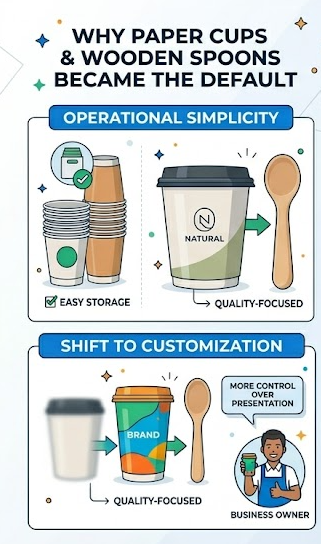
Why This Type of Packaging Became the Default

Paper cups with wooden spoons didn’t become popular overnight. It happened gradually as businesses tried to simplify operations and respond to changing expectations.
They’re easy to stack, easy to store, and don’t require any return or cleaning process. For takeaway-heavy models, that alone solves a lot of headaches.
At the same time, they send a certain signal to customers. Compared to plastic, the combination feels cleaner and more natural. That matters, especially for brands trying to position themselves as modern or quality-focused.
Because of this shift, many businesses now prefer working with a custom ice cream cup manufacturer instead of buying generic stock. It gives them more control over how their product is presented.
Online Marketplaces: Useful, but Not Always Stable
If you search for suppliers, online B2B platforms will likely be the first thing you see. And to be fair, they’re useful—especially at the beginning.
You can compare dozens of suppliers quickly, check minimum order quantities, and request samples without much effort. For testing different cup sizes or materials, this flexibility helps.
Most of the sellers you’ll find operate as an OEM ice cream cup supplier, meaning they can produce based on your requirements rather than just selling standard items.
But there’s a trade-off. Listings don’t always reflect real production quality, and communication gaps can slow things down. Many buyers start here, but few rely on it as their only sourcing method long term.
Direct Factories: More Control, More Responsibility

Once order volumes become predictable, going directly to a factory tends to make more sense.
You get better pricing, but more importantly, you get consistency. Instead of negotiating every order from scratch, you build a working relationship.
Businesses that scale usually end up partnering with an ice cream cup factory for bulk distributors because it simplifies planning. Production schedules, material choices, and even packaging details become easier to manage over time.
That said, working directly also means you need clearer communication. Specifications, timelines, and expectations all need to be defined upfront.
Local Suppliers: A Safety Net That Matters
Even companies importing large volumes often keep a local supplier in the background.
The reason is simple—things don’t always go as planned. Shipments get delayed, forecasts miss the mark, or demand spikes unexpectedly.
Having access to an ice cream cup supplier for restaurant chains nearby allows you to react quickly. You won’t get the lowest price, but you gain speed and flexibility.
In practice, many businesses treat local sourcing as a backup rather than a primary channel.
Eco-Focused Suppliers: More Than Just Materials
Sustainability has moved from being optional to being expected in many markets.
Some suppliers focus specifically on biodegradable or certified materials. Working with a paper ice cream cup manufacturer for eco brands helps ensure that your packaging meets those expectations without compromising usability.
It’s not just about compliance. For certain customers, this kind of packaging influences buying decisions directly.
Distributors: When Simplicity Is the Priority
Not every business wants to manage multiple suppliers.
Distributors offer a simpler setup. You order cups, lids, spoons, and other items from one place, often on a regular schedule.
Some of them source from an ice cream cup manufacturer for foodservice operators, which means the products are standardized but reliable.
This approach works well if your focus is operational efficiency rather than detailed customization.
Private Label: Turning Packaging Into an Asset
At some stage, plain packaging starts to feel limiting.
That’s where private labeling comes in. Instead of using generic cups, you design your own—logos, colors, messaging, everything.
A private label ice cream cup manufacturer usually supports both design and production, which makes the process easier if you don’t have internal resources.
It’s a bigger step, but it can change how customers perceive your product, especially in competitive markets.
What Actually Drives Cost Differences

Pricing isn’t as straightforward as it looks.
Order size plays a big role. Larger quantities lower unit costs, particularly when dealing with an ice cream cup factory for international buyers.
Customization adds cost as well. Printing, coatings, and structural changes all affect the final price. The key is deciding what actually adds value.
Then there’s logistics. Shipping, storage, and handling can shift the total cost more than expected. Sometimes a higher unit price locally ends up being more practical overall.
Quality Issues: Small Details, Big Impact
Most problems show up after delivery, not before.
Cups might not hold up well with cold products. Spoons might feel rough or inconsistent. Printing might not match the approved design.
A reliable food-grade ice cream cup supplier for global markets should be able to provide clear specifications and documentation. If that’s missing, it usually leads to problems later.
Sampling and occasional checks help, especially when working with new suppliers.
Why Long-Term Partnerships Usually Win
Switching suppliers frequently might seem like a way to save money, but it often creates instability.
When you work consistently with a bulk ice cream cup manufacturer for large-scale procurement, processes become smoother. There’s less need to re-explain requirements, and fewer surprises during production.
Over time, this kind of relationship tends to be more efficient than constantly searching for cheaper options.
Final Thoughts
There’s no perfect sourcing channel—only what fits your current situation.
Online platforms are flexible but inconsistent. Factories offer control but require structure. Local suppliers provide speed but at a higher cost. Distributors simplify everything but limit customization.
Most businesses don’t choose just one. They combine options based on need.
In the end, the goal isn’t just to buy ice cream cups with wooden spoons. It’s to build a supply setup that doesn’t break under pressure—because when demand increases, packaging is one of the first things that gets tested.