
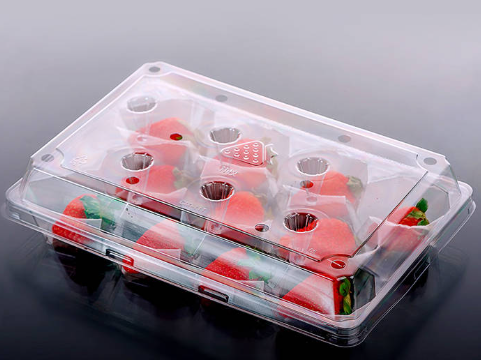
In the U.S. fruit supply chain, packaging decisions rarely start with sustainability. They start with damage rates, packing speed, and whether trays survive distribution without collapsing or trapping moisture. Sustainability enters the conversation later—usually when retailers, regulators, or brand partners begin asking uncomfortable questions. That shift explains why rPET fruit trays have moved from a niche alternative to a sourcing requirement across North America.
What many wholesale buyers discover quickly is that not every supplier advertising recycled content is equipped to support fruit packaging at scale. rPET behaves differently from virgin PET, and fruit trays are far less forgiving than generic food containers. Choosing the right custom rPET fruit tray manufacturer for wholesale buyers therefore becomes less about marketing claims and more about operational fit.
Why rPET Fruit Trays Are No Longer Optional
U.S. retailers have become increasingly specific about packaging expectations. Recyclability alone is not enough; buyers are expected to demonstrate material traceability and, in some cases, participation in circular systems. At the same time, fruit packaging still has to meet the same physical demands it always has: clarity for visual inspection, ventilation for respiration, and strength for stacking.
This tension exposes weak suppliers quickly. Manufacturers without consistent rPET sourcing struggle with color variation and brittleness. Others can form trays but lack the structural understanding required for berries or stone fruit. As a result, experienced buyers gravitate toward a smaller pool of OEM rPET fruit tray suppliers for wholesale distribution that have already navigated these challenges.
Cascades: Setting the Baseline for rPET Food Trays
Cascades is often referenced not because it is the cheapest option, but because it set expectations early. Its rPET fruit trays are designed around rolled-edge reinforcement, a detail that appears simple but materially affects stacking strength. That design choice allows Cascades to maintain performance levels close to virgin PET without increasing material usage.
From a sourcing perspective, Cascades operates at a scale that reduces risk. Multiple production locations and established recycling streams mean fewer surprises during peak fruit seasons. For buyers managing national or multi-regional programs, working with a sustainable rPET fruit tray manufacturer for wholesale buyers like Cascades simplifies planning and compliance discussions with downstream partners.
More importantly, Cascades treats circularity as a process rather than a promise. Tray-to-tray recycling is integrated into its supply model, which resonates with large fruit distributors under pressure to show measurable progress rather than aspirational targets.
GoGreen Packaging (CPT): Carbon Reduction as a Design Driver
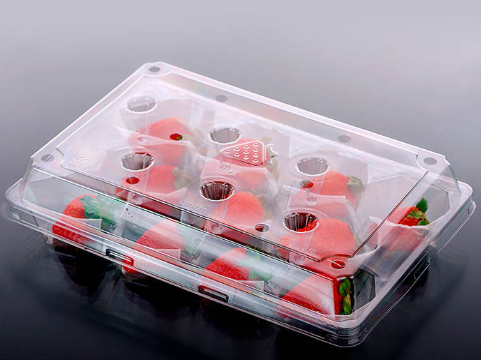
GoGreen Packaging approaches sustainability from a different angle. Instead of focusing exclusively on rPET purity, its Go Polypro trays are engineered to reduce overall carbon impact. For some wholesale buyers, particularly those reporting emissions at the program level, this distinction matters.
Functionally, GoGreen’s fruit trays emphasize moisture control and airflow stability. These features contribute directly to shelf-life extension, which often outweighs marginal differences in material composition. Buyers evaluating alternatives to PET frequently consider GoGreen as a custom fruit tray supplier for wholesale buyers when rPET availability or pricing becomes volatile.
That said, GoGreen’s solutions are best suited to buyers with clearly defined sustainability metrics. Its value proposition depends on how carbon reduction is measured and communicated within the supply chain, rather than on material circularity alone.
NNZ USA: Engineering Trays Around Fruit Behavior
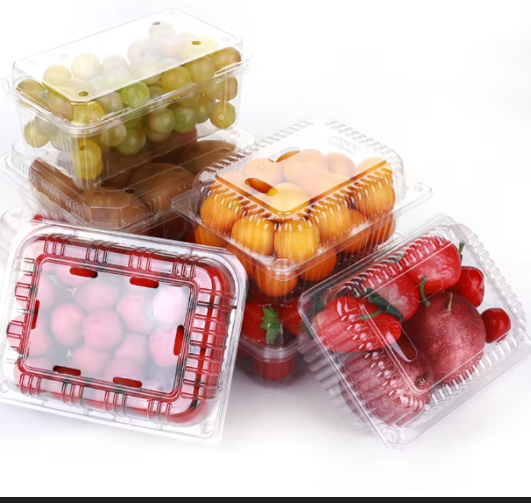
NNZ USA stands out for its focus on fruit-specific tray design. Rather than adapting generic food trays, NNZ engineers rPET solutions around the physical behavior of berries, grapes, and stone fruit. Vent hole placement, tray depth, and stacking geometry are treated as variables rather than fixed templates.
This approach appeals to buyers who have already experienced losses from crushed or overheated fruit. Working with a custom rPET fruit tray factory for wholesale buyers like NNZ shifts the conversation from unit price to damage reduction and packing efficiency. In high-value fruit categories, those factors often justify a higher upfront cost.
NNZ’s material sourcing and certification practices align with U.S. food-contact standards, but its real advantage lies in how consistently its trays perform across long transport distances.
Naturpac: Sustainability as a Core Operating Principle

Naturpac does not position sustainability as an add-on. Its fruit trays are produced entirely from rPET, and its business model is built around reducing environmental impact rather than offsetting it later. For buyers under pressure from retail partners or corporate ESG teams, this clarity simplifies internal approvals.
Naturpac’s tray designs incorporate features such as leak resistance and tamper evidence, reflecting a practical understanding of wholesale distribution rather than retail aesthetics. For buyers sourcing from a custom sustainable fruit tray manufacturer for wholesale distribution, Naturpac offers alignment between environmental goals and operational reality.
The trade-off is cost. Fully recycled content carries a premium, and Naturpac’s pricing reflects that. Buyers typically engage with Naturpac when long-term compliance and brand positioning outweigh short-term savings.
Grounded Packaging: Data-Driven rPET Customization
Grounded Packaging represents a newer generation of suppliers that integrate sustainability data directly into their offering. Its rPET fruit trays can be supplied as finished trays or rollstock, allowing buyers to choose how packaging fits into existing operations.
What differentiates Grounded is transparency. Buyers receive real-time data on carbon impact and recyclability, which supports reporting obligations increasingly common in U.S. retail contracts. For companies seeking a custom OEM or ODM rPET fruit tray manufacturer for wholesale buyers, this level of documentation can be as valuable as the tray itself.
Grounded’s solutions tend to attract buyers who are already committed to sustainability tracking and need packaging partners that can support that complexity.
Choosing an rPET Fruit Tray Partner That Actually Fits
From a wholesale buyer’s perspective, the most common sourcing mistake is assuming that all rPET trays behave the same. Material quality, forming consistency, and structural design vary significantly between suppliers. A tray that performs well in controlled tests may fail under real distribution conditions.
Evaluating a rPET fruit tray manufacturer for wholesale buyers therefore requires looking beyond recycled content percentages. Production capacity during peak seasons, responsiveness to structural adjustments, and experience with specific fruit categories often matter more than headline sustainability claims.
Hidden costs also deserve attention. Small rPET batches frequently carry premiums, while custom tooling should be amortized over realistic order volumes rather than ideal scenarios. Logistics, especially domestic freight in the U.S., can quietly erode perceived savings if production locations are poorly aligned with distribution routes.
rPET, Virgin PET, and PP: Practical Trade-Offs
Virgin PET remains the most predictable material, but its acceptance continues to decline in sustainability-driven markets. rPET offers a balance between performance and environmental responsibility, provided the manufacturer controls resin quality. PP alternatives deliver durability and moisture resistance but face limitations in transparency and recycling infrastructure.
For most U.S. wholesale fruit programs, rPET represents the most viable middle ground. Aligning with an experienced rPET fruit tray supplier for wholesale distribution allows buyers to meet regulatory expectations without compromising fruit quality.
Final Perspective
Circular packaging in the U.S. fruit industry is no longer theoretical. It is shaping procurement decisions in real time. The five manufacturers discussed here illustrate different paths toward sustainable rPET fruit tray production, each suited to different buyer priorities.
Ultimately, selecting the right custom rPET fruit tray manufacturer for wholesale buyers is less about finding the most sustainable narrative and more about building a supply relationship that holds up under operational pressure. As expectations continue to rise, that distinction will only become more important.