
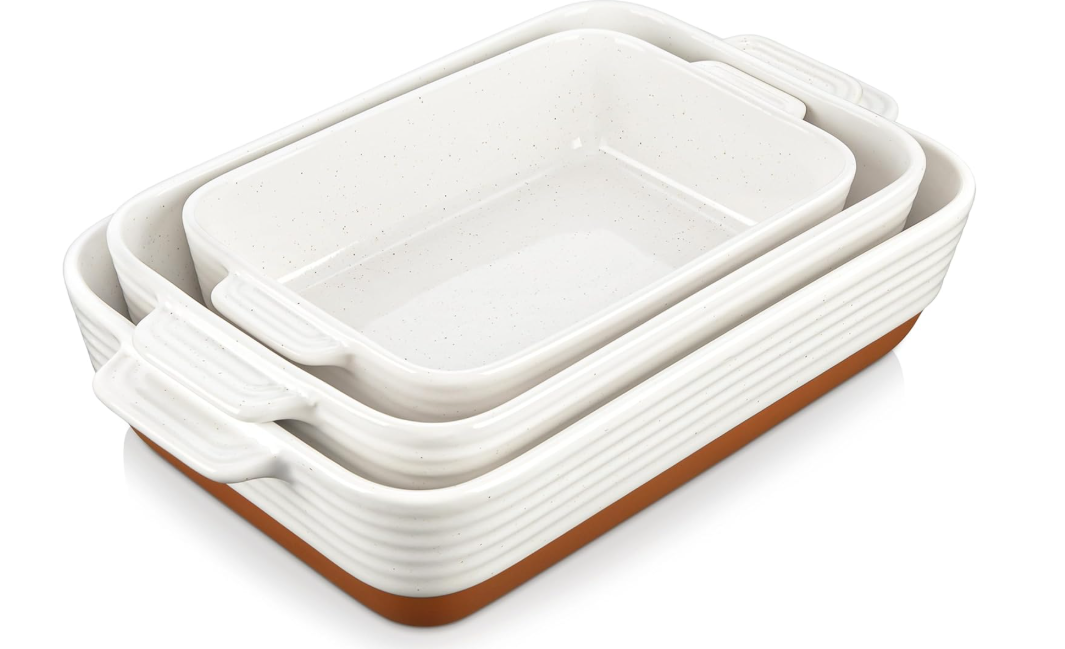
For overseas buyers, searching for professional ceramic baking tray factories in Germany for wholesale orders often feels like a safe starting point. Germany has a reputation for disciplined manufacturing, strict food-contact regulations, and long equipment lifecycles. On paper, it looks like an ideal sourcing destination.
In practice, however, many buyers reach the same conclusion after the first few supplier calls: the German market does not work the way the keyword suggests.
There are no large-scale factories in Germany dedicated to producing fully molded ceramic baking trays in the traditional cookware sense. What exists instead is a mature industrial ecosystem built around metal baking trays finished with ceramic, enamel, or sol-gel coating systems. This structure is not accidental, and it is not a compromise. It reflects how the German baking tray industry developed over decades.
Buyers who understand this early tend to move faster and avoid unnecessary supplier churn later.
Why “Ceramic Baking Tray” Is a Functional Term in Germany
Within Germany, the term ceramic baking tray is used far more as a functional description than a material promise. Most products in this category begin as steel or aluminum trays engineered for dimensional stability. Ceramic-derived surface systems are then applied to achieve heat resistance, release performance, and cleaning efficiency.
This approach mirrors Germany’s industrial strengths. Metal forming and surface engineering are deeply established disciplines. Traditional ceramic cookware production, by contrast, never scaled into a dominant industrial segment.
As a result, companies operating as professional baking tray factories for wholesale buyers focus on reliability, repeatability, and regulatory clarity. Material purity is secondary to performance consistency, especially for commercial baking environments.
BICO GmbH as a Structured Professional Baking Tray Factory
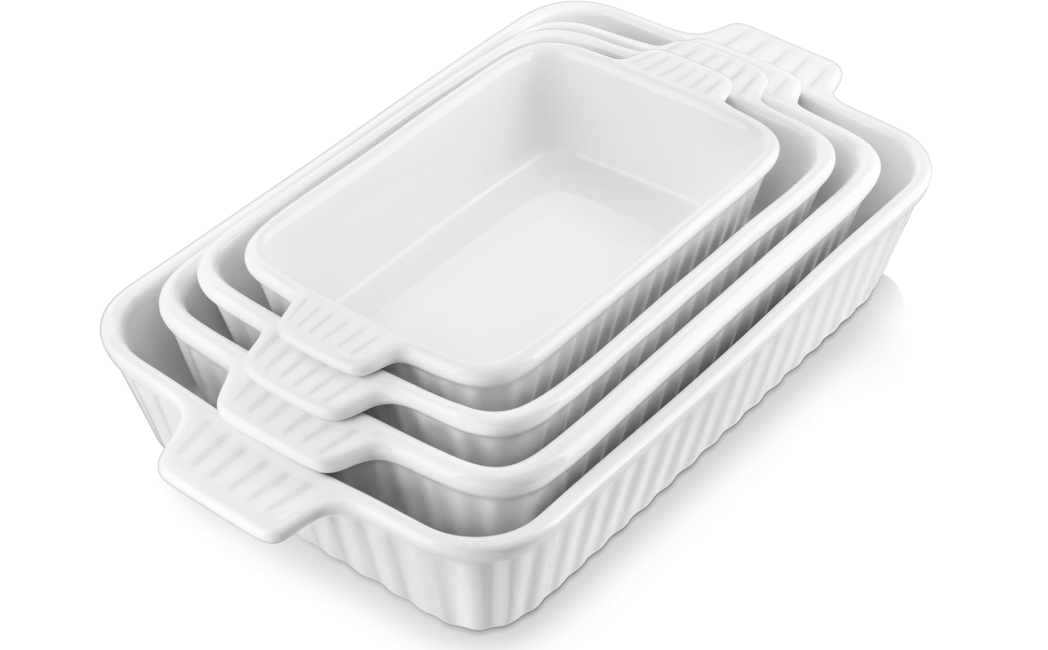
BICO GmbH is best understood as a baking tray specialist rather than a cookware brand. Since its early years, the company has focused on forming trays for commercial ovens and professional baking lines. Ceramic coating options were added later, driven by demand rather than marketing trends.
Today, BICO supplies custom ceramic baking trays for wholesale orders by combining standardized metal substrates with controlled coating processes. Buyers can specify tray dimensions, edge geometry, surface behavior, and batch repeatability based on their production needs.
From a sourcing perspective, BICO appeals to buyers who value predictability. MOQ levels are designed for stable wholesale demand rather than short pilot runs. Delivery schedules tend to remain consistent, particularly for EU-based buyers managing recurring orders.
Demmler GmbH and Long-Term Baking Tray Manufacturing
Demmler GmbH carries a manufacturing history that predates modern bakeware entirely. Originally rooted in sheet metal processing, the company gradually transitioned into professional baking tray production as commercial baking equipment standardized across Europe.
Today, Demmler’s trays can be supplied with ceramic coating systems when required. These products often meet the expectations of buyers searching for ceramic baking tray factories for wholesale buyers, even though the ceramic element exists as a surface treatment rather than a solid structure.
Demmler operates at a scale that favors consistency over speed. For buyers prioritizing long-term availability and controlled production, this stability often outweighs aggressive customization options.
ACS Coating Systems GmbH Behind Many Ceramic Baking Trays

ACS Coating Systems GmbH does not manufacture baking trays, yet its influence across the German market is substantial. The company develops ceramic and sol-gel coating systems used by multiple baking tray factories throughout Germany.
Many products sold as ceramic baking trays for wholesale orders rely on ACS formulations, either directly or through licensed application partners. ACS rarely appears on the finished product label, but its technology shapes surface performance across multiple suppliers.
For buyers, this explains why different factories may offer trays with very similar coating characteristics despite differing production origins.
Anneliese Backtechnik GmbH and Aluminum-Based Baking Tray Solutions
Anneliese Backtechnik GmbH is primarily associated with aluminum baking trays supplied to bakeries and food production facilities. The company’s trays are designed to withstand repeated mechanical handling and long production cycles.
Although aluminum trays are not ceramic by default, ceramic coating systems can be applied when required. This makes Anneliese relevant for buyers sourcing custom ceramic baking trays for wholesale, particularly when heat transfer efficiency is a priority.
That said, coating aluminum introduces additional cost layers. Buyers typically evaluate this option carefully against expected lifespan and maintenance savings.
Kempf GmbH and OEM Ceramic Baking Tray Projects
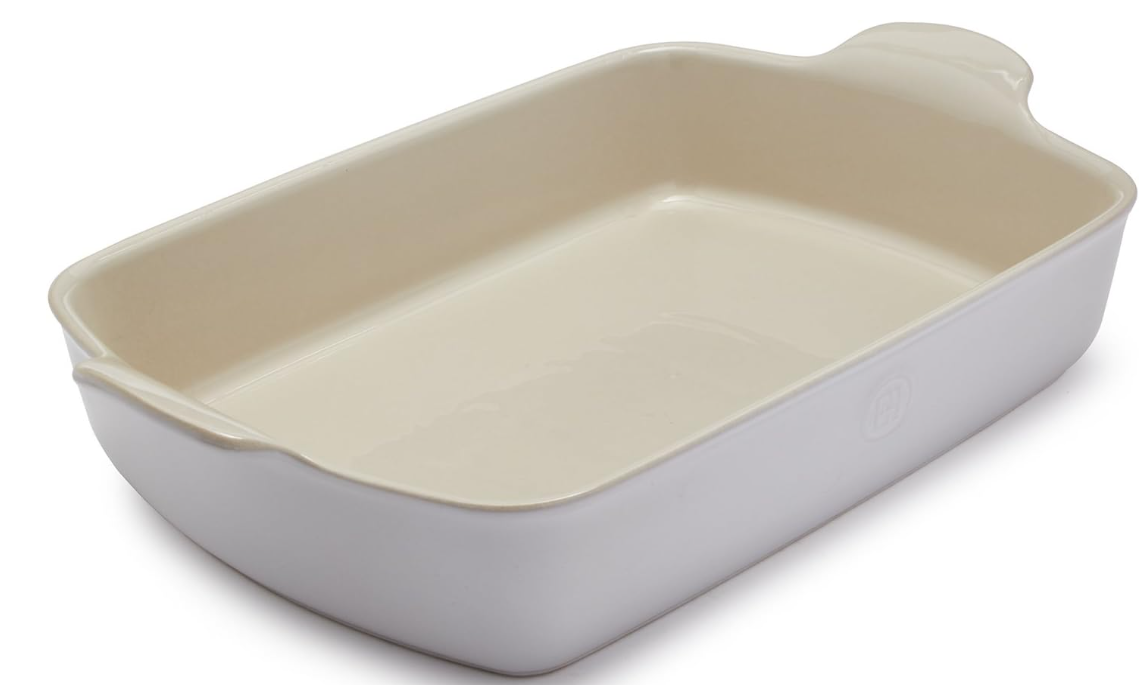
Kempf GmbH operates primarily as a surface treatment specialist rather than a tray manufacturer. Since the early 1980s, the company has focused on coatings designed to improve release behavior and extend tray service life.
Ceramic formulations are part of Kempf’s portfolio and are often used in OEM projects. As a result, Kempf frequently supports custom ceramic baking trays for wholesale supply without appearing as the named supplier.
This layered production structure is common in Germany and is often misunderstood by overseas buyers unfamiliar with the market.
Hertkorn GmbH and Material Classification Boundaries
Hertkorn GmbH produces stone baking slabs rather than metal trays. These products are sometimes associated with ceramic-related searches because of their mineral composition.
Functionally, however, stone slabs behave very differently from coated metal trays. While they offer high thermal mass, they are not interchangeable in most commercial baking workflows. For buyers evaluating ceramic baking tray factories for wholesale orders, Hertkorn represents an adjacent category rather than a direct substitute.
Uniq Dealz and Large-Volume Baking Tray Production
Uniq Dealz operates at a larger industrial scale than many German suppliers in this space. Its focus lies in enamel-coated baking trays designed for durability and consistent appearance.
Although enamel and ceramic coatings differ technically, many buyers accept enamel as a functional equivalent. For large professional baking tray wholesale orders, Uniq Dealz offers volume capacity and structured pricing that smaller factories cannot always match.
Germany Versus China in Ceramic Baking Tray Sourcing
The difference between German and Chinese suppliers is structural rather than qualitative. Chinese factories often produce fully molded ceramic baking trays with lower MOQs and aggressive pricing. German factories concentrate on coated metal trays supported by documentation, repeatability, and shorter lead times within Europe.
When comparing ceramic baking tray factories for wholesale orders, buyers typically weigh compliance expectations, logistics costs, and after-sales stability alongside unit pricing.
Making Practical Wholesale Decisions
Pure ceramic baking trays can perform well in certain retail or light-use scenarios. Ceramic-coated metal trays are better suited to commercial and industrial environments where durability and handling resistance are critical.
Many experienced buyers adopt mixed sourcing strategies. German factories supply coated trays for regulated or high-risk markets, while Asian suppliers support cost-driven product lines. This approach balances compliance confidence with margin control.
Final Thought
Searching for professional ceramic baking tray factories for wholesale orders in Germany requires adjusting expectations, not lowering standards. Germany’s advantage lies in controlled production systems built for long-term use, not in traditional ceramic forming.
Buyers who align with this reality tend to source more efficiently and avoid costly missteps later in the supply chain.