
Let’s be honest: the Mediterranean diet isn’t just a health trend; it’s a survival strategy for the modern, busy professional. Whether you are trying to meal prep for a grueling 60-hour work week or you’re a product developer looking to capture the next wave of “fast-casual” dining, the Greek chicken bowl is your best friend. It’s modular, it’s vibrant, and most importantly, it actually tastes like real food even after three days in a fridge.
In this guide, I’m breaking down seven variations that range from the ultra-traditional to some experimental fusions. Along the way, we’ll look at the “how” and “why” behind their success in both home kitchens and the broader commercial market.
1. The “Old-School” Souvlaki Street Bowl

You can’t beat the classics. This recipe is all about the marinade—heavy on the dried oregano, a ridiculous amount of fresh garlic, and high-phenolic olive oil. For the chicken, I always recommend thighs over breasts because they don’t turn into cardboard when reheated.
If you’re moving from a home kitchen to a commercial scale, you realize quickly that consistency is a nightmare. That’s why sourcing from a reliable chicken bowl supplier for bulk orders is a total game-changer for businesses. It allows you to keep that authentic “charred on a stick” flavor without having a dedicated grill master at every location. Serve this over a bed of lemon-scented rice with a massive dollop of tzatziki that’s thick enough to hold a spoon upright.
2. The Quinoa & Kale “Superfood” Mediterranean Mix
Standard rice is fine, but for the crowd that spends their weekends hiking or at the gym, quinoa is the currency of choice. It provides that nutty texture and a protein punch that keeps you full until dinner. We pair this with massaged kale—yes, you actually have to massage the leaves with olive oil and salt to break down the fibers—and grilled chicken breast.
For brands looking to break into the health-food retail space, working with a custom chicken bowl factory for private labeling is the fastest route to market. It lets you focus on the branding and the “superfood” narrative while the heavy lifting of food safety and portioning is handled by experts. Pro tip: add some pomegranate seeds on top for a burst of sweetness that cuts through the earthy kale.
3. The Roasted Chickpea “Crunch” Bowl
Texture is the most underrated part of a bowl. Most Greek bowls are “soft” (rice, soft chicken, soft feta). By adding chickpeas that have been seasoned with cumin and roasted until they’re nearly as crunchy as nuts, you change the whole experience. This version is a massive hit in the meal-prep world because chickpeas stay crunchy longer than pita chips do.
For those in the hospitality or catering game, procuring pre-prepped bases from an experienced chicken bowl manufacturer for commercial kitchens allows your staff to focus on the “assembly art” rather than the tedious prep. It’s about efficiency without sacrificing that “made-from-scratch” vibe that customers pay a premium for.
4. The Harissa-Greek Fusion (The “Heat” Bowl)
While Greece isn’t exactly the spice capital of the world, a little North African harissa paste goes a long way. Mixing harissa into the Greek yogurt marinade creates a beautiful, spicy-creamy crust on the chicken as it grills. It’s a bit of a “fusion” risk, but in a crowded market, being different is better than being “just okay.”
When you’re dealing with specialty flavor profiles like this, you need a supply chain that doesn’t blink. Many regional distributors rely on a leading chicken bowl wholesaler for international shipping to ensure the chicken is processed with these specific spice blends in mind. It ensures that the “kick” is the same in a London franchise as it is in a New York one.
5. The Deconstructed Gyro Bowl (No Soggy Bread)
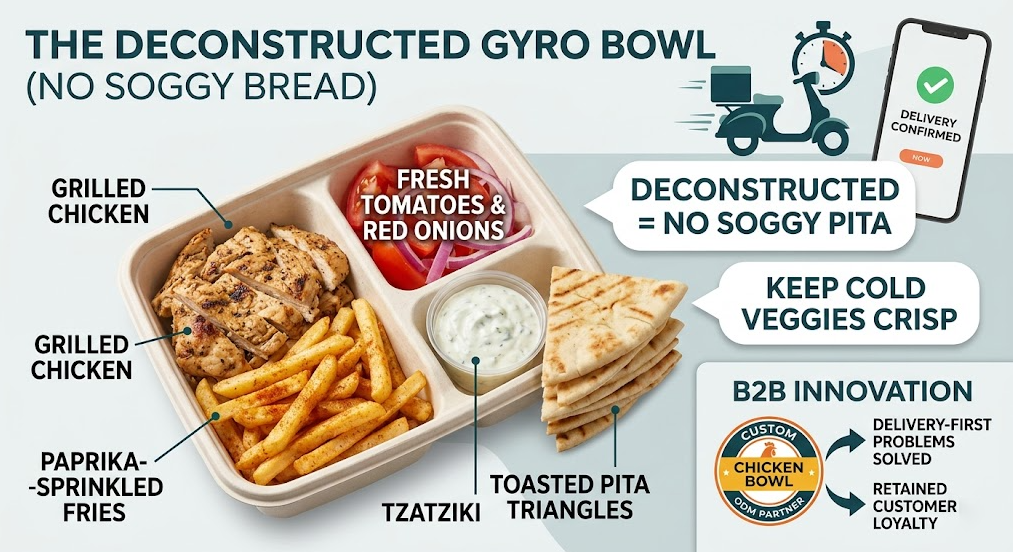
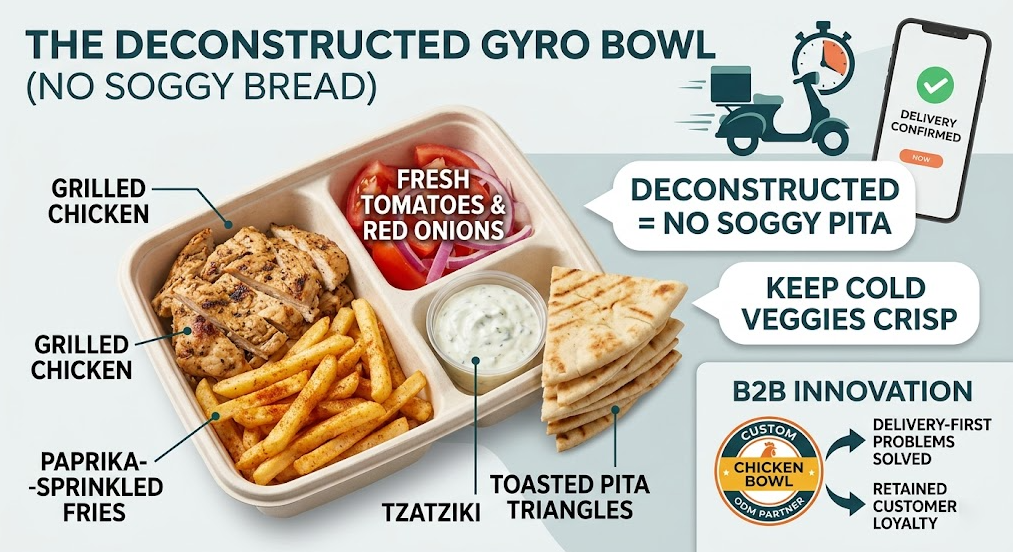
The biggest tragedy in food delivery is the soggy pita. By deconstructing the gyro—putting the chicken, red onions, tomatoes, and fries (yes, traditional Greek gyros have fries inside!) into a bowl—you save the meal. The pita is served on the side, toasted and cut into triangles.
For startup food tech companies, finding an innovative chicken bowl ODM partner is the key to solving these “delivery-first” problems. They can help you engineer a bowl that keeps the hot stuff hot and the cold veggies crisp. It’s a logistics puzzle as much as it is a culinary one. I recommend a heavy sprinkle of paprika over the fries to give it that authentic Athens street-vendor aesthetic.
6. Pesto-Infused “Modern Greek” Bowl
This is for the people who are bored of lemon and oregano. By using a sun-dried tomato pesto as a finishing sauce, you bridge the gap between Italian and Greek flavors. We use artichoke hearts, kalamata olives, and roasted red peppers to fill out the bowl.
In the B2B world, procurement managers for large chains often look for a trusted chicken bowl supplier for chain restaurants specifically because they need ingredients that play well together. You can’t have a pesto that’s so oily it separates in the bowl. It has to be an emulsion that coats the chicken and the orzo perfectly, creating a rich, luxurious mouthfeel that feels much more expensive than it actually is.
7. The “Low-Carb” Cauliflower Rice Bowl

We can’t ignore the Keto crowd. Replacing rice with cauliflower rice is the standard move, but the trick is to sauté the cauliflower with plenty of lemon and parsley so it doesn’t taste “sad.” Pair this with a fatty protein like grilled halloumi cheese and skin-on chicken.
Manufacturing cauliflower rice at scale is a nightmare because of the water content. If you’re a food brand looking to enter the “frozen/ready-to-eat” aisle, you absolutely have to partner with a specialized chicken bowl factory for frozen food brands. They have the flash-freezing tech required to make sure the cauliflower doesn’t turn into mush when the customer hits the microwave button. It’s the difference between a repeat customer and a one-star review.
The Professional Side: Why the “Bowl” Model Wins in B2B
If you’re reading this from a business perspective, you know that the “bowl” is the ultimate vessel for profitability. From a packaging standpoint—which I know a thing or two about—the bowl is easier to seal, easier to stack, and offers a better “unboxing” experience than a flat plate.
But the real magic happens in the supply chain. A professional chicken bowl manufacturer for food service providers doesn’t just sell you meat and veg; they sell you a standardized unit of labor. By outsourcing the marinating, the sous-vide cooking, and the portioning, a restaurant can cut its kitchen labor costs by 30-40%.
In 2026, the market is moving away from “cheap” and toward “transparent.” Wholesale buyers are looking for clean labels. They want to know the chicken was raised without a pharmacy’s worth of antibiotics and that the olive oil actually came from an olive. Whether you’re a small-time caterer or a global distributor, the quality of your partner defines the ceiling of your success.
Wrapping It Up
These seven recipes aren’t just meals; they’re templates. You can swap the feta for goat cheese, the chicken for lamb, or the rice for farro. The Greek chicken bowl is a masterpiece of modularity.
For the home cook, it’s a way to eat like a king without spending four hours in the kitchen. For the B2B professional, it’s a high-margin, low-complexity product that taps into the most durable food trend of the last century: Mediterranean wellness. Grab your lemons, find your supplier, and start building.